Everything in LLMs & Generative AI, page 9
Agent Memory: Short-Term vs. Long-Term Recall
Agent memory gives an LLM a sense of history, separating fleeting conversation context from persistent knowledge. Short-term memory tracks the current chat, while long-term memory recalls user facts across sessions.
Agentic Reasoning: LLMs that Plan, Act, and Learn
Agentic reasoning treats an LLM as an autonomous agent that interacts with its environment. It plans tasks, uses tools like APIs, and learns from feedback to solve complex problems. The footgun is assuming its plans are optimal or actions are always correct.

Cross-Encoder Re-ranking: Accuracy Over Speed
A cross-encoder re-ranks search results by reading the query and each document together, allowing it to spot subtle connections. It's the second, high-precision step in a search pipeline, re-ordering a small list of candidates.
Evaluating RAG Systems: Metrics for Retrieval and Generation
Evaluating a RAG system means grading its two parts: retrieval and generation. Metrics like relevance check if the right documents were found, while faithfulness and accuracy check if the final answer correctly uses those documents.
Document Chunking: Slicing Text for LLMs
Think of chunking as preparing text "bites" for an LLM. It breaks large documents into smaller, meaningful segments to fit a model's context window and improve search. It's essential for Retrieval-Augmented Generation (RAG) and semantic search.
World Models: An AI's Internal Simulator for Planning
A world model is an AI's internal simulator, letting it 'dream' about how actions change its environment. This powers robots and autonomous cars, letting them plan complex tasks without real-world trial and error.
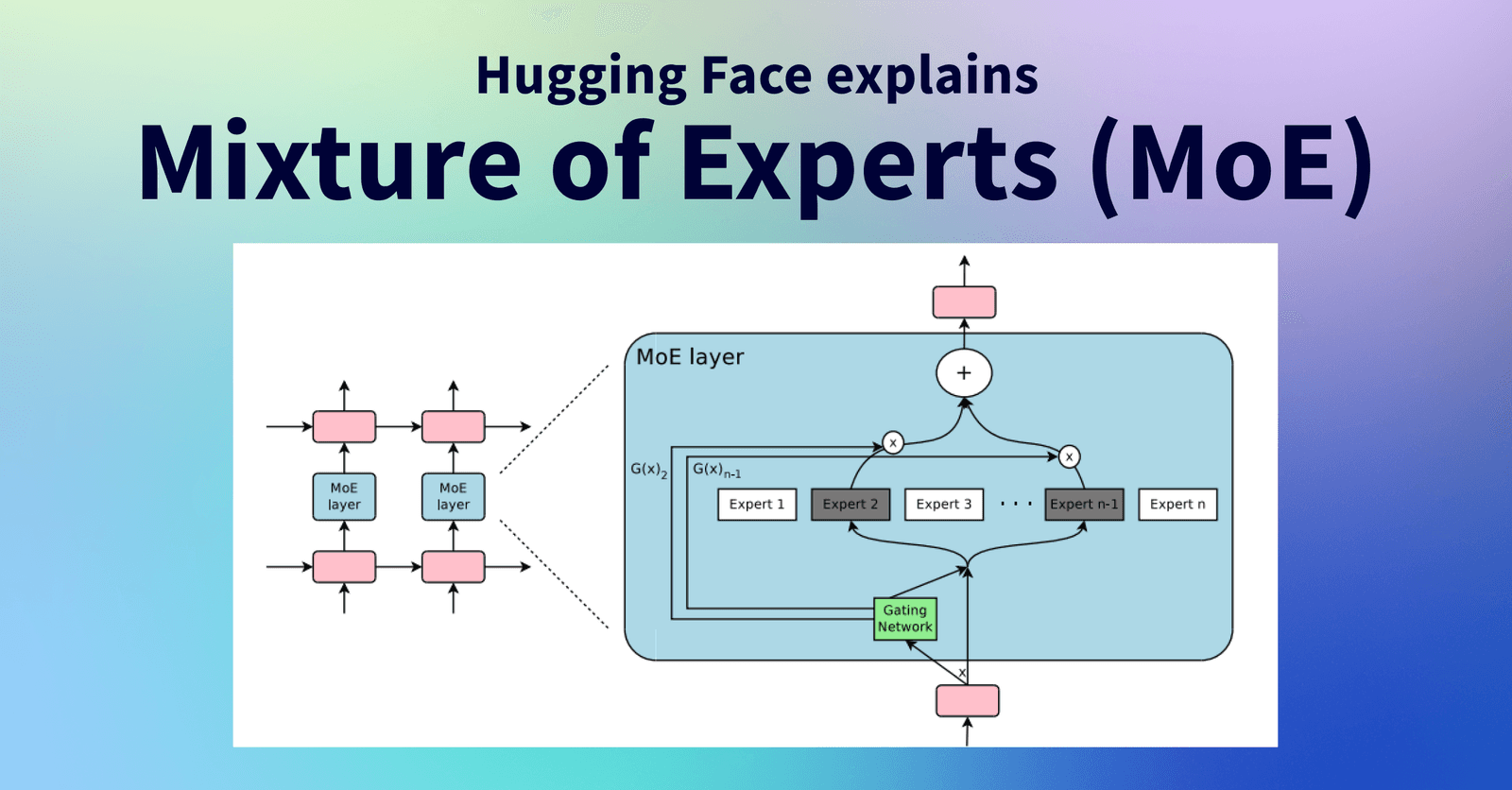
Mixture of Experts: Scaling Models by Activating Specialists
A Mixture of Experts (MoE) model acts like a team of specialists instead of one generalist. A router sends each token to a few expert sub-networks, enabling faster training and inference for massive models.
Model Merging: Combine LLM Skills Without Retraining
Model merging blends specialized LLMs into one, like creating a custom alloy from different metals. It's used to combine a coding expert with a legal expert, for example, without costly retraining.
Amazon Bedrock: One API for Many AI Models
Amazon Bedrock is an API gateway for foundation models, letting you switch AI providers without rewriting code. It's used to build generative AI apps while avoiding vendor lock-in.
MaaS: Renting AI Brains via API
Model-as-a-Service (MaaS) is like renting a pre-trained AI expert via an API. Instead of building and training your own models, you pay to use powerful, ready-made ones for tasks like text generation or image analysis.

The Llama Model Family: Open-Source AI for Production
Think of Llama not as one model, but a family of open-source AIs you can run anywhere. Use it for cost-effective, fine-tuned applications like internal search or when you need full control. The biggest mistake is mis-sizing the model for your task.
The OpenAI API: Access to Foundational AI Models
The OpenAI API provides access to influential models like GPT and DALL-E. It enables developers to integrate generative AI into commercial applications and research, building on technology that catalyzed the current AI boom.
Hugging Face Hub: The GitHub for Machine Learning
Think of the Hugging Face Hub as the GitHub for machine learning. It's a central platform to find, share, and collaborate on millions of models, datasets, and demo apps. Use it to download a pre-trained model or share your own.
AI Auditing: The OWASP LLM Top 10 Checklist
Think of an AI audit like a building inspection for your LLM app, checking for structural weaknesses. It uses frameworks like the OWASP Top 10 to find risks like prompt injection and data leakage.
Bias Mitigation Algorithms: Correcting Unfair AI
Bias mitigation algorithms steer AI toward a defined standard of fairness. They're used in high-stakes systems like hiring or loan approvals to counteract harmful, systemic tendencies learned from biased data.

The EU AI Act: Risk-Based AI Regulation
The EU AI Act isn't a blanket ban but a risk-based framework. It sorts AI into tiers—from unacceptable to minimal risk—and applies rules proportionally, affecting any company with AI users in the EU. The footgun is assuming it only applies to EU companies.

Fairness Metrics: Quantifying AI's Impact on People
Fairness metrics translate "fairness" into a measurable score, checking if a model treats groups equitably. They are crucial for models in hiring or lending.
AI Governance: Rules for Building Intelligent Systems
AI governance creates rules of the road for intelligent systems, ensuring they're safe, fair, and transparent. It applies when governments pass laws or companies form ethics boards. The footgun is treating this as only a legal problem, not a technical one.
Deepfakes: AI-Generated Media Impersonations
Deepfakes are AI-generated media that convincingly impersonate people. Think of it as digital puppetry, where an AI manipulates a face or voice. They're used for film effects and satire, but also for misinformation. The footgun: assuming you can spot one.

Data Bias: When AI Inherits Our Flaws
Generative AI learns patterns from its training data. Data bias occurs when this data contains skewed perspectives or stereotypes, which the model then reproduces and amplifies. This is why an image generator might default to stereotypes.
We are hiring for this. Every open role lists the topics its interview covers, so you can prepare for the real thing rather than guessing.
See open roles