Everything in LLMs & Generative AI, page 11
BERTScore: Judging AI Text on Meaning, Not Just Words
BERTScore evaluates AI-generated text by comparing its meaning to a reference, not just matching words. It's used to score machine translation or summarization where phrasing can vary.
HellaSwag: A Benchmark Designed to Fool LLMs
HellaSwag is a commonsense benchmark designed to fool language models. It asks an AI to pick the most logical sentence ending, but the wrong answers are specifically generated to trick machines, not humans. It's used to test for true contextual understanding.
Inception Score: Judging AI Art for Quality and Variety
Inception Score judges an AI image generator on quality and variety, using a classifier to check if images are distinct and the overall set is diverse. Its main footgun is that it only measures what another AI can classify, not what a human finds appealing.

Human Evaluation: Judging AI When Metrics Aren't Enough
Human evaluation is the ultimate reality check for AI, using people to judge qualities like fluency and coherence that automated scores can't capture. It's essential for tasks like summarization but is too slow and costly to use for everything.
Text-to-Video Generation: From Prompt to Picture Show
Text-to-video models are like a film director in a box, turning written descriptions into moving pictures. This tech, powered by video diffusion models, is used for creating short-form content or prototyping visual ideas from a simple text prompt.
Flamingo: Few-Shot Learning for Vision-Language Models
Flamingo is a vision-language model that learns new visual tasks from a few examples, like a child seeing a picture book before the zoo. It can tackle multiple tasks without needing massive, task-specific datasets.
BLIP: Bootstrapping Better Vision-Language Models
BLIP is a pre-training framework that masters both image understanding and generation by creating its own training data. It uses a captioner and filter to generate clean image-text pairs from noisy web data.
Text-to-Speech (TTS): Turning Text into Spoken Audio
Text-to-Speech (TTS) systems are digital voice actors, converting written language into artificial human speech. They are the core of any system that needs to speak text aloud.
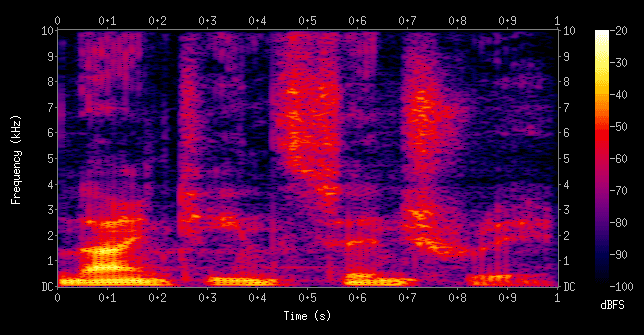
Audio Spectrograms: Turning Sound into Images for AI
A spectrogram turns sound into an image, plotting frequency against time, with color showing intensity. This lets vision-based AI models "see" audio for tasks like speech recognition or music generation. The footgun is mistaking it for a simple waveform.
Large Multimodal Models (LMMs): Beyond Text
An LMM is like a large language model that can also see and hear. It processes and connects information from multiple sources—like text, images, and audio—to perform tasks like describing a picture or answering questions about a video.
Multimodal Fusion: Combining Senses for AI
Multimodal fusion lets an AI combine data types like text, images, and audio into one understanding, much like a human brain. It's key for visual question answering or analyzing video sentiment.
Joint Embedding Space: A Rosetta Stone for AI
A joint embedding space acts like a Rosetta Stone, mapping different data types—like images and text—to a shared coordinate system where similar concepts are close together. This powers text-to-image models and cross-modal search.
Speech-to-Text (ASR): Turning Spoken Words into Data
Speech-to-Text (ASR) is a digital stenographer, turning spoken language into machine-readable text. It's the engine behind voice assistants, automated call routing, and video captioning.
Multimodal Models: Beyond Just Text
A multimodal model understands the world by connecting different data types, like images and text, instead of just one. It's how AI generates images from descriptions or answers questions about a photo. The footgun is assuming more data types always helps.
Latent Diffusion Models (LDM)
Latent diffusion models denoise in a compressed latent space instead of raw pixels. A pretrained autoencoder shrinks the image first and expands it back after, cutting compute enough to make text to image generation practical on consumer hardware.
Fréchet Inception Distance (FID): Grading AI Art
FID grades AI-generated images by comparing their statistical "vibe" to real ones. It uses a pre-trained network (InceptionV3) to see if a batch of generated images has similar feature distributions to a real dataset. A lower score is better.
Mode Collapse: When Your AI Gets Stuck in a Rut
Mode collapse is when a generative AI finds a “cheat” and produces the same few outputs over and over. This is a classic failure in GANs where the generator stops learning the full data distribution.

Text-to-Image Synthesis: From Prompt to Picture
Text-to-image models translate words into pixels by learning statistical links between text and images. They power creative tools like DALL-E but don't truly understand prompts, leading to errors in logic like counting or spatial arrangement.
Generative Inpainting: Filling in the Blanks with AI
Generative inpainting is like Photoshop's 'Content-Aware Fill' on steroids. It uses AI to reconstruct missing or unwanted parts of an image, perfect for removing objects or repairing old photos.

Hierarchical AI Agents: The Org Chart for AI
Think of a corporate org chart for AI. A top-level agent breaks a big goal into smaller tasks and delegates them to specialized, lower-level agents. This is used for complex problems like automating software development. The main risk is coordination overhead.
We are hiring for this. Every open role lists the topics its interview covers, so you can prepare for the real thing rather than guessing.
See open roles