Advanced concepts in Product Management, page 3
PR/FAQ: Write the Press Release Before You Build
A PR/FAQ forces you to write the launch press release before writing any code, ensuring you build something customers want. It vets ideas by starting with the customer benefit and working backwards.
Data Governance: Corporate Management vs. Global Policy
Data governance operates at two scales: managing data within a company and setting data policy between nations. It applies to corporate data management and international internet governance.

Visiontype: Prototyping Your 3-5 Year Product Future
A visiontype is an interactive prototype of your product's 3-5 year future, making abstract goals tangible. It aligns teams on a long-term direction, breaking the cycle of purely incremental updates. The biggest mistake is creating it in a silo.
Master Data Management (MDM): The Single Source of Truth
Master Data Management (MDM) creates a single source of truth for core business entities. It's used when departments have conflicting data (e.g., 'ACME Inc.' vs 'Acme Corp').
Data Stewardship: The Librarian for Your Data
A data steward is the designated owner of a data asset, responsible for its quality and business value, not just its storage. This role is crucial where data is shared across teams, ensuring consistency.
Data Masking: Protect Data, Preserve Utility
Data masking creates a realistic but fake version of your data by scrambling sensitive fields. It's used to give developers and analysts safe datasets for testing or analytics without exposing real PII.
Programmatic Advertising: A Stock Exchange for Ads
Think of programmatic advertising as a stock exchange for ad impressions. It automates buying ad space via real-time auctions, letting you target specific users across the web. The main footgun is paying for fraudulent bot traffic or appearing on unsafe sites.
Demand-Side Platform (DSP): Your Ad-Buying Robot
A DSP is an automated bidding system for advertisers, like a stock trading bot but for ad space. It lets them buy impressions across many publisher sites from one interface, targeting users in real-time auctions.

The Boy Scout Rule: Leave Code Cleaner Than You Found It
The Boy Scout Rule applies a simple principle to code: always leave it a little cleaner than you found it. When fixing a bug, make a small improvement like renaming a variable.
Lookalike Audiences: Find More of Your Best Customers
Lookalike audiences find new customers by algorithmically modeling your best existing ones. Ad platforms like Facebook use your "seed" list of high-value users to find a much larger group of statistically similar people to target with ads.
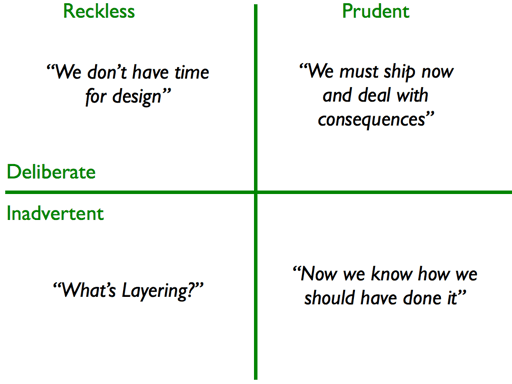
The Technical Debt Quadrant
The Technical Debt Quadrant reframes debt not as one problem, but a 2x2 matrix: prudent vs. reckless and deliberate vs. inadvertent. This distinguishes a strategic choice to ship early from a simple mess. The footgun is treating all debt as equally bad.
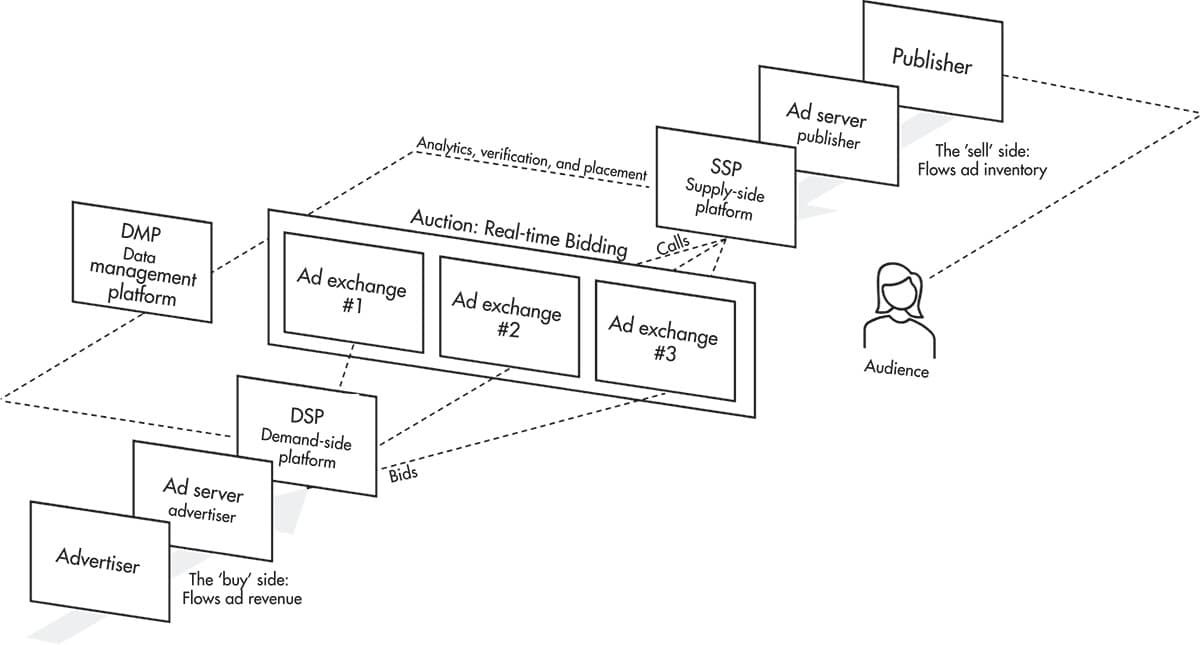
Real-Time Bidding (RTB): An Instant Auction for Every Ad
RTB treats every ad slot like a stock trade. The moment a page loads, an auction runs in milliseconds for advertisers to bid on showing their ad to you. It's how hyper-targeted ads appear instantly across different websites.
Mob Programming: The Whole Team on One Computer
Mob programming is like pair programming for the whole team: everyone works on one task, on one computer, at the same time. It's used for complex problems or onboarding. The footgun is letting it become a passive meeting instead of an active collaboration.

Unit Economics: Is Each Customer Profitable?
Unit economics asks if you make or lose money on a single customer or sale. It's used in SaaS to compare customer lifetime value (LTV) to acquisition cost (CAC). The footgun is defining the 'unit' poorly, hiding that each new customer costs you money.
Benchmarking: Know Where You Stand in Your Industry
Benchmarking answers "Are we good?" by comparing your performance metrics against industry bests. It's used to set realistic goals for cost, quality, or time. The main footgun is comparing apples to oranges—using benchmarks from dissimilar companies.
LTV to CAC Ratio: Is Your Growth Profitable?
The LTV to CAC ratio measures if you make more money from a customer than you spent to get them. It's the core health metric for a subscription business, used to judge marketing efficiency. A ratio above 3:1 is often healthy.
Exception Reporting: Focus on Signals, Not Noise
Exception reporting filters out the noise, showing only data that breaks predefined rules. It's used in financial reconciliation to flag mismatched transactions or to alert on system performance dips.

Van Westendorp Price Sensitivity Meter
The Van Westendorp Price Sensitivity Meter is a market research technique for determining consumer price preferences. It's used to help set product prices by surveying potential buyers about their perceived value and willingness to pay.
Contextual Onboarding: Just-in-Time User Guidance
Contextual onboarding delivers guidance exactly when a user needs it, triggered by their actions. It introduces core features step-by-step as users explore, preventing overwhelm.
The Semantic Layer: A Business Map for Company Data
A semantic layer is a translation dictionary for data, mapping cryptic database columns to plain business terms like "Revenue." It lets non-technical teams build reports without writing SQL.
We are hiring for this. Every open role lists the topics its interview covers, so you can prepare for the real thing rather than guessing.
See open roles