Intermediate concepts in Product Management, page 8
Product Line Strategy: Selling a Family of Products
A product line strategy sells a family of related products individually, not as a bundle. It's used to capture different market segments, like offering 'good, better, best' software tiers or car trims.

Portfolio Roadmap: The Strategy Across Your Products
A portfolio roadmap is the top-line strategy for a group of related products, ensuring they all pull in the same direction. Use it to align multiple product lines with business objectives.
GE-McKinsey Nine-Box Matrix: Portfolio Strategy Beyond the 2x2
The GE-McKinsey matrix plots business units on a 3x3 grid to guide 'invest, hold, or divest' decisions. It's used to prioritize investments by weighing multiple factors for market attractiveness and business strength, not just market share and growth.

Feature Management: Control Releases After You Deploy
A feature management platform decouples code deploys from feature releases. It centralizes control over who sees what, turning simple code toggles into a powerful system for canary releases, A/B tests, and targeted rollouts, all from a UI.
The Counterfactual Framework for Causal Inference
The Counterfactual Framework models causality by imagining two parallel universes for each person: one with a treatment, one without. It's the basis for A/B tests and analyzing observational data.

Customer Journey Mapping: Walk in Your Customer's Shoes
A customer journey map is a storyboard of a user's experience, showing every interaction from their perspective. Use it to find pain points in a signup flow or support process. The biggest footgun is mapping an ideal path, not the messy reality.
Brand Architecture: Your Company's Brand Family Tree
Brand architecture is a family tree for a company's products, organizing how the main corporate brand relates to its sub-brands. It dictates whether a new product gets the parent's name or a standalone identity, maximizing value across the portfolio.

Server-Side Experimentation: Testing Your Backend Logic
Server-side experimentation renders A/B test variations on the server before sending the page. Use it for testing deep backend logic like search algorithms or to avoid the visual 'flicker' of client-side tests. The footgun: it requires developer cycles.
Average Treatment Effect (ATE): Isolating the Impact of a Change
The Average Treatment Effect (ATE) isolates an intervention's true impact by comparing the average outcome of a treated group to a control group. It's used in A/B tests and policy evaluations. The footgun is assuming causation without true randomization.
Jobs to be Done: Sell the Hole, Not the Drill
Jobs to be Done (JTBD) says people don't buy a drill, they buy a hole. It focuses on the customer's underlying goal, not your product. This helps uncover new opportunities, but the footgun is defining the job too narrowly, limiting innovation to your current…

The Novelty Effect: When New Isn't Always Better
The Novelty Effect is a temporary metric spike from a feature's newness, not its inherent value. It often appears in A/B tests for high-frequency products, inflating short-term metrics. The footgun is mistaking this initial excitement for a long-term win.

Design Sprint: From Idea to Prototype in 5 Days
A Design Sprint fast-forwards you to see customer reactions without building a real product. In one week, your team goes from a big question to a realistic prototype and user feedback.
Sample Ratio Mismatch (SRM): When Your A/B Test Is Broken
Sample Ratio Mismatch (SRM) means your A/B test's traffic split is broken, violating random assignment. For example, a 50/50 split results in a statistically significant imbalance.
OKRs: Set Direction, Not Tasks
OKRs connect ambitious vision (Objectives) to measurable progress (Key Results). Used by companies to align quarterly efforts on high-level goals, not just a feature list.
The Independent Growth Team Model
An independent growth team is a startup-within-a-company, given autonomy to run experiments across the funnel. Use it to break silos and accelerate learning. The main footgun is isolation, creating a rogue unit whose wins are difficult to integrate.
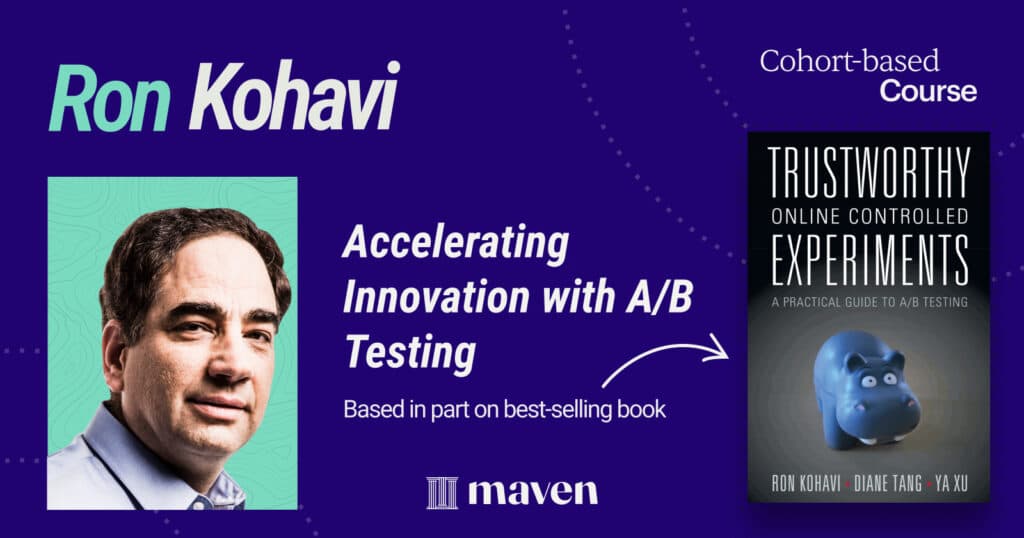
Experiment Knowledge Base: Don't Repeat Failed Tests
An Experiment Knowledge Base is your company's collective memory for A/B tests, centralizing hypotheses, results, and learnings. It prevents re-running old tests and surfaces past insights.
API-as-a-Product: Your API Is Your Business
Treat your API as a core product with developers as your customers, not just a technical integration. This mindset is crucial when exposing data to partners or building a developer ecosystem, like Stripe or Twilio do.
OKRs: Frame Growth Goals as Measurable Outcomes
OKRs separate your ambitious goal (Objective) from the measurable results that prove you're there (Key Results). Growth teams use this to align on what success looks like.
Open vs. Closed Platforms: Walled Garden or Public Park?
An open platform is a public park, inviting others to build on it; a closed one is a walled garden with total control. This choice defines growth: via a third-party ecosystem (Android) or tight integration (Apple).
SDKs: A Strategy to Make Your Platform the Default
An SDK is a strategic tool to drive adoption. By bundling compilers and frameworks, you make it easy for developers to build for your platform or integrate your service, making your ecosystem the path of least resistance.
We are hiring for this. Every open role lists the topics its interview covers, so you can prepare for the real thing rather than guessing.
See open roles