Concepts in Product Management, page 26
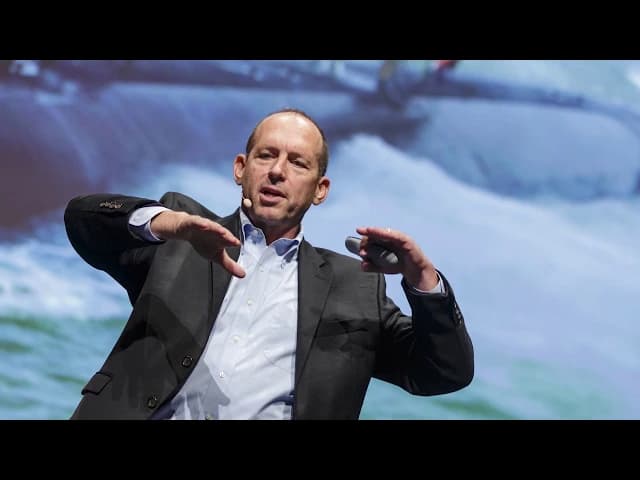
Intent-Based Leadership: State the Goal, Not the Steps
Instead of giving orders, leaders declare their intent, empowering teams to figure out the 'how.' It's used in agile teams or military units where frontline context is key. The footgun is giving control without clarity, which leads to chaos instead of results.
Three Horizons: Core, Growth, Future
Three Horizons splits energy across core defense, scaling winners, future bets at once. Use it when your roadmap is only incremental tweaks with no long-term bets. The footgun is seeing horizons as sequential stages, not parallel portfolios needing fuel today.
Commitment and Consistency: The Identity Ratchet
People follow through on what they already said yes to. Use it to turn a tiny user action into sustained engagement, or to get a team to ship by making a public deadline. A coerced yes creates resentment, not consistency.
dbt: Managing Data Transformations as Code
dbt treats your data transformations as a software project, letting you build, test, and version control your SQL. It's the 'T' in the modern ELT paradigm. Use it to create reliable data models in a warehouse. The footgun: dbt only transforms data.
Intent-Based Leadership: The Leader-Leader Model
Instead of waiting for orders, teams declare their intent to act. This leader-leader model, born on a nuclear sub, shifts the default from 'ask permission' to 'act unless vetoed,' empowering distributed decision-making.
The Platform Chicken-and-Egg Trap
A platform is worthless until both sides show up, yet neither arrives first without the other. Marketplaces and payment networks face this coordination trap. Growing both sides at once starves the platform because neither reaches critical mass.
Framing Effect: Presentation Rewires Decisions
The same fact hits differently depending on its wrapper. In growth, framing decides whether users see "90% uptime" or "10% downtime," swinging conversions without changing the product. Teams obsess over the offer yet ship copy that frames value as a loss.
Looker: Google's Data Analytics Platform
Looker is Google Cloud's data analytics platform that creates a single source of truth for metrics. It uses a modeling language, LookML, to define business logic on top of your database.
Humble Inquiry: Ask Questions You Can't Answer
Humble Inquiry means asking questions you don't know the answer to, building trust by showing genuine curiosity. Use it in 1-on-1s or retrospectives to uncover hidden assumptions. The footgun is asking a leading question disguised as an open one.
Minto Pyramid Principle: Answer First
Start with the answer, then stack the proof beneath it. Use it when executives will cut you off if you don't reach the point in 30 seconds. The footgun is messy buckets: overlapping supporting arguments collapse the pyramid and make correct answers look…
Bayesian vs. Frequentist A/B Testing
Frequentist testing asks how surprising a result is if nothing changed; Bayesian asks probability B is better. Frequentist fixes sample size to control false positives, while Bayesian lets you peek.
Segment: The Universal Translator for Customer Data
Segment is a universal translator for customer data. Track an event once in your app, and Segment forwards it to all your marketing and analytics tools, saving you from building dozens of separate integrations.
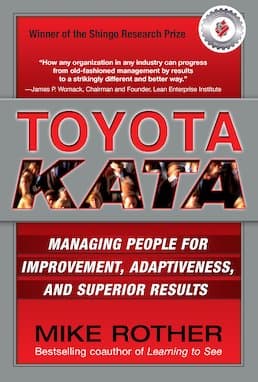
Toyota Kata: The Practice Routine for Continuous Improvement
Think of Toyota Kata as a daily workout for your team's problem-solving muscles. It provides a structured routine to move from a current condition to a target condition via rapid, small experiments.
Golden Path: The One Journey That Matters
Golden Path is the single user journey that drives core value. In growth, you optimize this highway before fixing side roads. The footgun is A/B testing edge cases while your main funnel leaks users.
Apache Kafka: A Distributed Log for Data Streams
Think of Kafka as a durable, append-only log for events, not just a temporary message queue. It excels at handling high-throughput, real-time data feeds for analytics or log aggregation. The footgun is treating it like a simple broker, leading to data loss.
Obeya: The Project 'War Room'
Think of an Obeya as a project's 'war room,' a space for visualizing work to make fast, informed decisions. It's used in lean and agile settings to align teams on strategy and surface problems. The footgun is treating it as a status meeting room, not.
Resurrection Campaign
A resurrection campaign is a targeted effort to win back dormant or churned users by re-engaging them with relevant value, often via email or push. It matters because reactivating known users is usually cheaper than acquiring new ones.
Snowplow: A Private Pipeline for Event Data
Think of Snowplow not as an analytics tool, but as a private pipeline you own for creating high-quality event data. It collects raw events, validates them against schemas, and loads them into your warehouse. The footgun is expecting turnkey dashboards.
Hoshin Kanri: A Company's Strategic Compass
Hoshin Kanri, or "compass management," is a strategic planning process for aligning an entire company. It ensures high-level goals are effectively communicated throughout the organization and translated into concrete action at every level.
Revenue Churn: Dollars Lost, Not Logos
Revenue churn tracks dollars lost from your existing base, not just headcount. In subscriptions, one enterprise downgrade can dwarf ten small cancellations. Teams often celebrate low logo churn while ignoring revenue churn that silently erodes growth.
We are hiring for this. Every open role lists the topics its interview covers, so you can prepare for the real thing rather than guessing.
See open roles