Intermediate interview questions in Product Management, page 13
Stationarity in time series and why ARIMA needs it
Constant mean/variance/autocovariance; ARIMA's coefficients assume them; test with the ADF test and ACF plots; achieve it via differencing or log transforms.
Decide between cutting a feature versus taking technical debt for a deadline
Quantify business risk of both paths, secure buy-in, and lock a time-boxed post-launch remediation plan.
Explain time series stationarity and how to achieve it
Tests your grasp of core time series assumptions. Define stationarity (constant mean/variance over time), explain why models need it for stable predictions, and name methods to test and achieve it. A red flag is just saying the data looks 'flat'.
Explain stationarity in a time series
This tests your grasp of core time series modeling assumptions. A strong answer defines stationarity (constant mean/variance), explains its importance for ARIMA (stable patterns), and names a test (ADF) and a fix (differencing).

Use Cost of Delay to decide which project to start first
Tests if you quantify economic burn rate of sequencing, not raw ROI. Calculate CoD by dividing monthly value by duration: Project B is $5k/mo, Project A is $2.5k/mo, so start B first. Red flag: static NPV or "quick win" logic without computing delay cost.
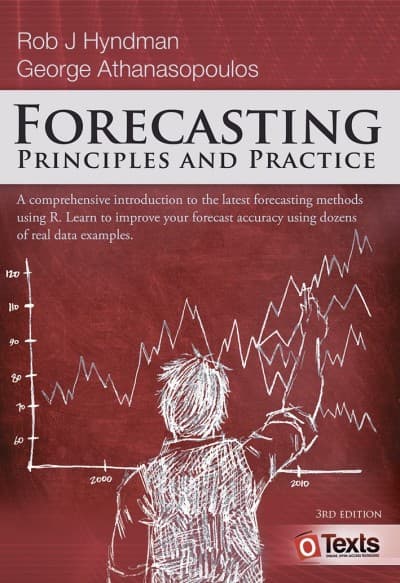
Random split vs walk-forward validation in forecasting
Random splits leak future data into training; walk-forward validation rolls the origin ahead, testing only on later observations.

How would you implement Classes of Service in Kanban?
Tests whether you segment work by risk and cost of delay. A strong answer defines explicit policies, visualizes classes with color or lanes, and reserves WIP capacity per class. Red flag: using classes as simple priorities without capacity rules.
Train-Test Split vs. Time-Series Cross-Validation
This tests your grasp of data leakage in temporal data. A good answer explains why random splits create lookahead bias, then details how rolling-origin validation respects time. A red flag is just describing methods without explaining *why* one is necessary.
How would you implement Classes of Service in Kanban?
This tests your understanding of risk management and differentiated service delivery. A good answer defines the 4 classes (Expedite, Fixed Date, Standard, Intangible), explains their different pull policies, and gives a risk-based example.
Train-test split vs. time-series cross-validation?
Tests if you see why temporal data breaks random splits. Contrast random sampling with sequential 'walk-forward' validation, where you only use past data to predict the future.
How would you implement Classes of Service in Kanban?
Tests your grasp of risk management and flow optimization in Kanban. A good answer defines classes (Expedite, Fixed Date), explains implementation via swimlanes and WIP limits, and gives an example showing trade-offs.
Which classical baseline model handles weekly seasonality and upward trend?
Tests matching model structure to data characteristics. Name Holt-Winters triple exponential smoothing; map its level, trend, and seasonal equations to weekly period. Red flag: jumping to SARIMA without explaining why ETS is the natural baseline.
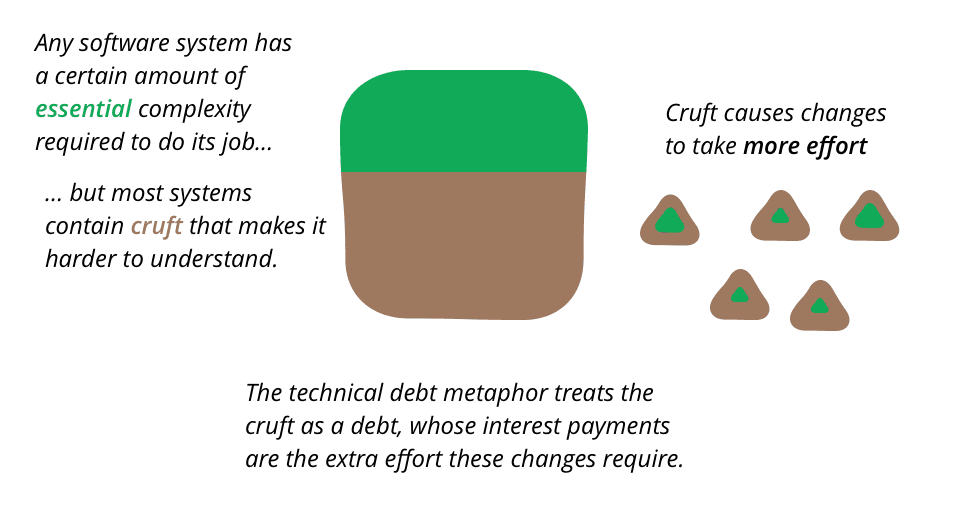
How do you justify API refactoring over new features to stakeholders?
Tests turning technical drag into business cost. Frame cruft as interest on velocity; quantify incident cost, MTTR, and lead time; advocate incremental cleanup with product work. Avoid demanding a six-month rewrite without product tie-in.

Design referral tracking from invite to conversion
Tests data modeling for multi-stage conversion tracking. Strong answers separate codes from conversion events, model status transitions, and enforce unique constraints. Weak answers merge invite and reward into one table or store denormalized counts on users.
Which model for forecasting with seasonality and trend?
This tests your knowledge of classical time series models. A good answer names Holt-Winters, explaining its level, trend, and seasonal components. It also discusses choosing between additive and multiplicative methods. A red flag is jumping to complex models.
Forecasting inventory with trend and weekly seasonality?
This tests mapping a business problem to a statistical tool. A good answer names Holt-Winters, explains its level, trend, and seasonal components, and discusses additive vs. multiplicative seasonality.

How would you enforce a 3-project freemium limit and handle upgrades?
Tests entitlement and growth tradeoffs. Strong answers use API-level enforcement, atomic checks to prevent concurrent overages, soft upsell prompts preserving context, and async billing webhooks. Red flag: UI checks or limits in the projects table.
Sprint velocity is highly variable. What technical root causes do you check?
Check scope stability via carryover, flow via cycle time, quality via rework, and estimation via point variance.

How do you technically implement an A/B test for onboarding flows?
Tests experiment pipeline design: deterministic user bucketing, an exposure event before rendering, and an event schema linking actions to variant_id. Red flag: re-randomizing per session or skipping exposure logs.

Walk me through a magic link login system and its security considerations
Tests auth architecture and threat modeling for passwordless flows. Strong answers map request-token-email-verify-session, then harden with short expiry, single-use tokens, rate limits, and device binding.
We are hiring for this. Every open role lists the topics its interview covers, so you can prepare for the real thing rather than guessing.
See open roles