Interview questions in Product Management, page 33

What technical metrics monitor third-party developer ecosystem health?
Tests your ability to define product-level platform metrics beyond infrastructure health. Great answers include time-to-first-call, API funnel conversion, SDK error rates by version, and community contribution velocity.
How would you adapt a growth model for network effects and k-factor?
Define K as invites x conversion; K over 1.0 explodes, yet K over 0.7 with fast cycle time still compounds; anchor at peak delight.
How do you optimize a data warehouse for billions of rows?
Tests physical design in columnar warehouses at scale. Strong answers cover partition and cluster pruning, materialized views or rollups to reduce joins, caching and search indexes for hot paths, and reserved slots or autoscaling.
How should an EM facilitate reviews in a self-organizing team?
Tests separating feedback from pay, replacing individual ratings with systemic coaching. Cover: framing reviews as career development, biweekly 1:1s for meta-coaching, team raise pools, and obstacle removal. Red flag: stack ranking or hero worship.
Optimizing a Slow, Expensive Data Warehouse for BI Dashboards
Tests your grasp of data warehouse architecture beyond basic SQL. A great answer covers partitioning/clustering, materialized views for pre-aggregation, and cost controls. A red flag is suggesting only query rewrites or just 'adding more compute'.
How do you manage performance in a self-organizing team?
This tests your ability to shift from individual performance management to fostering team-based career development. A great answer reframes the goal, uses frequent 1-on-1s for coaching, and decouples raises from feedback.
How would you optimize a slow, expensive data warehouse?
Tests your diagnostic approach to performance issues. A good answer first analyzes query patterns, then applies partitioning by date, clustering by high-cardinality keys, and materialized views for aggregations.
How to manage performance reviews in self-organizing agile teams?
This tests your servant leadership mindset. Reframe "performance management" as "career development," use frequent 1-on-1s for coaching and obstacle removal, and separate compensation from feedback. Red flag: focusing on individual metrics or stack ranking.
Roll out a breaking change to a core public API
This tests risk management while evolving a public API contract. A strong answer covers versioning, phased deprecation with SLAs, migration tooling, and proactive communication. Red flag: proposing a hard cutover without sunset or migration support.
Describe a strategy for reconciling different forecasts into one robust prediction
Tests synthesis of heterogeneous models into a consensus forecast. Strong answers diagnose divergence drivers first, then weight by track record or uncertainty, and output a distribution. Red flag: blind averaging without understanding why models disagree.
Design a near real-time pipeline to monitor orders per minute
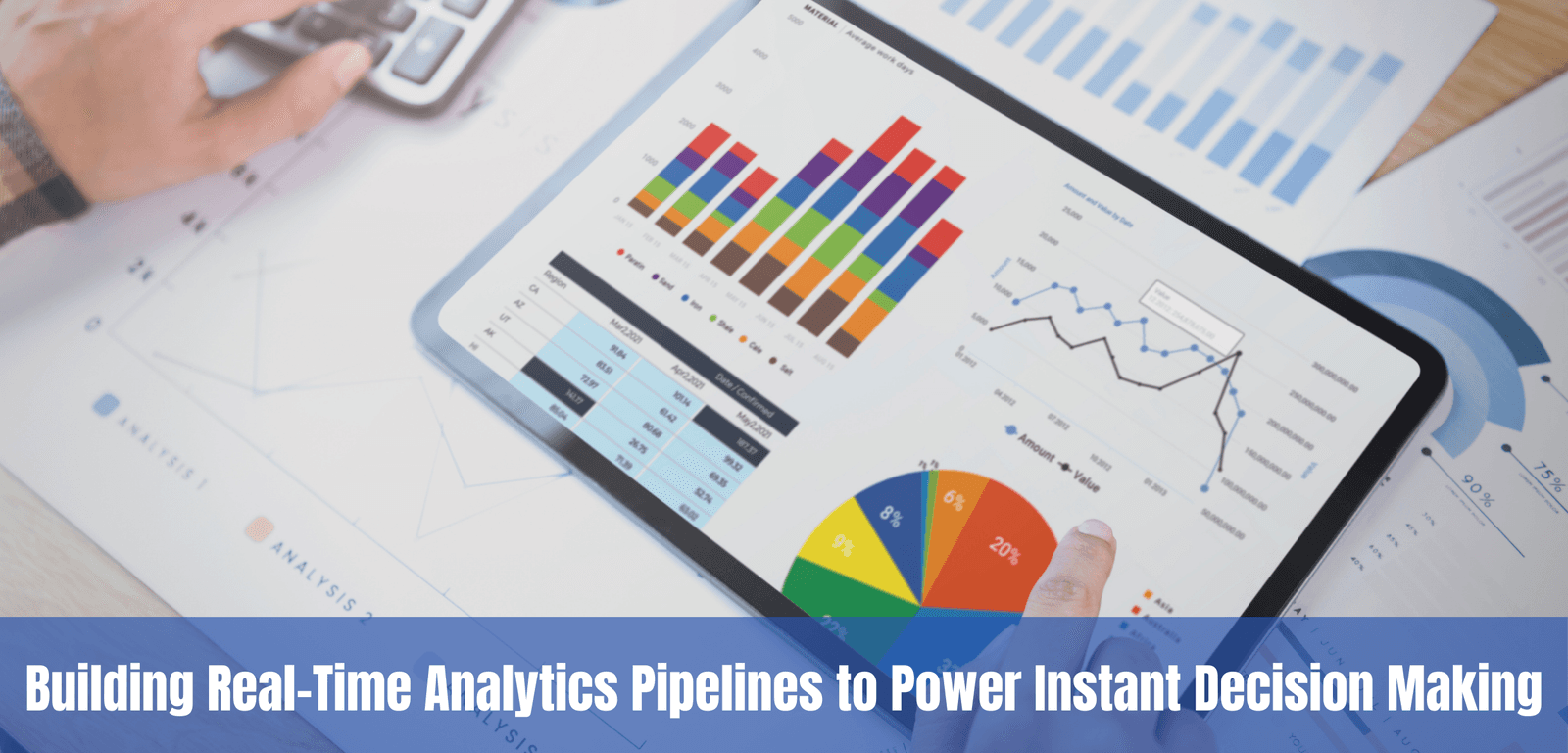
Tests stream architecture and batch trade-offs. Outline: Kafka or Kinesis ingestion, Flink with tumbling windows, Druid or Pinot storage, Grafana alerts. Contrast batch on latency, exactly-once semantics, and cost. Red flag: calling cron SQL real-time.
Describe the difference between feature and component teams
Tests your grasp of how team structure affects value flow. A strong answer contrasts vertical slices with component ownership, noting feature teams shorten feedback while component teams create handoffs. Red flag: treating either as universally better.
Design a Near Real-Time Analytics Pipeline
Tests your ability to design a low-latency data system and articulate trade-offs. A good answer covers ingestion (Kafka), processing (Flink), storage (Druid), and visualization (Grafana), contrasting the architecture's low latency with a batch setup.
Feature teams vs. component teams: pros and cons?
Tests your grasp of how team structure impacts value delivery. Define feature (vertical slice) and component (horizontal) teams. Contrast speed vs. reusability. Red flag: Calling one 'good' and the other 'bad' without discussing trade-offs.
Design a near real-time analytics pipeline for a critical metric
This tests your grasp of stream processing trade-offs (latency, cost, correctness). Outline a 4-stage pipeline (ingest, process, store, visualize) with specific tech choices, contrasting its low-latency, high-cost nature with batch.
Feature Teams vs. Component Teams: Pros and Cons
This tests your grasp of how team structure affects value delivery. A great answer defines feature (vertical slice, end-to-end) and component (horizontal, specialized) teams, then contrasts their trade-offs: speed vs. deep expertise.
Trace an event from click to analysis
Client SDK captures and batches, a collection endpoint ingests, a stream and ETL enrich and load into a warehouse for analysis.

Compare webhooks to sandboxed plugins for monolith extensibility
Tests distributed vs in-process extensibility. Webhooks are async, loosely coupled, and isolated but add network latency. Sandboxed plugins run in-process for low-latency UI depth yet need strict host API permissions and lifecycle gating.

Describe client-side events and properties to track Export to CSV usage
This tests telemetry design for async actions. A strong answer defines three custom events—click, success, failure—with properties like location, file_size, error_code, and user_id, fired at the right lifecycle moments.

Compare SAFe and LeSS from an engineer's view
Tests whether you see scaling frameworks as workflow design choices. Answers contrast SAFe's PI planning and RTE-managed dependencies with LeSS's single Sprint planning and team-driven resolution. Red flag: calling them interchangeable without citing autonomy.
We are hiring for this. Every open role lists the topics its interview covers, so you can prepare for the real thing rather than guessing.
See open roles