Intermediate everything in Product Management, page 22
Explain backlog refinement: purpose, participants, and outcomes
Tests your grasp of continuous planning for predictability. A good answer defines the purpose (clarify, estimate, prioritize), participants (whole team + PO), and outcomes (a 'Ready' backlog). A red flag is describing it as a one-off pre-sprint meeting.

How do you resolve a heated technical debate between two developers?
Tests your ability to facilitate conflict, moving a team from argument to a structured decision. A great answer involves de-escalating, using a technique like conflict mapping to understand the core issue, and guiding the team to a resolution.
Why is team velocity a poor KPI for agile success?
Tests your grasp of agile principles and Goodhart's Law. Explain velocity is for forecasting, not performance. Detail dysfunctions like point inflation and ignoring quality. Propose outcome-focused alternatives like cycle time.

SAFe vs. LeSS: Planning, Dependencies, and Autonomy
Tests your grasp of the trade-offs between coordination and autonomy in scaling frameworks. A good answer contrasts SAFe's top-down PI Planning with LeSS's bottom-up, team-focused approach.

Estimating Cross-Team Initiatives in PI Planning
This tests your ability to lead multi-team estimation. A good answer covers decomposing work, bottom-up team estimates, mapping dependencies, and synthesizing a risk-assessed plan. A red flag is a single top-down estimate that ignores team capacity.
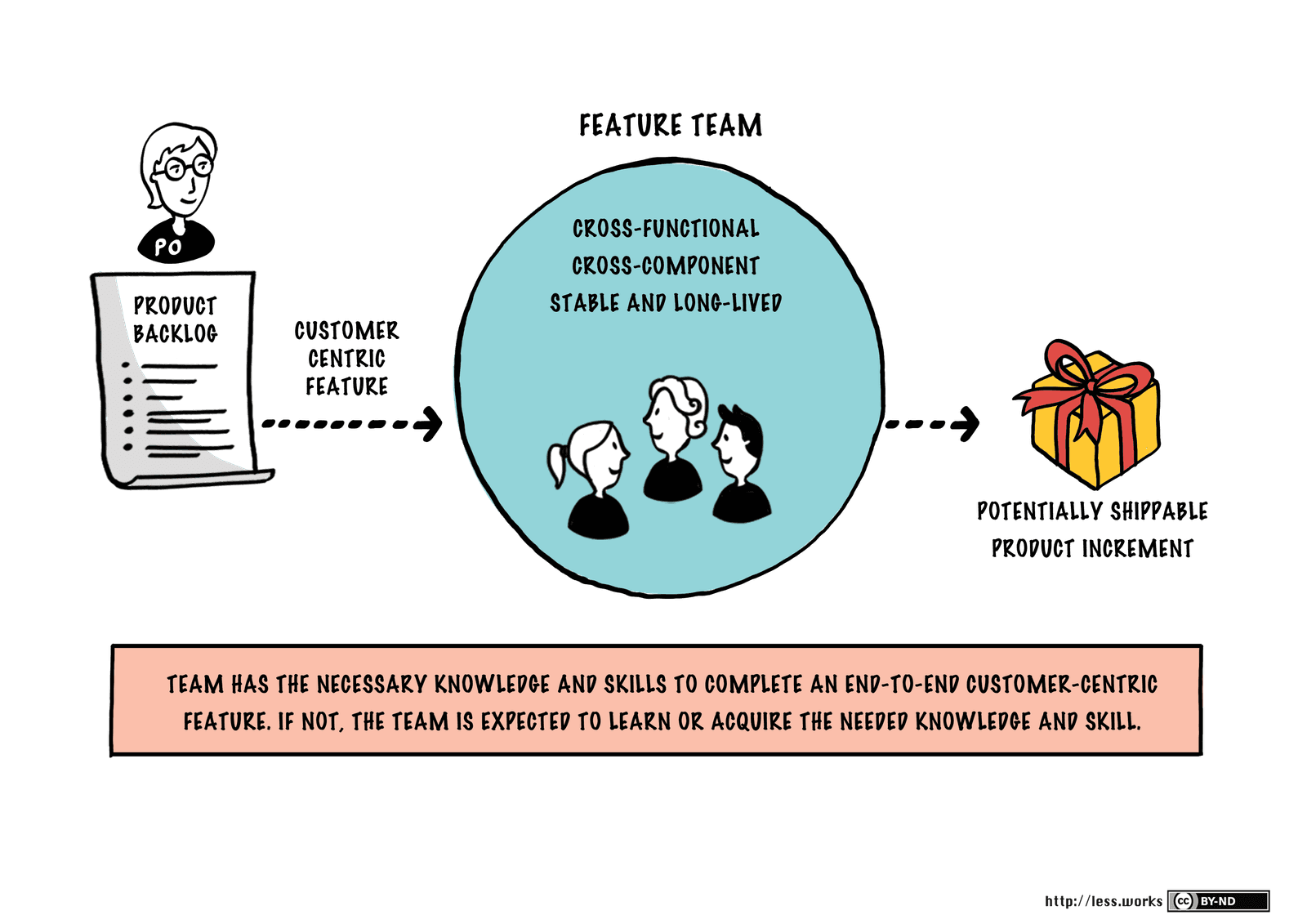
Technical Prerequisites for LeSS Feature Teams
Tests if you can link agile structure to technical architecture. A great answer covers codebase design for shared ownership, a fast CI pipeline for frequent integration, and a robust automated testing strategy.
What is the purpose of a shared 'Definition of Done'?
Tests your ability to ensure quality and transparency across multiple teams. A shared 'Definition of Done' is a formal description of quality for the integrated Increment. It ensures all work is combinable and shippable.
Diagnosing a Widening Code Review Band in a CFD
This tests data interpretation and problem-solving. A great answer defines the bottleneck, hypothesizes causes (capacity, PR size), proposes diagnostics, then offers solutions. A red flag is blaming individuals or jumping to a single, unverified solution.
Investigating Variable Sprint Velocity: Technical Root Causes
This tests your ability to diagnose team issues with data, not anecdotes. Propose technical hypotheses like flaky tests or merge conflicts and link them to metrics like CI/CD failure rates or PR cycle time. A red flag is blaming individuals or poor estimation.

How would you implement Classes of Service in Kanban?
This tests your understanding of risk management and differentiated service delivery. A good answer defines the 4 classes (Expedite, Fixed Date, Standard, Intangible), explains their different pull policies, and gives a risk-based example.

How would you measure the success and impact of a new feature?
This tests your ability to connect engineering work to business value. A strong answer defines success metrics upfront, instruments code for quantitative data like adoption rates, and gathers qualitative feedback.
How do you adapt when user feedback invalidates your current sprint?
This tests your ability to connect process to technical strategy under pressure. A great answer involves immediately notifying the Product Owner, quantifying the impact, and proposing technical pivots like feature flagging.

MVP vs. Throwaway Prototype: Technical Differences
This tests your understanding of Minimum Viable Architecture (MVA). Differentiate by intent: a prototype is a throwaway concept test, while an MVP is a sustainable first version built on an MVA. A red flag is describing a sacrificial architecture for an MVP.
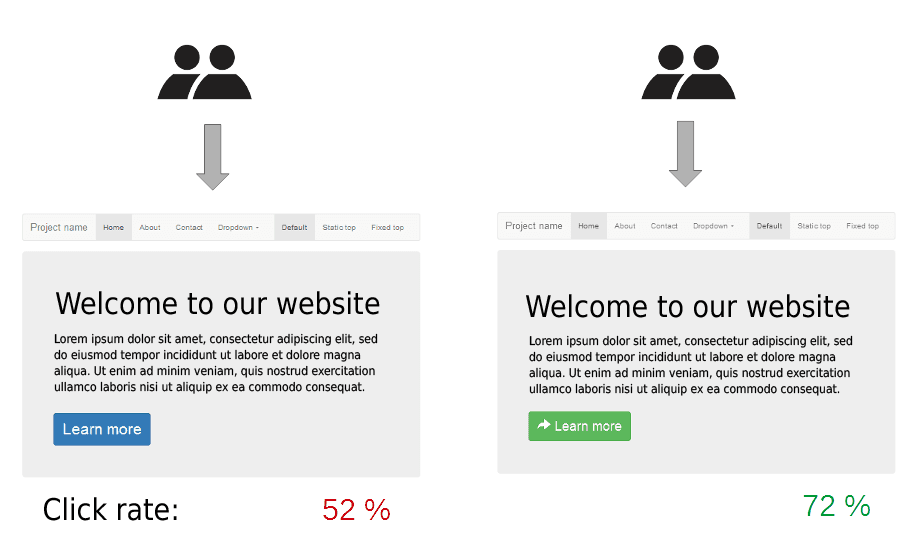
How would you A/B test a redesigned dashboard?
Tests translating a vague goal ('more engagement') into a concrete engineering plan. A good answer defines key metrics first, then outlines user bucketing, instrumentation, and statistical analysis.

What is the Strangler Fig pattern?
Tests your understanding of gradual legacy system modernization. A good answer defines the pattern (new system grows around old), outlines the steps (identify seams, build, redirect traffic), and links it to Agile's incremental value delivery.
How would you introduce TDD to a team?
Tests your ability to drive change pragmatically. A great answer outlines a gradual adoption: start with a pilot, gather data on bug rates and velocity, and scale based on demonstrated value. A red flag is demanding immediate, universal adoption.

Describe a CI/CD pipeline for a containerized web app
This tests your grasp of automated quality control in software delivery. A strong answer details the CI, build, staging, and production stages, emphasizing quality gates like security scans and E2E tests.
Balancing Emergent Design with Long-Term Architectural Vision
This tests your ability to balance agile practice with large-scale system needs. Explain how an "Architectural Runway," built with "Enablers," reconciles emergent design with intentional architecture for near-term features.
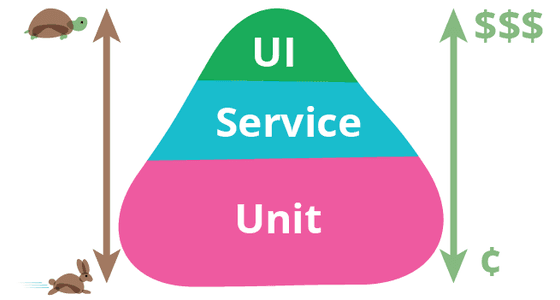
Explain the Test Pyramid and how it guides your strategy.
Tests your grasp of balanced automated testing. Define the pyramid's layers (Unit, Service, UI), explain trade-offs like speed and cost, then apply it to a new service. A red flag is describing the layers without explaining the 'why' behind the shape.
How do you make a Sprint Review more than a demo?
Tests your understanding of Scrum's purpose beyond ceremony. A great answer outlines how an engineer can partner with the PO, structure the meeting for feedback, and ensure that feedback directly influences the backlog.
We are hiring for this. Every open role lists the topics its interview covers, so you can prepare for the real thing rather than guessing.
See open roles