Everything in Python & FastAPI, page 3
How can you provide a Swagger UI example for a Pydantic body?
Tests whether you know FastAPI generates OpenAPI schema from Pydantic metadata. A strong answer names Field(example=...) for per-field samples and Body(example=...) for the full payload.
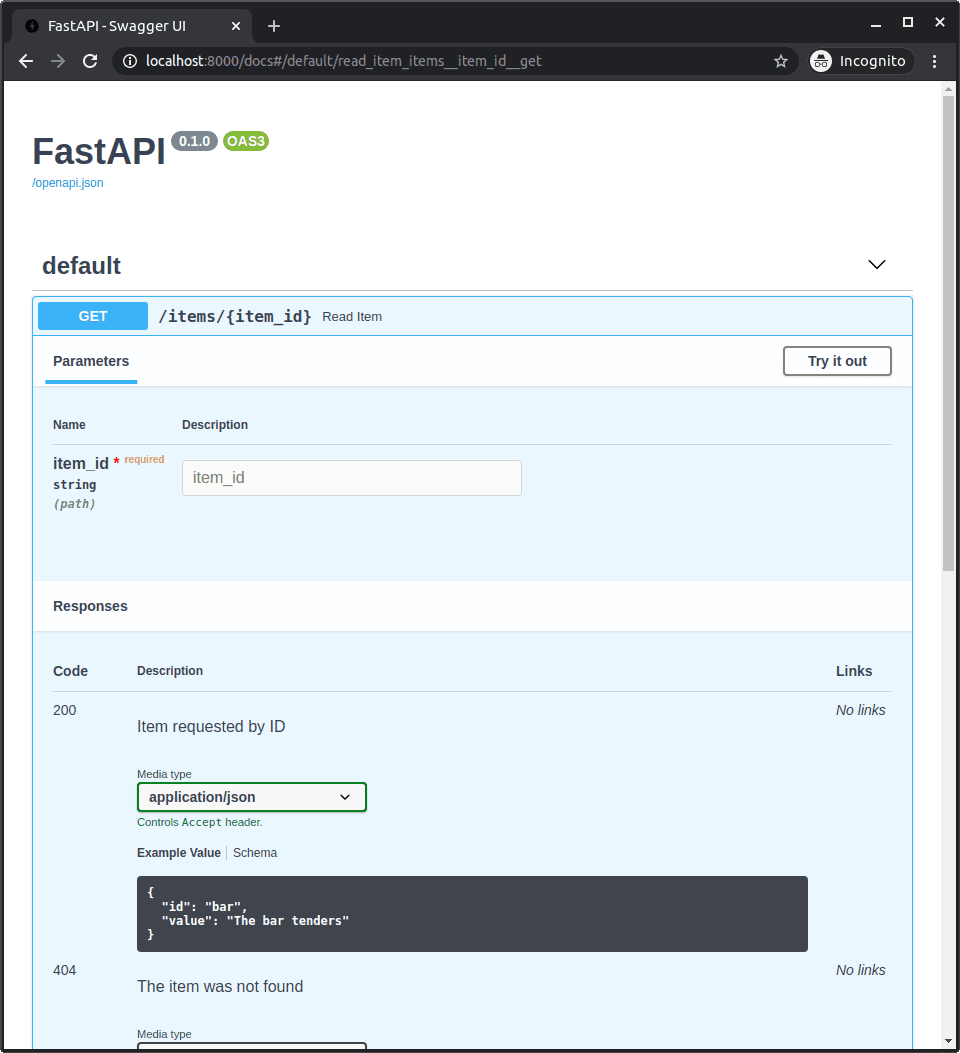
How do you document multiple response schemas in OpenAPI?
This tests FastAPI OpenAPI schema generation for error responses. A strong answer covers the decorator responses dict mapping status codes to Pydantic models and descriptions, plus manually returning JSONResponse with that code.
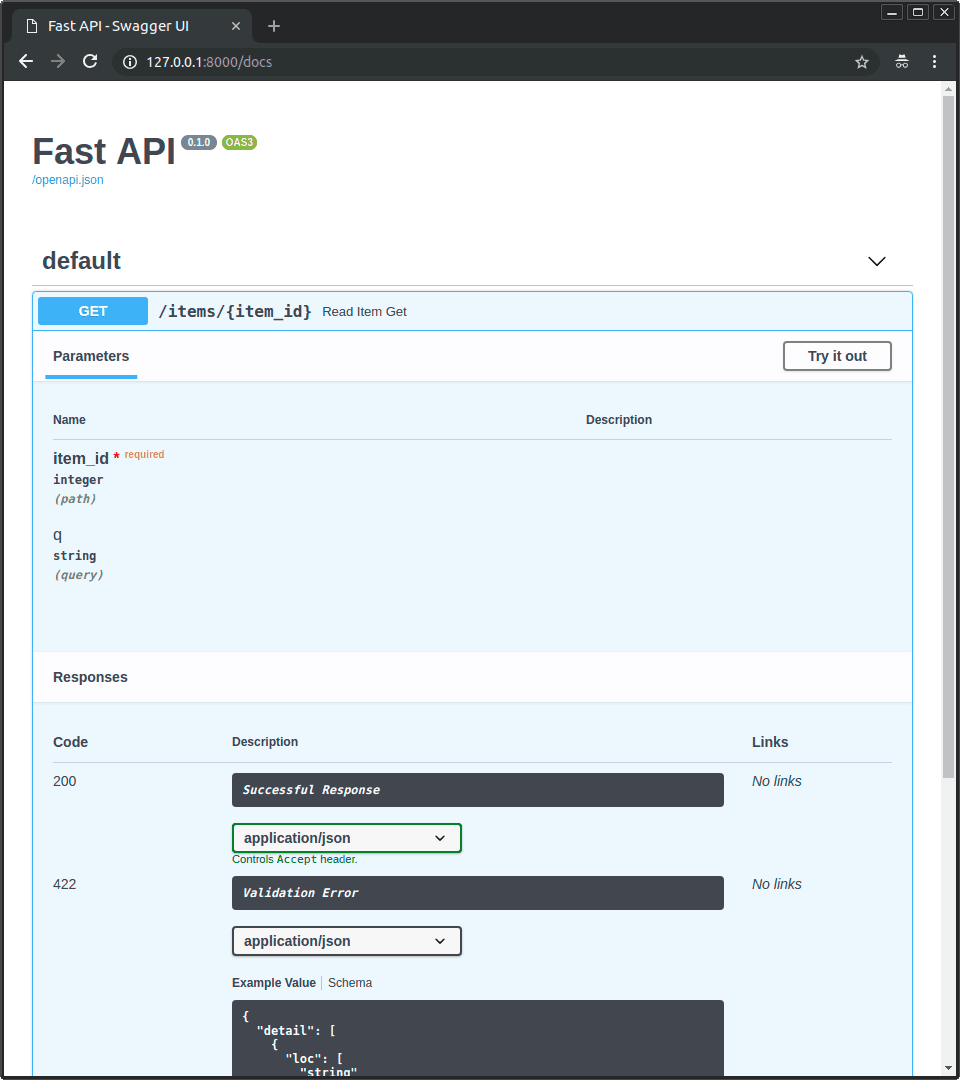
What are FastAPI's two default interactive documentation UIs and URL paths?
This tests whether you know FastAPI's built-in auto-generated docs. A strong answer names Swagger UI at /docs and ReDoc at /redoc, then notes the OpenAPI schema at /openapi.json. A weak answer confuses these with external tools or custom routes.
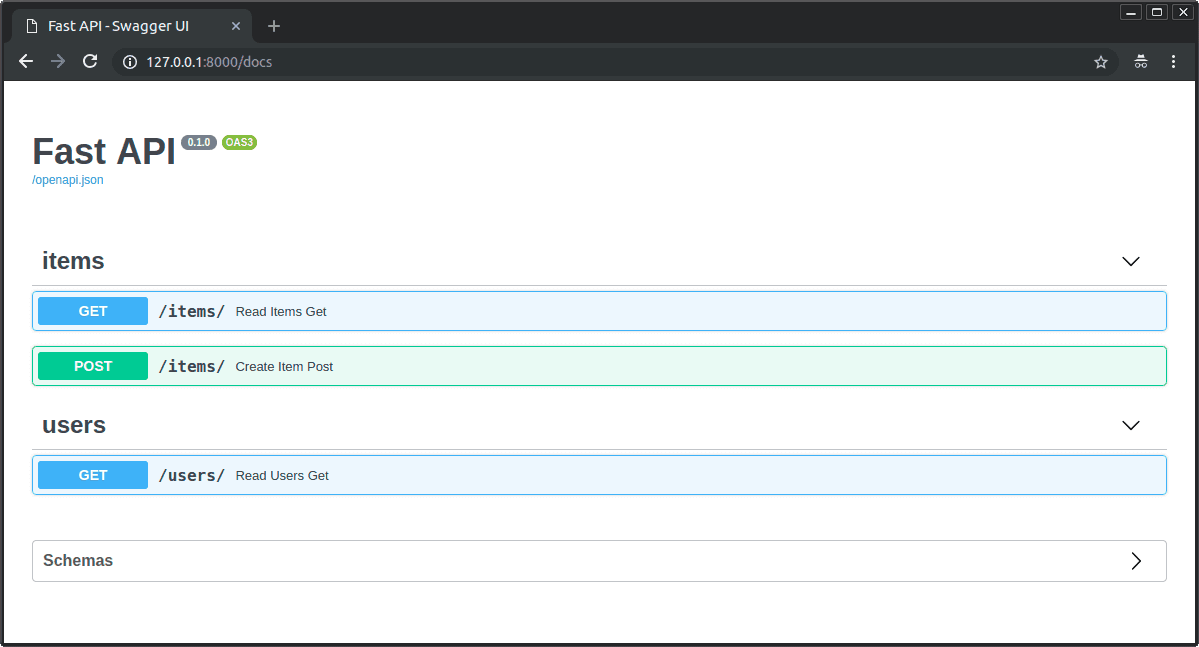
Add summary and description to a FastAPI endpoint for Swagger UI
This tests FastAPI path operation decorator configuration. Pass summary and description to @app.get, or use function docstring for description. A red flag is setting metadata inside the function body or confusing docs with Pydantic Field descriptions.
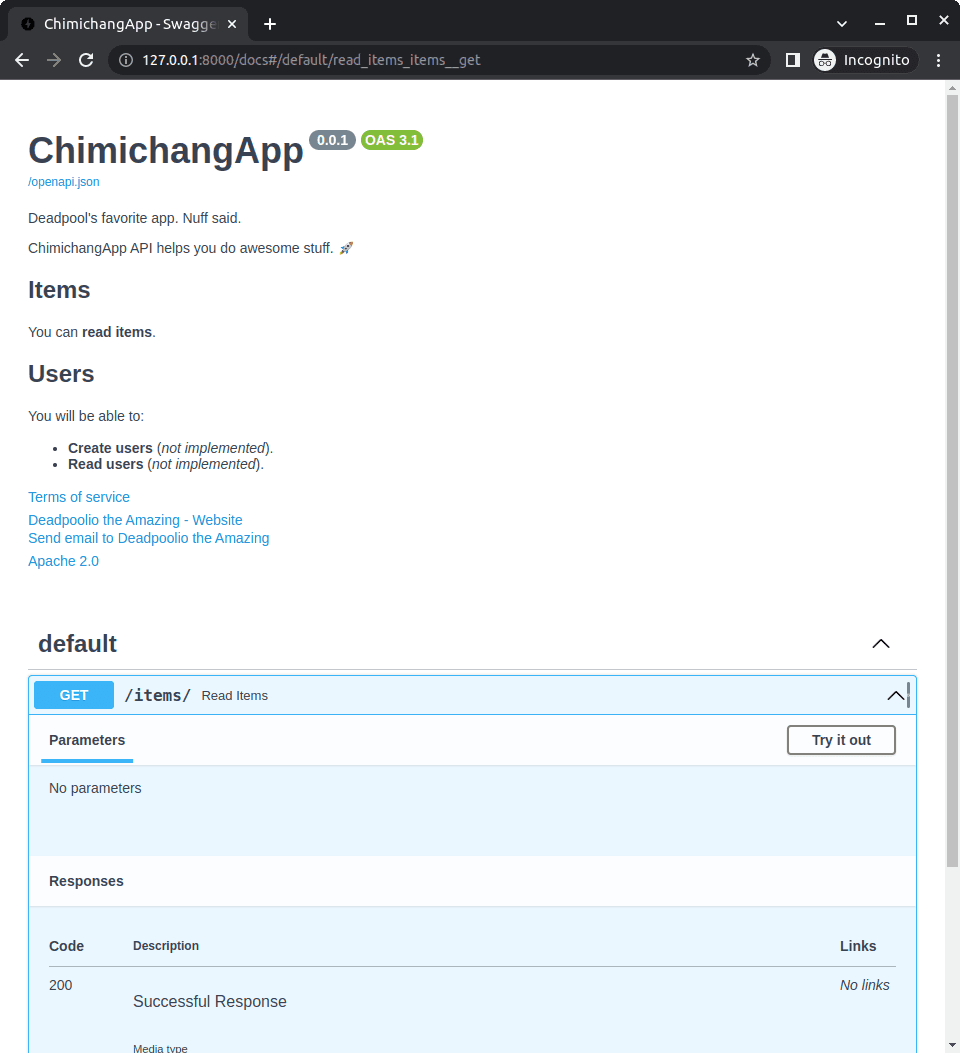
How do you add a title, description, and version to FastAPI auto-docs?
Tests if you know FastAPI's metadata kwargs for OpenAPI docs. Pass title, description, and version to the FastAPI() constructor; Swagger UI and ReDoc render them automatically.
How do router-level and app-level dependencies affect dependency override testing?
This tests FastAPI dependency hierarchy and test isolation. A strong answer states overrides are global to the app, so router-specific deps need scoped fixtures to prevent cross-test leaks. A red flag is claiming APIRouter has its own override registry.
How do you test a FastAPI WebSocket endpoint and lifecycle with pytest?
Tests knowledge of FastAPI TestClient usage for async WebSocket lifecycles. Use a with statement for websocket_connect; assert send, receive_json, and close; tests use standard def because TestClient handles the async app.
How do you test FastAPI background tasks are enqueued correctly?
This tests mocking framework hooks without firing side effects. A great answer: mock BackgroundTasks or override its dependency, assert add_task got the right function and payload, and test the sender separately.
How would you use pytest fixtures to manage TestClient and mock dependencies?
Tests FastAPI test isolation and dependency overrides. Strong answer: function-scoped fixture yielding TestClient, mock injection via app.dependency_overrides, and teardown cleanup to prevent state leaks.
How do you test a FastAPI endpoint without real tokens?
Tests whether you know FastAPI's dependency override mechanism to isolate business logic from auth. A great answer describes using app.dependency_overrides to swap the auth Depends for a mock returning a fake user, then cleaning up after the test.
Explain FastAPI dependency overrides with an in-memory SQLite test example
This tests FastAPI's hook for swapping dependencies cleanly in tests. A strong answer names app.dependency_overrides, defines a test-only in-memory SQLite session, and handles teardown. A red flag is patching globals or mocking ORM instead of dependency.
What is FastAPI's TestClient and how does it differ from requests?
Tests if you know TestClient runs pytest against the app directly without a live server. Good answers note its HTTPX-based Requests-like API, passing the FastAPI app into the client, and simple asserts. Red flag: saying you need a running server and real URLs.
How do you test a FastAPI GET endpoint with pytest and TestClient?
Import TestClient and app, write a test_ function, call client.get("/items/1"), assert status_code == 200 and json() matches expected data.
Design DB transaction middleware and identify the background-task pitfall
Tests request-scoped DB lifecycle awareness. Strong answer: middleware closes the session on response, yet BackgroundTasks run afterward, so sharing that session causes crashes or leaks. Red flag: saying background tasks can reuse the request transaction.
Why is FastAPI BackgroundTasks poor for multi-minute PDF generation?
Tests whether you know BackgroundTasks is same-process and for seconds, not minutes. Answer: propose a task queue with broker, workers, and result backend; return HTTP 202 with a job ID. Red flag: suggesting FastAPI workers instead of persistence and retries.
Which FastAPI CORSMiddleware parameters beyond allow_origins fix a PUT preflight?
Configure allow_methods for PUT and allow_headers for Authorization so the browser approves the cross-origin call.
Write a FastAPI middleware that adds X-Process-Time header
Tests FastAPI lifecycle and header mutation. Strong answers use the http middleware decorator, await call_next, compute elapsed time, and inject X-Process-Time before returning. Red flag: forgetting to await call_next or mutating headers after the return.
Purpose of await next(request) in FastAPI middleware and timing effects
Tests ASGI middleware lifecycle. await next(request) forwards the request downstream to the endpoint and returns the response. Pre-call code touches the request; post-call code touches the response.
How do you send an email without blocking a FastAPI request?
Tests knowledge of FastAPI's BackgroundTasks for post-response work. Strong answer: import it, inject into the endpoint, define a task function, and call add_task before returning.
Frontend on localhost:3000 gets errors calling FastAPI on localhost:8000. Name and fix?
This tests whether different ports mean different origins, causing CORS errors. A strong answer names CORS, notes ports are distinct origins, and outlines using CORSMiddleware with allow_origins.
We are hiring for this. Every open role lists the topics its interview covers, so you can prepare for the real thing rather than guessing.
See open roles