All bites
The whole library, newest first. Filter by what you are here for, or pick a topic if you already know.
4247 bites
Page 178
Definition of Ready (DoR): The Bouncer for Your Sprint
The Definition of Ready (DoR) is the bouncer for your sprint, a checklist ensuring a user story is clear and actionable before the team commits to it. It prevents starting work on half-baked ideas. The footgun is making it too rigid, creating a bottleneck.
Weighted Shortest Job First (WSJF): Prioritizing for Economic Impact
WSJF prioritizes work by its economic impact over time, not just its total value. It sequences backlogs in SAFe by dividing the "cost of delay" by job size. The footgun is getting bogged down in precise estimates instead of using relative sizing.
Servant Leadership: Serve First, Lead Second
A servant-leader inverts the power pyramid, focusing on their team's growth over their own power. This is common in Agile, where scrum masters remove blockers to help developers perform at their best.

The Five Dysfunctions of a Team: A Model for Diagnosing Failure
This model uses a business fable to explore the root causes of team failure and organizational politics. It applies when a team struggles to grow together, offering a framework to diagnose underlying issues.
Tuckman's Stages: Why Teams Must Storm Before They Perform
Teams evolve through predictable phases, not starting out fully effective. A team must pass through forming, storming (conflict), and norming (resolution) to reach high performance.
Agile Coaching: Teacher, Mentor, Facilitator, Coach
An Agile Coach isn't just a senior Scrum Master, but a guide helping teams find their own path to high performance. They support teams by teaching, mentoring, facilitating, and coaching to improve outcomes.
Powerful Questions: Sparking Discovery, Not Just Answers
Powerful questions spark discovery rather than demand a specific answer. Use them in retrospectives or when a team is stuck to unlock new solutions. The footgun is asking a leading question disguised as an open one, which shuts down creativity.
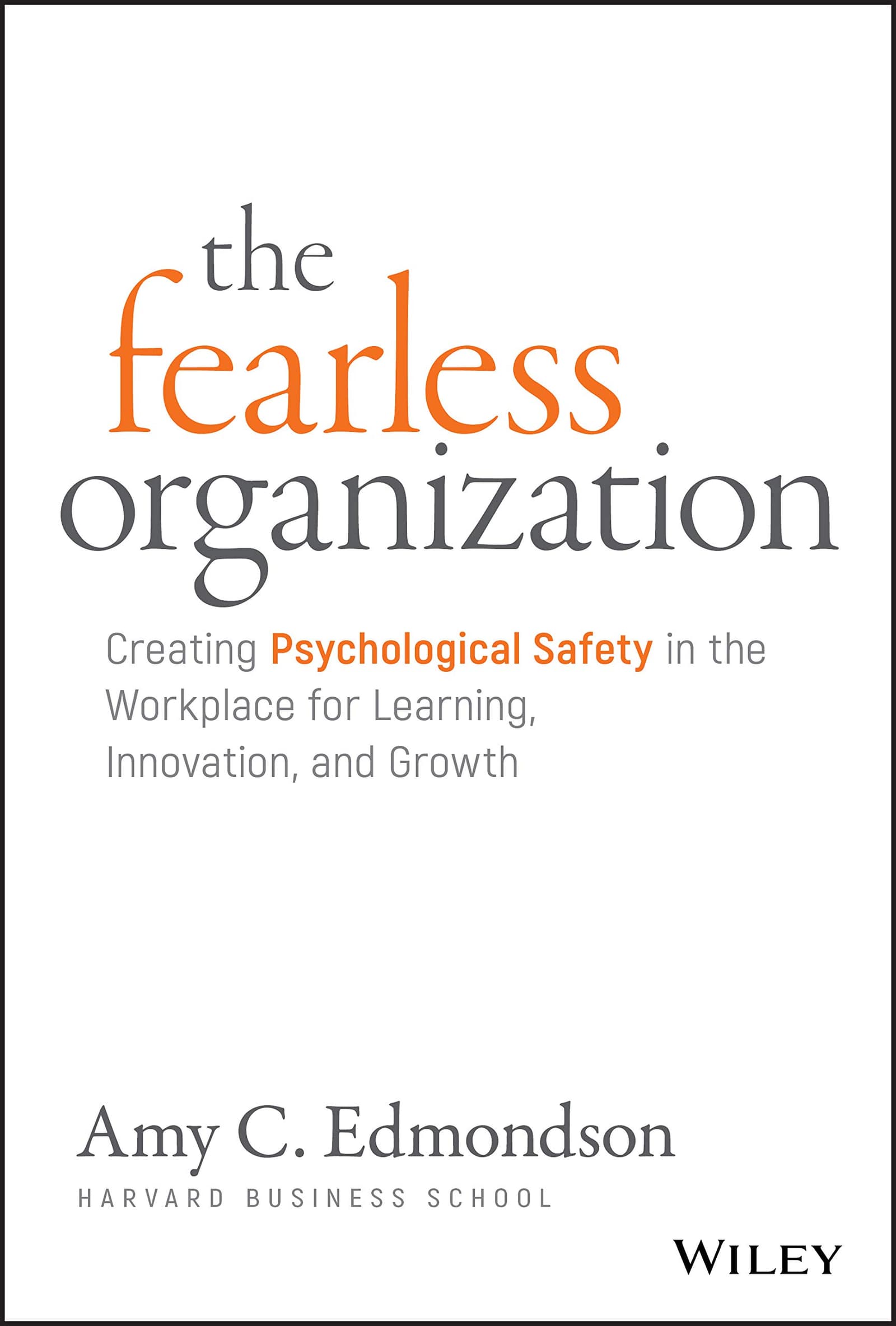
Psychological Safety: The Foundation of High-Performing Teams
Psychological safety is the belief you won't be punished for speaking up or making mistakes. It's the top predictor of team effectiveness, enabling the risk-taking and candor needed for innovation.
Liberating Structures: Rules for Unleashing Group Intelligence
Liberating Structures are simple rules that replace default meeting formats, ensuring everyone participates. Use them in retrospectives or planning sessions to move beyond presentations.
The Four Stances of an Agile Coach
An agile coach isn't just a senior Scrum Master; they operate from four stances: teaching, mentoring, facilitating, and professional coaching. This model helps them choose the right approach to develop a team's capability, not just run ceremonies.
Technical Debt: The Hidden Cost of Shipping Fast
Technical debt is like a loan on your codebase: you ship faster now by taking a shortcut, but pay 'interest' later as slower development. It's often a choice to meet a deadline. The footgun is thinking all debt is bad; strategic debt is fine if.
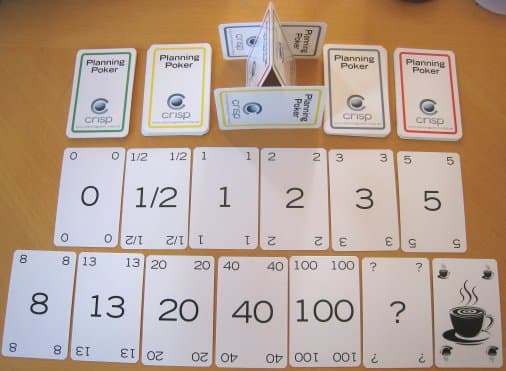
Planning Poker: Avoid Groupthink in Estimates
Planning poker avoids groupthink in effort estimation. Team members reveal estimates simultaneously using cards, preventing the first number spoken from anchoring everyone else. It's used in Agile to size up tasks.

Burndown Chart: A Project's Fuel Gauge
A burndown chart is a project's fuel gauge, showing work left versus time. Scrum teams use it to track sprint progress and predict completion. The footgun is treating it as a performance report instead of a conversation starter about blockers.
T-Shaped Skills: Deep Expertise, Broad Collaboration
T-shaped skills describe a professional with deep expertise in one area (the T's vertical bar) and the ability to collaborate across others (the horizontal bar). This is vital in agile teams where cross-functional work is constant.
Collective Code Ownership: The Team Owns the Code
Collective code ownership treats the entire codebase as team property; anyone can change anything. This prevents bottlenecks in agile teams, especially during refactoring.

Pair Programming: Two Heads, One Keyboard
Think of pair programming as a continuous code review. One developer (the Driver) writes code while the other (the Navigator) reviews it in real-time. This is often used for complex tasks or onboarding. The footgun is letting one person dominate the keyboard.

The Boy Scout Rule: Leave Code Cleaner Than You Found It
The Boy Scout Rule applies a simple principle to code: always leave it a little cleaner than you found it. When fixing a bug, make a small improvement like renaming a variable.
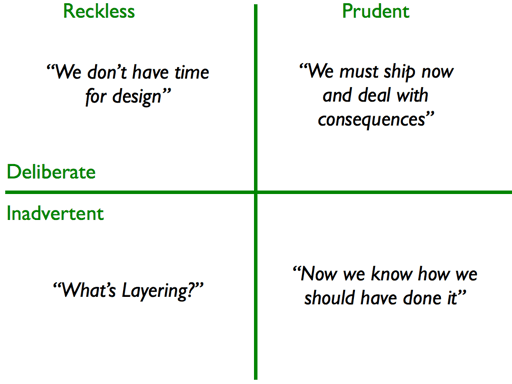
The Technical Debt Quadrant
The Technical Debt Quadrant reframes debt not as one problem, but a 2x2 matrix: prudent vs. reckless and deliberate vs. inadvertent. This distinguishes a strategic choice to ship early from a simple mess. The footgun is treating all debt as equally bad.
Mob Programming: The Whole Team on One Computer
Mob programming is like pair programming for the whole team: everyone works on one task, on one computer, at the same time. It's used for complex problems or onboarding. The footgun is letting it become a passive meeting instead of an active collaboration.
Epic: The Agile Placeholder for Big Ideas
An Epic is a large user story that's too big for a single sprint, acting as a placeholder for a major feature. Use it to group related stories for features like 'user profile management.'