All bites
The whole library, newest first. Filter by what you are here for, or pick a topic if you already know.
8667 bites
Page 286
Roadmap Capacity Planning: Ideal vs. Reality
Capacity planning isn't about your team's ideal output (design capacity), but their actual output (effective capacity) after accounting for meetings, bugs, and on-call. Use it to build realistic roadmaps.
Outcome-Based Roadmaps: Solve Problems, Not Ship Features
An outcome-based roadmap frames work around problems to solve, not a checklist of features to build. It gives teams autonomy to find the best solution for goals like increasing user engagement or improving conversion.

Thematic Roadmaps: Focus on 'Why,' Not 'What'
A thematic roadmap organizes work around strategic goals ("themes") like "Improve User Onboarding," not just a feature list. It's used to align teams on high-level objectives and persuade executives. The footgun is mistaking a feature list for a strategy.

Product Roadmap vs. Backlog: Strategy vs. Tactics
A roadmap is your strategic travel plan showing major destinations (product goals), while the backlog is the turn-by-turn navigation for the current leg of the journey (development tasks). The footgun is cluttering the roadmap with backlog details.
Goal-Question-Metric: Measure What Matters, Not What's Easy
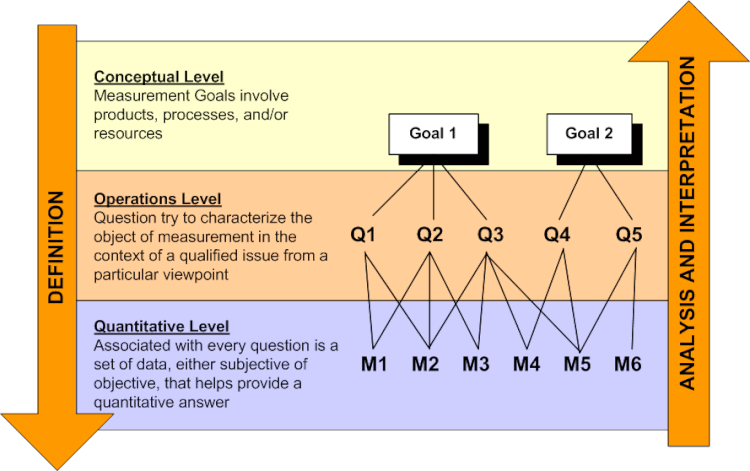
GQM is a top-down framework for defining metrics. You start with a Goal, ask Questions to clarify it, then define Metrics to answer them. This avoids the common trap of collecting vanity metrics that don't reflect true software quality or business goals.

Counter Metrics: Guardrails for Your Goals
Counter metrics are the guardrails for your primary goal, preventing you from optimizing one number at the expense of user experience. If you increase ad impressions for revenue, track user retention to ensure you aren't just driving users away with spam.

The HEART Framework for Measuring UX
The HEART framework provides a structure for measuring user experience on large-scale web applications. It helps teams define user-centered metrics to track progress towards goals and make data-driven decisions.
AARRR 'Pirate' Metrics: A Funnel for What Really Matters
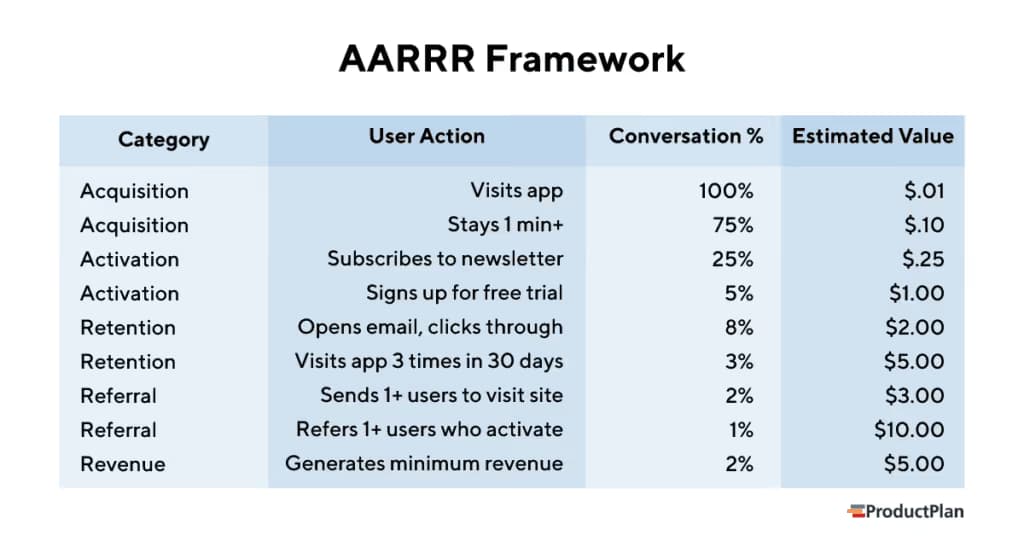
The AARRR framework is a five-stage funnel (Acquisition, Activation, Retention, Referral, Revenue) that tracks the user journey. It helps product teams focus on metrics that directly impact business health, not vanity metrics like social media likes.
Vanity vs. Actionable Metrics: Measure What Matters
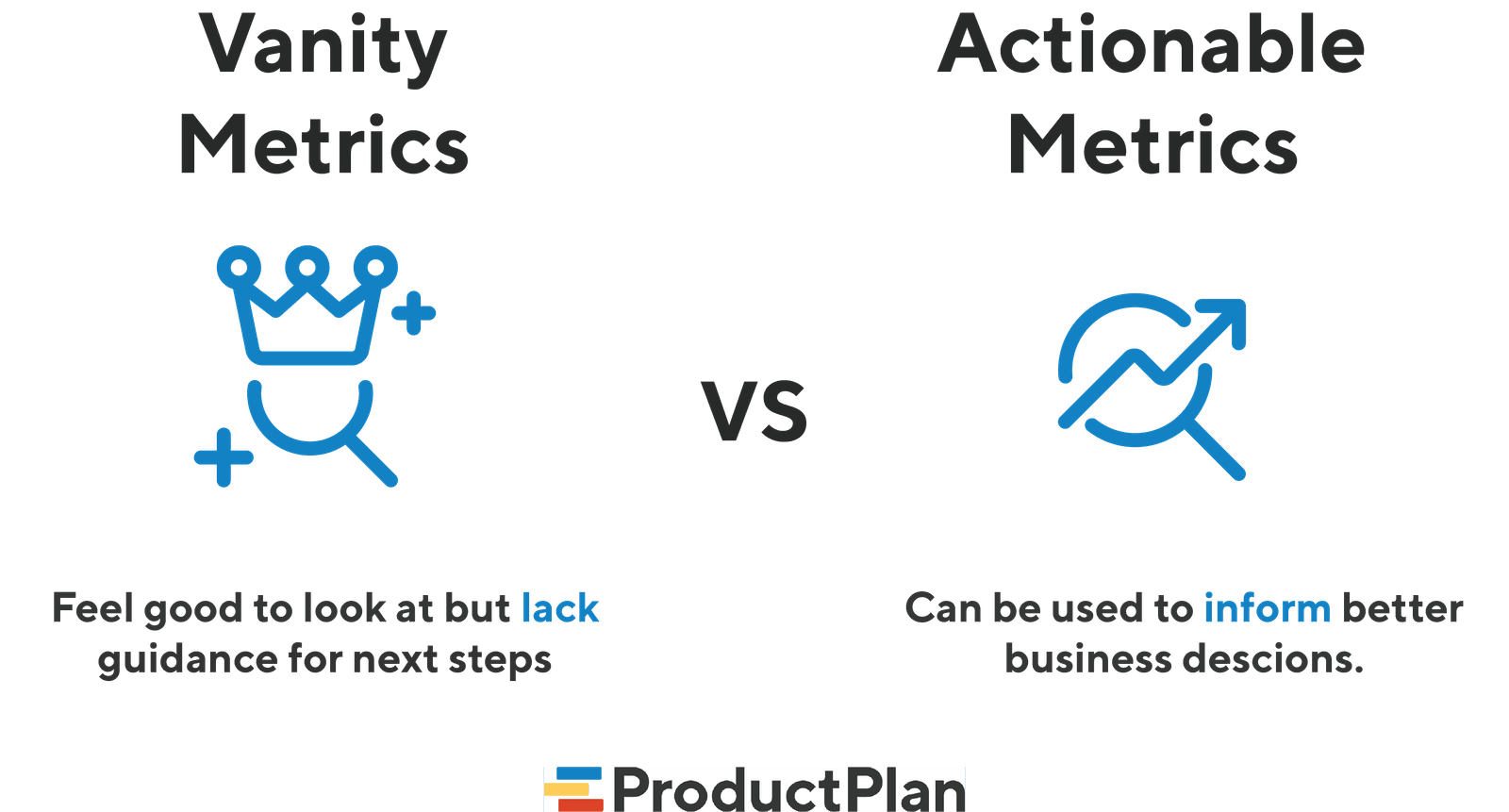
Vanity metrics look impressive but don't inform decisions (e.g., total downloads). Actionable metrics tie to business goals and guide your next move (e.g., conversion rate). This helps product teams focus on real growth, not just impressive-looking charts.

SMART Goals: From Vague Hopes to Actionable Plans
SMART goals turn fuzzy ambitions into concrete plans by forcing clarity. It's a checklist for ensuring a goal is Specific, Measurable, Assignable, Realistic, and Time-bound. Use it for project planning or performance reviews to create trackable progress.

Van Westendorp Price Sensitivity Meter
The Van Westendorp Price Sensitivity Meter is a market research technique for determining consumer price preferences. It's used to help set product prices by surveying potential buyers about their perceived value and willingness to pay.
LTV to CAC Ratio: Is Your Growth Profitable?
The LTV to CAC ratio measures if you make more money from a customer than you spent to get them. It's the core health metric for a subscription business, used to judge marketing efficiency. A ratio above 3:1 is often healthy.

Unit Economics: Is Each Customer Profitable?
Unit economics asks if you make or lose money on a single customer or sale. It's used in SaaS to compare customer lifetime value (LTV) to acquisition cost (CAC). The footgun is defining the 'unit' poorly, hiding that each new customer costs you money.
Customer Lifetime Value (LTV): Predicting Future Customer Profit
LTV predicts the total net profit a customer will generate over their entire relationship with you. It guides how much to spend on acquiring customers (CAC) and helps identify your most valuable segments. The footgun: LTV is profit, not revenue.
Cost-Plus Pricing: Set Price Based on Cost, Not Value
Cost-plus pricing sets a product's price by adding a fixed percentage markup to its unit cost. It's common in government contracts where costs are clear. The footgun is that it ignores what customers are willing to pay, leaving money on the table.

Business Model Canvas: Your Business on a Single Page
The Business Model Canvas puts your entire business strategy onto a single page, showing how value, customers, and money connect. It's used by startups to map out a plan or by established companies to launch new products.
Niche Market Strategy: Big Wins in Small Ponds
A niche strategy means dominating a small, well-defined market instead of fighting for a slice of a large one. It's used by startups to gain a foothold or by large firms launching specialized products. The footgun is picking a niche too small to be profitable.
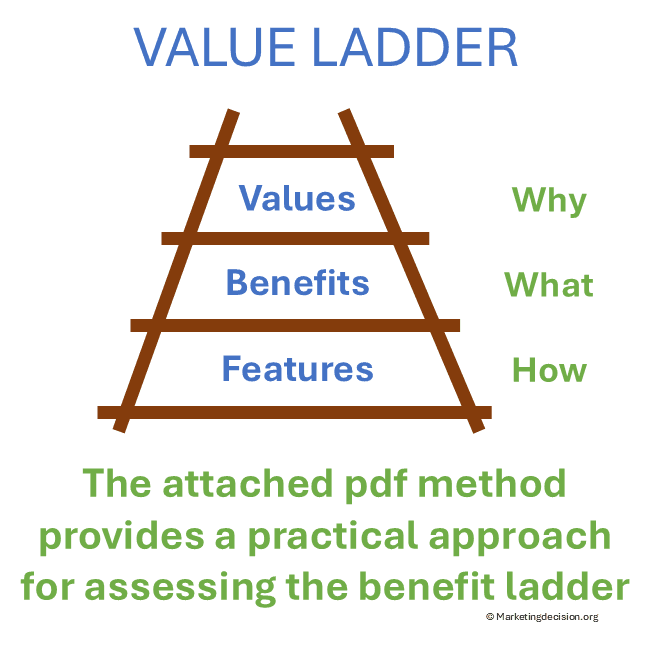
The Feature-Benefit-Value Ladder: Selling Outcomes, Not Specs
The Feature-Benefit-Value Ladder connects product specs to the outcomes customers truly want. It's used to prioritize features and craft messaging that links to core values.
Crossing the Chasm: From Early Hype to Mainstream Success
“Crossing the Chasm” is the dangerous gap between a tech product's first enthusiastic users and the pragmatic majority needed for real scale. It explains why products with initial hype fail.
Product Differentiation: Standing Out in a Crowded Market
Product differentiation is making your product uniquely distinct for a specific audience, not just objectively 'better'. It's how a new phone brand might focus on privacy to avoid competing on price alone.