All bites
The whole library, newest first. Filter by what you are here for, or pick a topic if you already know.
8667 bites
Page 320
Swift Optionals: Handling Nothing Safely
An Optional is like a box that might contain a value or might be empty (nil). You must safely unwrap it before using the value, preventing crashes. It's used for properties that might not exist yet or for function returns that can fail.
Swift Control Flow: Directing Your Code's Path
Control flow statements are the traffic signals of your code. They use keywords like if, for, and switch to make decisions and repeat actions, rather than just running top-to-bottom. This is how you show a list of items or check if a user is logged.
Variables and Constants in Swift
Swift has two ways to store a value: var declares a variable you can reassign later, and let declares a constant whose value is set once and can never change, and Swift's convention is to default to let unless you have a specific reason to need var.

Dunning Management: Recovering Failed Subscription Payments
Dunning is the automated process of chasing failed subscription payments. It's how you recover revenue from expired cards or insufficient funds, which is crucial for any SaaS or subscription business.

Vanity vs. Actionable Metrics: Measure What Matters
Actionable metrics explain *why* and guide your next move, while vanity metrics just look good on a chart. Use actionable metrics for setting KPIs to understand user behavior and business health.

Quantitative Growth Model: The Spreadsheet That Runs Your Business
A quantitative growth model is a spreadsheet that maps your business, showing how inputs like ad spend turn into revenue. It's used to forecast growth, simulate strategy changes, and set goals. The footgun: your model is only as good as its assumptions.
What a Head of Growth Actually Does
A Head of Growth is a systems architect for revenue, deciding where to place strategic bets, not just a campaign manager. They align product, engineering, and marketing around shared metrics and build the experimentation engine.
Growth Engineer: The Entrepreneur Inside the Company
A growth engineer is an entrepreneurial developer using code to directly drive business metrics. They work across the product, optimizing onboarding or running experiments to boost activation.
Holdback Groups: Measure Your True Cumulative Impact
A holdback group is your product's long-term control, shielding a small set of users from all new features. Use it to measure the cumulative impact of many small changes over months or years, beyond what individual A/B tests can show.

User Bucketing: The Engine of A/B Testing
User bucketing is a deterministic hash that assigns users to experiment groups. It ensures a user sees the same variation every time, which is critical for valid A/B tests. The main footgun is using an unstable user ID, which can re-bucket users and ruin your.
Product-Led Sales: Your Product is Your Best Salesperson
Product-Led Sales (PLS) treats your product as the primary lead generator. Instead of cold calls, sales teams engage users who show buying intent through their product usage, guiding them to a natural upgrade.

Product-Led Growth (PLG): Let Your Product Sell Itself
Product-Led Growth (PLG) makes the product the primary engine for acquiring and converting users. It relies on a mix of free features, virality, and a smooth upgrade path to paying tiers, letting users experience value before they buy.
Expansion MRR: Growing Revenue from Existing Customers
Expansion MRR measures new monthly recurring revenue from your existing customers. It's how you grow through upgrades, add-ons, or cross-sells, not just new signups. The footgun is mixing it with new business MRR, which hides your product's retention power.

Empty State
An empty state is the screen a user sees before any data exists, like a new account with no projects or a search with no results, and treating it as a real design surface rather than a blank gap is a high leverage move for activation.
Time to Value (TTV): From Signup to 'Aha!'
TTV measures the time from signup to a user's first "aha!" moment. Product teams track it to reduce early churn, as faster value builds trust. The footgun is defining "value" as completing setup, not a real user win.

Guardrail Metrics: Don't Win the Battle to Lose the War
Guardrail metrics are your experiment's safety net, ensuring a win in one area doesn't cause a loss elsewhere. During A/B tests, you monitor them to catch negative side effects on site speed or revenue.

The PIE Framework: Prioritizing What to Test Next
The PIE framework ranks A/B test ideas by scoring them on Potential, Importance, and Ease. It helps teams decide where to experiment first, focusing limited resources on high-impact changes.
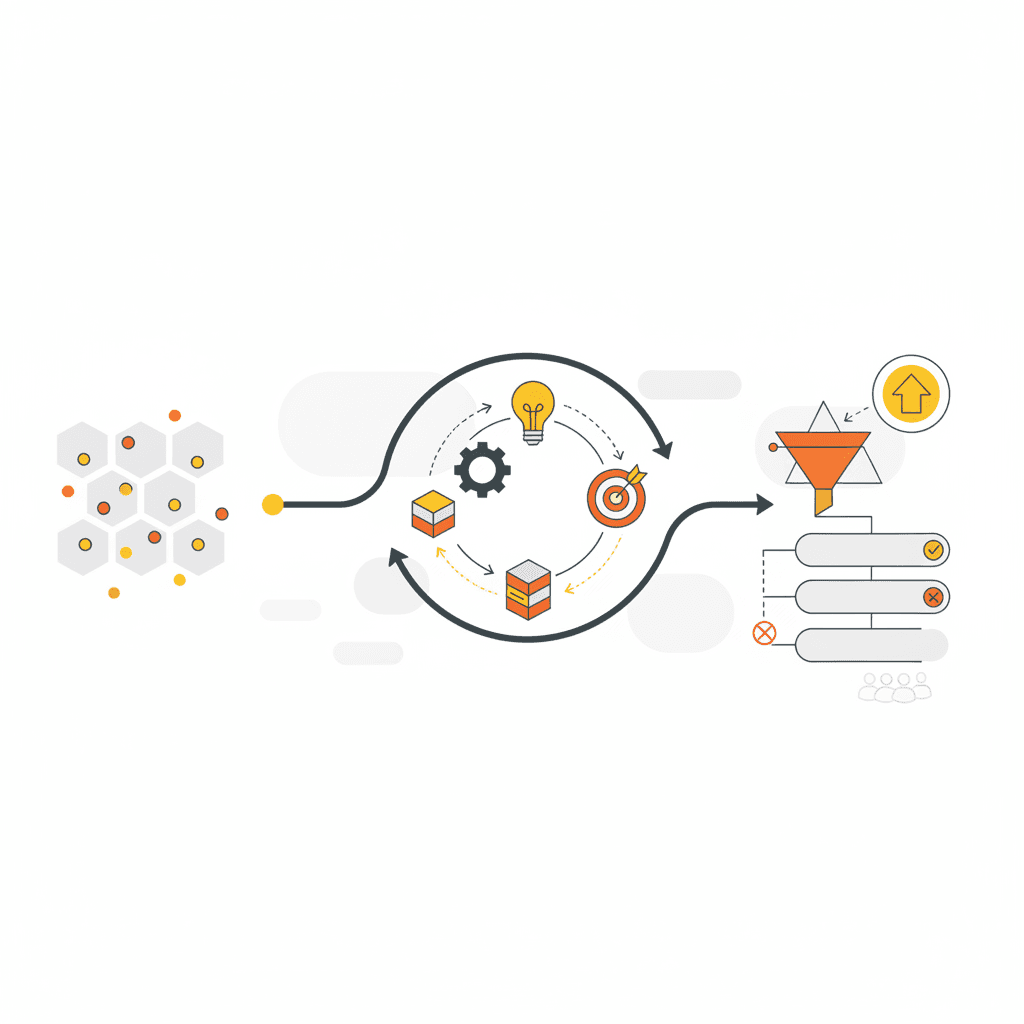
Managing Growth with an Experiment Backlog
An experiment backlog is a prioritized list of testable ideas that turns strategy into action. Agile teams use it to manage projects, using business intelligence to measure performance and ensure ideas deliver value. The footgun is a lack of governance.

Instrumentation Plan: Your Analytics Blueprint
An instrumentation plan is the blueprint for what user actions to track. It's like deciding where to put security cameras *before* building, not after a break-in. It's essential for new features and for cleaning up messy analytics.
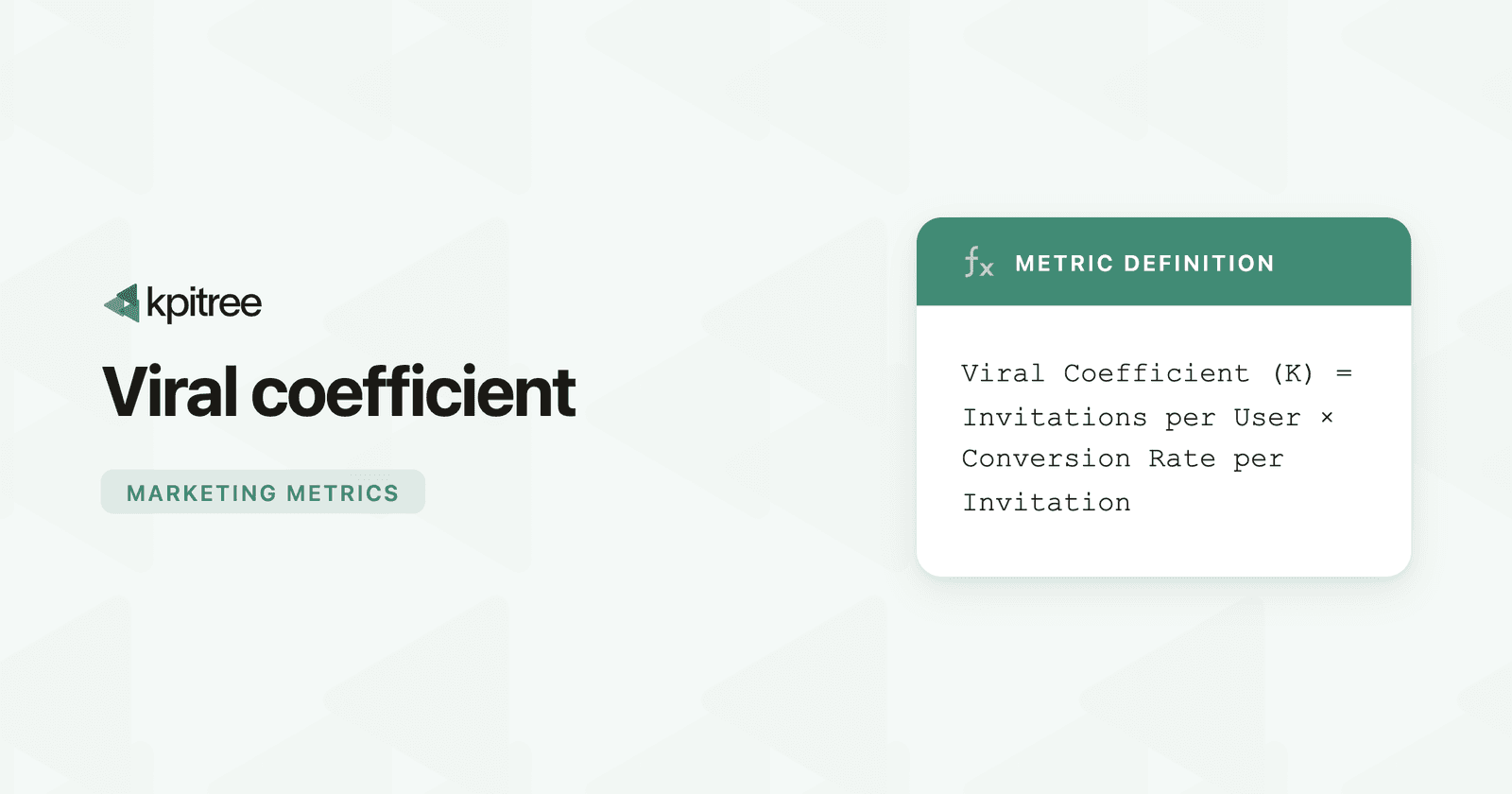
The K-Factor: Measuring Your Product's Viral Growth
The Viral Coefficient (K-factor) measures how many new users each existing user generates. It's key for products with referrals or sharing. The common mistake is chasing K > 1; even K=0.5 is valuable, as it effectively halves your acquisition cost.