All bites
The whole library, newest first. Filter by what you are here for, or pick a topic if you already know.
8667 bites
Page 415

Kotlin Sealed Classes: Enums for Types
A sealed class is like an enum, but for types. It defines a closed set of subclasses, letting each one carry different data. It's perfect for modeling states like Loading, Success, and Error, ensuring you handle every case at compile time.
Kotlin Scope Functions: Cleaner Code, Clearer Choices
Kotlin's scope functions (let, run, apply) create a temporary workspace for an object, avoiding repetitive variable names. Use them for object configuration or chaining calls.
Kotlin Extension Functions: Add Methods Without Inheritance
Kotlin extension functions let you add new functionality to existing classes without inheritance, as if you were adding a new method. They're perfect for creating helpers for third-party library classes or framework types like String.
Kotlin Data Classes: Automatic Boilerplate for Data Holders
A Kotlin data class automatically generates boilerplate like equals() and toString() for classes that just hold data. Use it for model objects or DTOs where value equality matters. The footgun: its copy() method is shallow, sharing mutable objects.
Kotlin Inheritance: Open for Extension, Closed by Default
In Kotlin, classes are final by default. Think of inheritance as an opt-in feature you enable with the open keyword. Use it to create specialized versions of a base class, like a Student from a Person.
Kotlin Functions: Named, Reusable Code Blocks
A function is a named recipe for your code. You give it ingredients (parameters) and it produces a result. They are used everywhere, from calculating values to handling button clicks.
Kotlin Null Safety: Catch Nulls at Compile Time
Kotlin's type system catches null pointer errors at compile time. Variables are non-nullable by default; you must opt-in to nulls with a ? (e.g., String?). The compiler then forces you to handle the null case. The main footgun is the !! operator.
Kotlin Variables: `val` for Constants, `var` for Variables
In Kotlin, val creates a read-only constant you assign once, like a fixed setting. var creates a mutable variable you can change later. Always prefer val unless you explicitly need to reassign a value to prevent accidental state changes.

Color Theory: Guiding the Eye in Data Visualization
Color in a chart is a cognitive shortcut, telling the viewer's brain what to notice and how to feel. Use it to highlight trends (green for growth) or group categories. The footgun is using too many colors, which creates noise and obscures insights.

Data Dashboards: The Single-Page Business Story
A data dashboard is the executive summary for your metrics, telling a story on a single page with key visualizations. It consolidates data from multiple reports, providing a high-level view to monitor business performance.

Analytics CoE: Centralizing Your Data Strategy
An Analytics Center of Excellence (CoE) is an internal data consulting group, centralizing experts to set standards and drive strategy. It helps large organizations standardize data quality and tooling. The footgun: becoming a bottleneck that slows teams down.
Time to Value (TTV): From Signup to 'Aha!'
Time to Value (TTV) measures the time from a user's first touch to their first 'aha moment' of real value. It's crucial for optimizing onboarding and reducing churn. The main footgun is defining value from the company's view, not the customer's.
Data-as-a-Product: Treat Your Data Like Software
Data-as-a-Product (DaaP) treats internal datasets like software, with owners, versions, and SLAs. This provides reliable, self-service data for consumers like analysts or other apps.
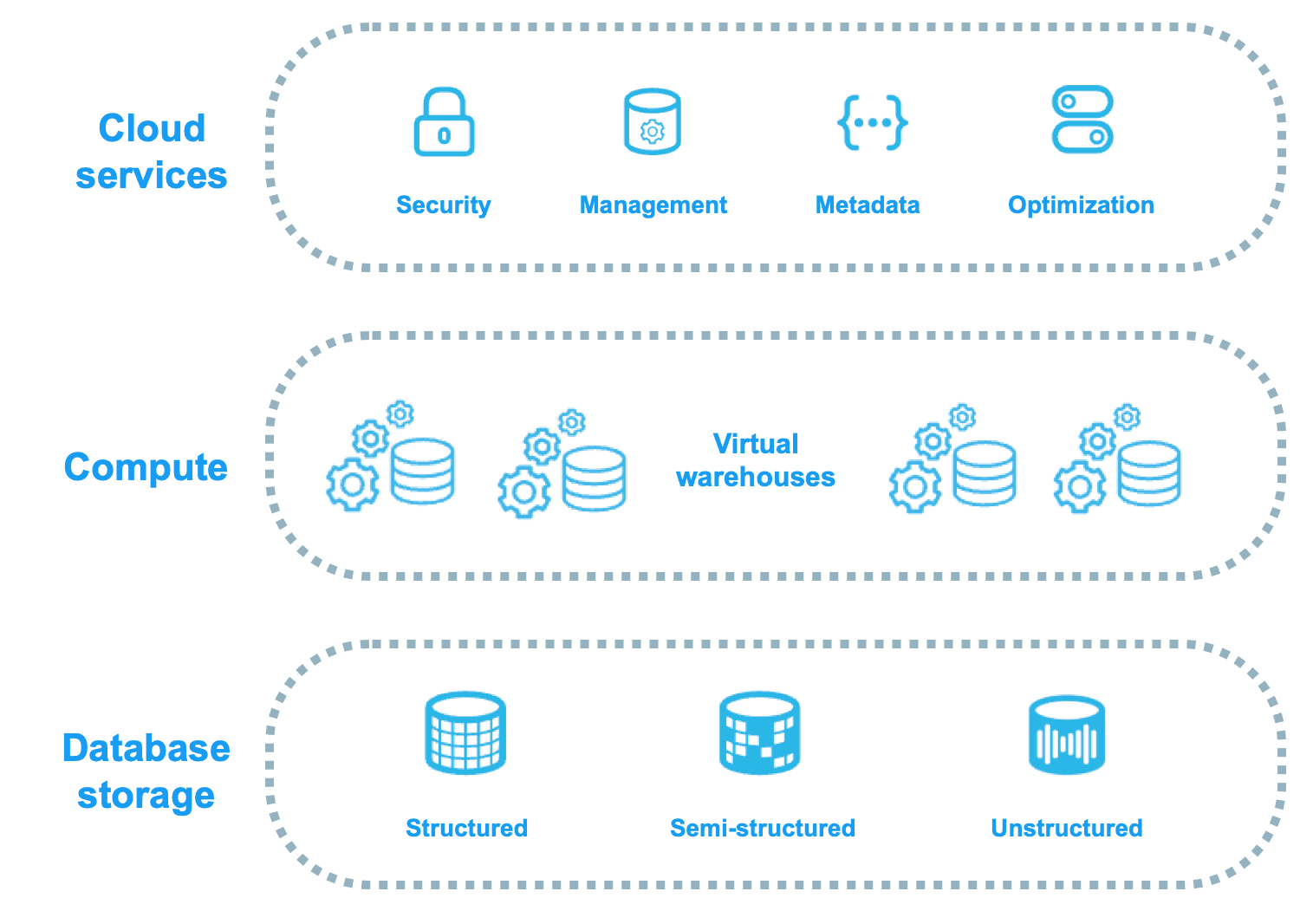
Snowflake: Decoupled Storage and Compute
Snowflake decouples storage from compute, acting like a shared-disk system for data management but a shared-nothing system for query performance. This lets you scale compute and storage independently, ideal for variable analytic workloads.

Multivariate Testing: Finding the Best Combination
Multivariate testing (MVT) finds the best *combination* of changes, not just the best single change. It tests multiple elements at once, like three headlines and two button colors, to see how they interact.

Period-over-Period Analysis: Measuring Change Over Time
Period-over-Period analysis answers 'Are we getting better?' by comparing metrics from consecutive time blocks, like this month's sales vs. last month's. The footgun is ignoring seasonality, which can create false signals of growth or decline.
Tracking Schema: Your Analytics Naming Convention
A tracking schema is the shared dictionary for your analytics, defining how you name user actions (events) and their details (properties). It's crucial for ensuring one team tracks "Song Played" the same way as another.
Sessionization: Turning Raw Events into User Stories
Sessionization groups a user's raw clicks and page views into a single "visit." It's used to analyze conversion funnels and calculate metrics like time-on-site. The main footgun: your definition of a "session" is arbitrary and can skew results.
Marketing Attribution: Deciding Who Gets Credit for a Conversion
Attribution modeling decides which marketing touchpoint gets credit for a conversion. It's used to justify ad spend by assigning value to channels like email, social, or search. The biggest footgun is using a simple model that overvalues the final click.
The HEART Framework: Measuring User-Centric Success
The HEART framework measures user-centric success, not just clicks. It provides five categories (Happiness, Engagement, Adoption, Retention, Task Success) to track product health.