Interview questions in Agile & Scrum, page 10

How do you differentiate an MVP from a throwaway prototype architecturally?
Distinguish by user commitment; define bounded contexts with stable interfaces; favor reversible decisions and day-one observability.
MVP vs. Throwaway Prototype: Technical Differences
This tests your understanding of Minimum Viable Architecture (MVA). Differentiate by intent: a prototype is a throwaway concept test, while an MVP is a sustainable first version built on an MVA. A red flag is describing a sacrificial architecture for an MVP.
Differentiating an MVP from a throwaway prototype
Tests your grasp of strategic technical investment. Differentiate by intent: an MVP is the first version, a prototype is disposable. A great answer introduces Minimum Viable Architecture (MVA) to support future needs.
How do you adapt in-progress work when feedback invalidates a key assumption?
Alert the PO, renegotiate Backlog if the Goal is at risk, use feature flags to isolate invalidated logic.
How do you adapt when user feedback invalidates your current sprint?
This tests your ability to connect process to technical strategy under pressure. A great answer involves immediately notifying the Product Owner, quantifying the impact, and proposing technical pivots like feature flagging.
How to handle user feedback that invalidates your current sprint's work?
Tests your grasp of Scrum's adaptation principle. A great answer involves immediately notifying the Product Owner, assessing Sprint Goal impact, and proposing technical pivots like feature flagging. A red flag is continuing to build the invalidated feature.

How would you measure a launched feature's success and impact?
This tests if you link code to business outcomes via agile metrics. A strong answer covers value, quality, satisfaction; names metrics like velocity or cycle time; and uses reports to track progress. Red flag: defining success purely by uptime or bug counts.
How would you measure the success and impact of a new feature?
This tests your ability to connect engineering work to business value. A strong answer defines success metrics upfront, instruments code for quantitative data like adoption rates, and gathers qualitative feedback.
How do you measure a new feature's success beyond bugs and uptime?
Tests if you connect engineering to business value. A great answer links success to the feature's original goals, proposes user behavior and business impact metrics, and names specific tools.
Pushing back on a costly, low-value feature
Estimate cost in engineer-weeks, size the expected value, frame it as cost-per-unit-of-value, then propose a cheap experiment to test the hypothesis first.
Quantify and communicate a feature's cost/benefit trade-off
Tests your ability to influence product decisions with data. Quantify engineering cost (time, complexity, risk), then propose cheaper experiments like an MVP or fake door test to validate the hypothesis first.
Handling a High-Cost, Low-Value Feature Request
Tests your ability to influence product using data and lean principles, not just technical objections. Quantify cost in engineer-weeks, ask for value metrics, then propose cheaper experiments (e.g., a fake door test).
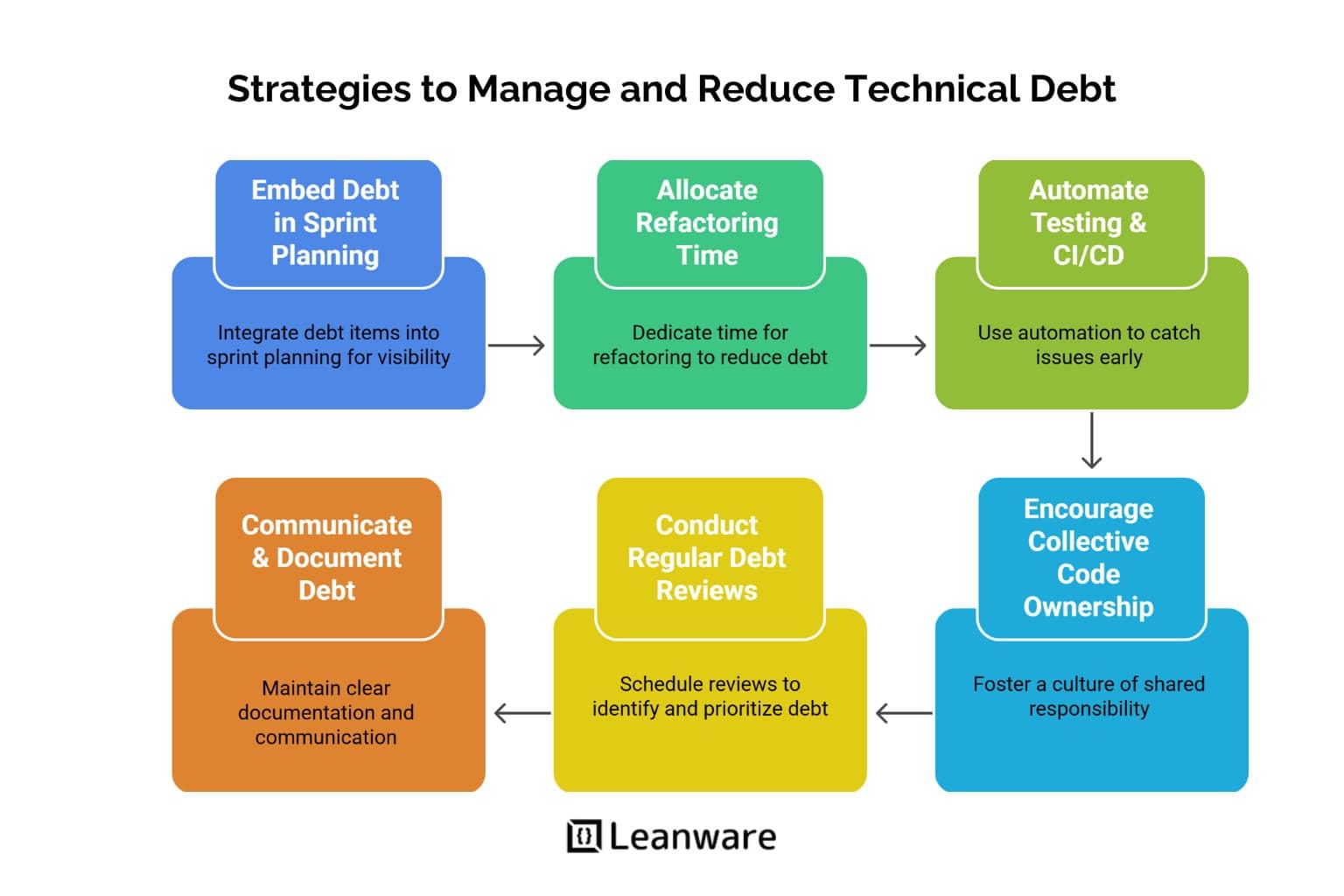
Describe a framework to strategically manage tech debt during product discovery
This tests strategic debt tradeoffs under speed pressure. A strong answer classifies debt by interest, caps MVP debt with guardrails, and reserves fixed sprint capacity for repayment. Red flag: vilifying debt or deferring cleanup without triggers.
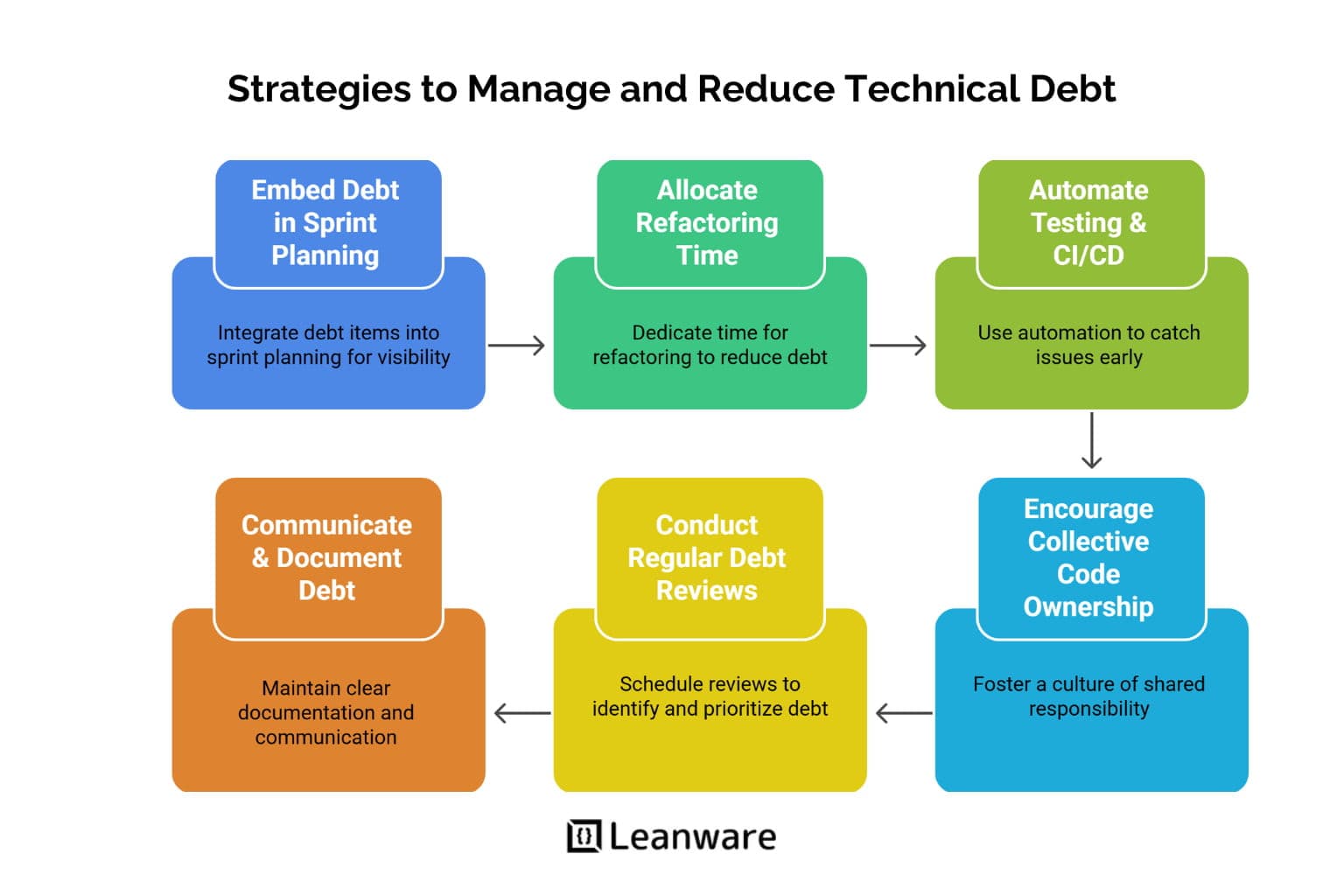
How do you strategically manage tech debt during product discovery?
This tests your strategic view of tech debt. A great answer defines intentional vs. unintentional debt, outlines a framework for tracking and repayment (like a debt backlog), and explains when it's a valid tool for MVPs.
Describe your framework for managing tech debt in product discovery.
Tests your strategic view of tech debt. A good answer frames debt as a tool, describes a framework for categorizing and tracking it, and explains how to tie repayment to product milestones. A red flag is viewing all debt as bad or lacking a concrete.

Describe the initial columns for a new Kanban board and their purpose
Tests whether you understand Kanban as a flow visualization tool. A strong answer names Backlog, To Do, In Progress, and Done, explaining each as a handoff or state change. Red flag: adding too many columns upfront or conflating the board with Scrum.
What columns would you set up on a new Kanban board?
Tests your grasp of workflow visualization, not just Agile terms. A good answer starts with To Do/In Progress/Done, then adds columns like Code Review to mirror the real process, and crucially, mentions setting WIP limits to manage flow and identify…
What initial columns would you set up on a Kanban board?
Tests your grasp of Kanban's core goal: visualizing workflow. Start with a simple board (To Do, In Progress, Done), explaining how each column represents a work state. A red flag is creating an overly complex board without justifying the need for each stage.

Lead Time vs Cycle Time in Kanban and measuring Cycle Time
Tests whether you distinguish customer wait time from active work. Strong answer: Lead Time is request-to-delivery with queues; Cycle Time is active start-to-finish measured from In Progress to Done. Red flag: treating them as synonyms or ignoring wait states.
Explain Lead Time vs. Cycle Time on a Kanban board
This tests your grasp of core Kanban flow metrics. Define Lead Time (customer request to delivery) and Cycle Time (work start to finish). Measure Cycle Time from the first 'In Progress' column to 'Done'. Red flag: defining terms without explaining their value.
We are hiring for this. Every open role lists the topics its interview covers, so you can prepare for the real thing rather than guessing.
See open roles