Concepts in AI & ML, page 9
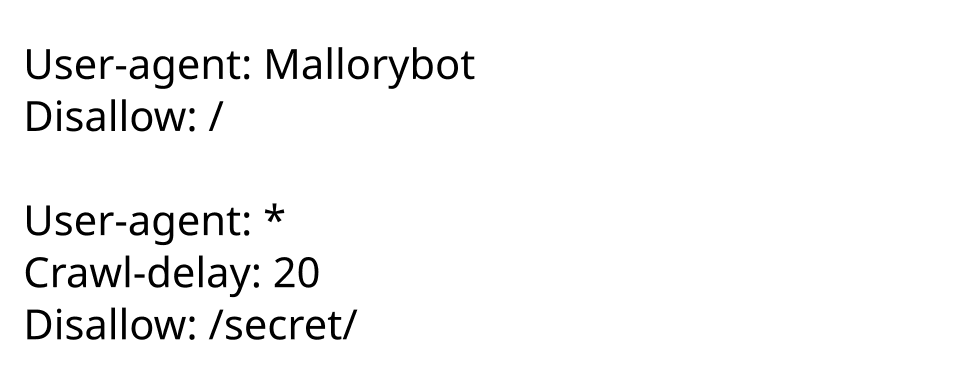
robots.txt: The Web's 'Keep Off The Grass' Sign
robots.txt is a public file suggesting which parts of a site web crawlers shouldn't visit, like admin areas. The footgun: it's a polite request, not a security wall. Malicious bots will ignore it, so never use it to hide sensitive data.
The Essential Matrix: Geometry for Stereo Vision
The Essential Matrix is a geometric bridge between two photos of the same scene, encoding the camera's relative motion. It's used in 3D reconstruction to find corresponding points; it tells you where a point from one image must lie in the other.
Multi-stage Docker Builds: Lean Images, Fast Deploys
Build your app in one container stage and run it in another, separate one. This keeps your final Docker image lean by shipping only the compiled artifact, not the entire build environment, compilers, and source code.
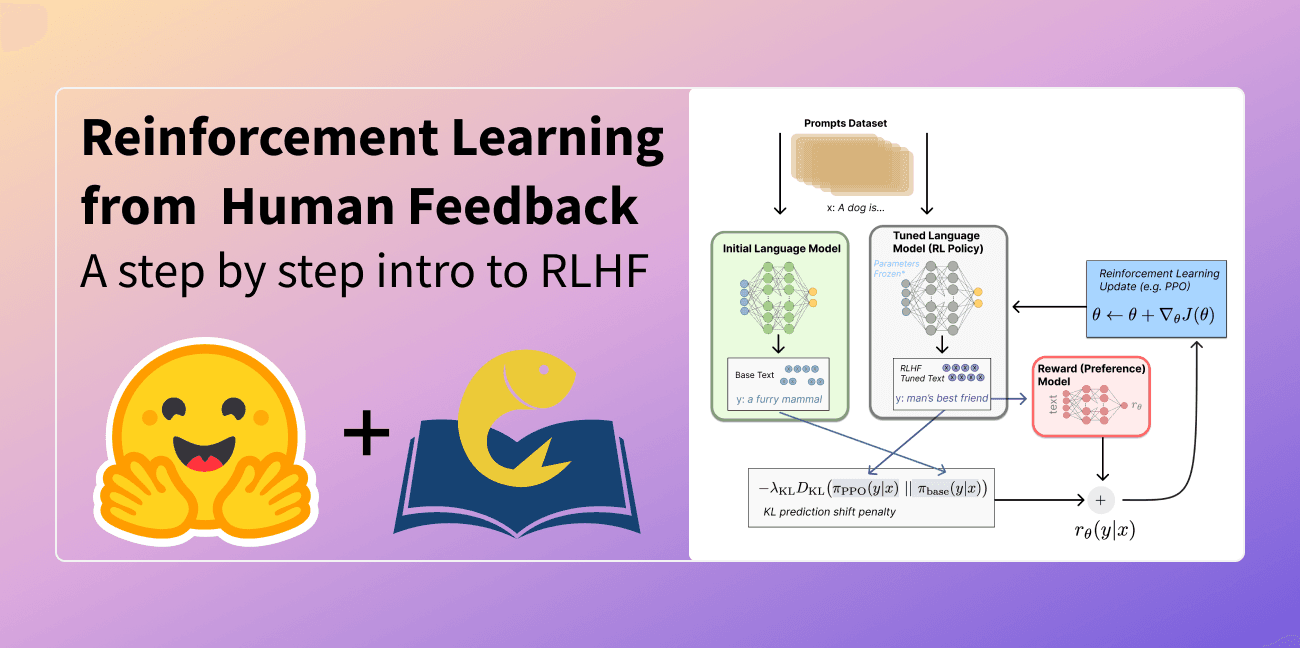
Reward Modeling: Teaching an LLM What 'Good' Means
A reward model is a judge that scores an LLM's outputs based on human preferences. It learns to assign a numerical 'goodness' score to text, turning subjective quality into an optimizable signal for training models like ChatGPT.
Querying NoSQL: It Depends on the Data Model
Querying NoSQL isn't one-size-fits-all; the method depends on the data model (key-value, document, graph). This is used for large, unstructured datasets like social feeds. The footgun is assuming SQL works everywhere; many require a model-specific API.
Triangulation: Finding 3D Points from 2D Images
Like your two eyes judging distance, triangulation finds a point's 3D location by seeing it from two different 2D camera views. It's key for 3D reconstruction and robotics.
Secrets Management: Beyond Environment Variables
Treat secrets like cattle, not pets: they should be temporary and replaceable. Use a central vault to dynamically inject credentials into apps at runtime, especially in CI/CD and containerized environments.
Scraping Dynamic Sites: Find the API, Not Just Render
To scrape a dynamic site, find the hidden API call its JavaScript makes to fetch data instead of rendering the whole page. This is faster and more reliable. This applies when your scraper gets empty HTML but you see data in your browser.
Structure from Motion (SfM): Rebuilding 3D from 2D Photos
Structure from Motion (SfM) reconstructs a 3D scene from 2D images taken from different viewpoints, much like your brain perceives depth. It's used for creating 3D maps from drone footage. The main footgun is its failure on textureless or reflective surfaces.
Nix: Reproducible Builds Through Functional Package Management
Nix treats system configuration like pure functional programming, ensuring reproducible builds by isolating every package into a unique, immutable path. It's used for reliable CI/CD and consistent dev environments. The footgun is its steep learning curve.

Streaming Ingestion: Catching Data as It Happens
Streaming ingestion is a conveyor belt for data, catching events as they happen instead of in batches. It's used for real-time fraud detection and IoT monitoring. The footgun is confusing ingestion (getting data in) with processing (acting on it).
Eight-Point Algorithm: Finding Geometry from Image Pairs
The Eight-Point Algorithm finds the geometric relationship between two camera views of the same scene. Given at least eight matching points, it estimates the essential or fundamental matrix.
NVIDIA CUDA: General-Purpose GPU Computing
CUDA unlocks a GPU's thousands of cores for general-purpose computing, not just graphics. It's key for accelerating tasks like machine learning by running the same operation on massive datasets in parallel.
Adapter Modules: Efficient LLM Fine-Tuning
Adapters are small modules plugged into a frozen LLM to avoid costly full fine-tuning. This lets you specialize a base model for many tasks by training tiny, swappable plugins instead of duplicating the entire model for each task.
gRPC: High-Performance RPC with Contracts
gRPC is a typed, high-performance function call between services. Instead of crafting JSON, you define a contract and gRPC handles the efficient binary transport. It's for low-latency microservice communication.

Bundle Adjustment: Jointly Refining 3D Scenes and Cameras
Bundle adjustment is a grand negotiation, simultaneously refining a 3D scene, camera poses, and lens properties to best explain the 2D images. It's the final polish in Structure from Motion (SfM) or SLAM.
Slash ML Training Costs with Spot Instances
Spot Instances are like flying standby for compute: you get a massive discount but can be 'bumped' if someone pays full price. Use them for ML training jobs that can be paused and resumed. The footgun is using them for tasks that can't tolerate interruption.
Proximal Policy Optimization (PPO): Stable RL Updates
PPO prevents destructive updates in reinforcement learning by "clipping" how much a policy can change at once, like a governor on an engine. It's a default for training LLMs with RLHF or robotics agents where stability is key.
Log Aggregation and Parsing: From Chaos to Clarity
Log aggregation gathers scattered system events into one place; parsing turns that raw text into structured, searchable data. This is essential for debugging distributed systems or analyzing security incidents.

SLAM: Mapping a Room While You're Still In It
SLAM solves a chicken-and-egg problem: you can't map a space without knowing your location, and you can't know your location without a map. It does both at once. It's used by robots and AR headsets to navigate.
We are hiring for this. Every open role lists the topics its interview covers, so you can prepare for the real thing rather than guessing.
See open roles