Intermediate concepts in Computer Vision, page 3
Perceptual Loss: Judging Images by Vibe, Not Pixels
Perceptual loss judges an AI-generated image by its 'vibe,' not just pixel-for-pixel accuracy. It compares high-level features, making it key for style transfer and super-resolution.

Scene Parsing: Labeling Every Pixel in an Image
Scene parsing is like digital coloring-by-numbers, assigning a category like 'road' or 'sky' to every pixel. It's used by autonomous vehicles to understand the road and AR apps to place objects.

Visual Question Answering (VQA): Teaching AI to See and Reason
VQA models combine vision and language to answer questions about an image, like a visual Turing test. It's used in assistive tech and advanced image search. The footgun is models learning to answer based on language patterns, not visual content.
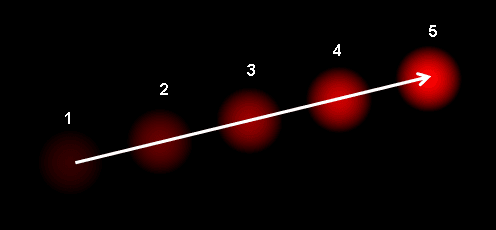
Visual Odometry: Estimating Motion from Pixels
Visual odometry is dead reckoning with a camera. It estimates movement by tracking how features shift between images, without GPS or maps. It's used in robotics and AR, but its biggest footgun is that small errors accumulate, causing it to drift over time.

Zero-Shot Learning: Classifying the Unseen
Zero-Shot Learning lets a model classify things it never trained on. It works by linking visual features to semantic descriptions, like identifying a 'zebra' from the description 'striped horse'. The footgun is assuming it creates knowledge from nothing.
Prototypical Networks: Learning from a Handful of Examples
Prototypical Networks classify new categories from few examples by finding the average representation, or 'prototype,' for each class. This is key for few-shot image recognition where you have only 1-5 examples.

Weakly Supervised Learning: Cheaper Labels, Smarter Models
Weakly Supervised Learning trains models on cheap, imprecise labels to perform complex tasks. It's used for object detection when you only have image-level tags, not pixel-perfect annotations.

Tone Mapping: Fitting HDR Light onto LDR Screens
Tone mapping compresses a vast range of light (HDR) to fit on a standard screen (LDR). It's how HDR photos and games look good on your monitor instead of having blown-out whites or crushed blacks. The footgun is creating unnatural, "over-cooked" images.
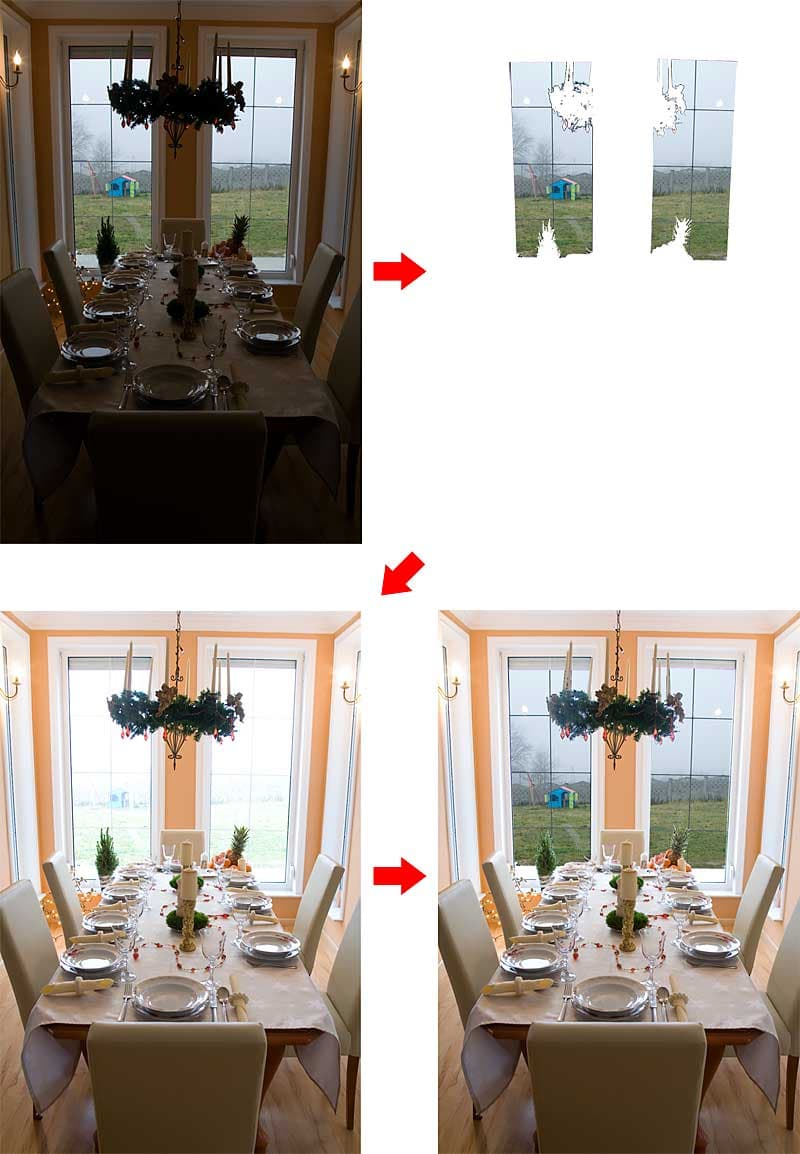
Exposure Fusion: HDR Looks Without the HDR File
Exposure fusion blends the best-lit pixels from several bracketed shots into one image. This lets you capture high-contrast scenes, like a bright window in a dark room, without creating a full HDR file.
Multi-frame Noise Reduction: Finding Signal in the Noise
Multi-frame noise reduction averages multiple shots to isolate the true signal. The underlying image is consistent, while random noise cancels out. It's key for low-light phone photos and video.
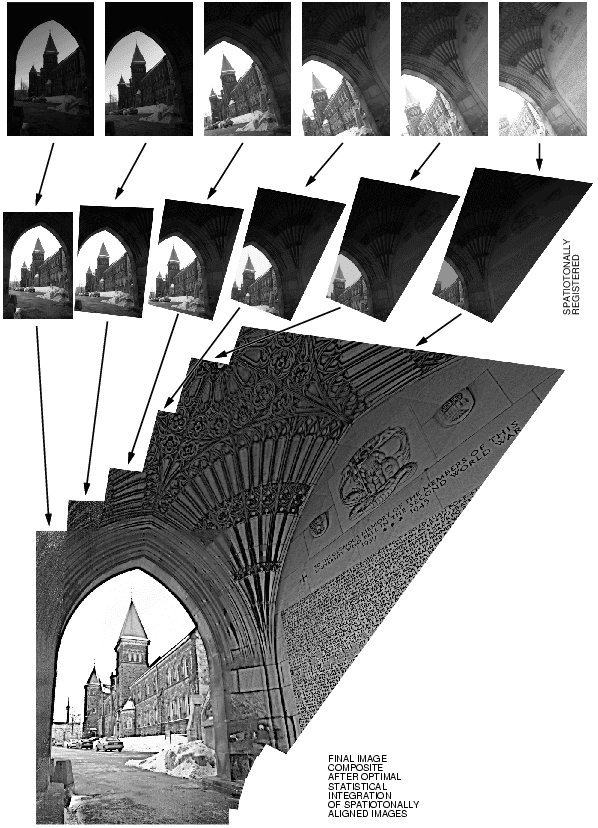
Synthetic Aperture: Faking a Big Lens with Software
Synthetic aperture uses depth data to computationally fake the shallow depth-of-field of a large lens. It's the magic behind smartphone 'Portrait Mode,' blurring the background to make a subject pop.
Super-Resolution: Creating Detail from Less
Super-resolution creates a high-res image from low-res sources by inferring missing details. It powers smartphone digital zoom and video upscaling. The footgun: generated details are plausible hallucinations, not ground truth, making it risky for scientific…

Precision vs. Recall: The Classifier's Trade-off
Precision is the quality of your positive predictions; Recall is the quantity you find. A spam filter with high precision avoids false alarms, while high recall catches most spam.
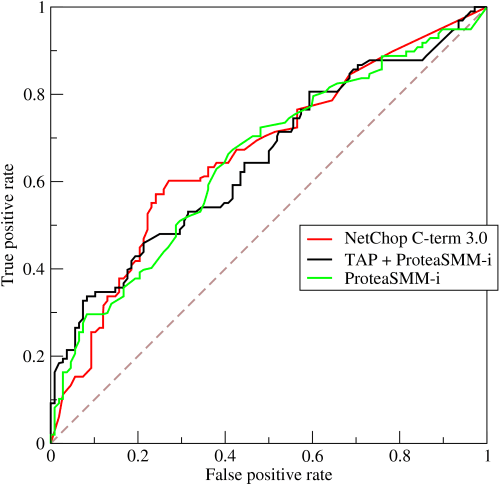
ROC Curve and AUC: Measuring Classifier Performance
An ROC curve visualizes a classifier's trade-off between catching true positives and flagging false ones across all thresholds. It's used to evaluate models like medical diagnostics or spam filters.
Model Quantization: Trading Precision for Performance
Model quantization trades numerical precision for a smaller memory footprint. It reduces model weights from high-precision types like fp32 to lower ones like int8 or int4, making large models fit on consumer hardware.
ONNX: The Universal Translator for ML Models
ONNX is a universal translator for ML models, letting you train in one framework (like PyTorch) and run in another. It's used to deploy models to diverse hardware without rewriting them.
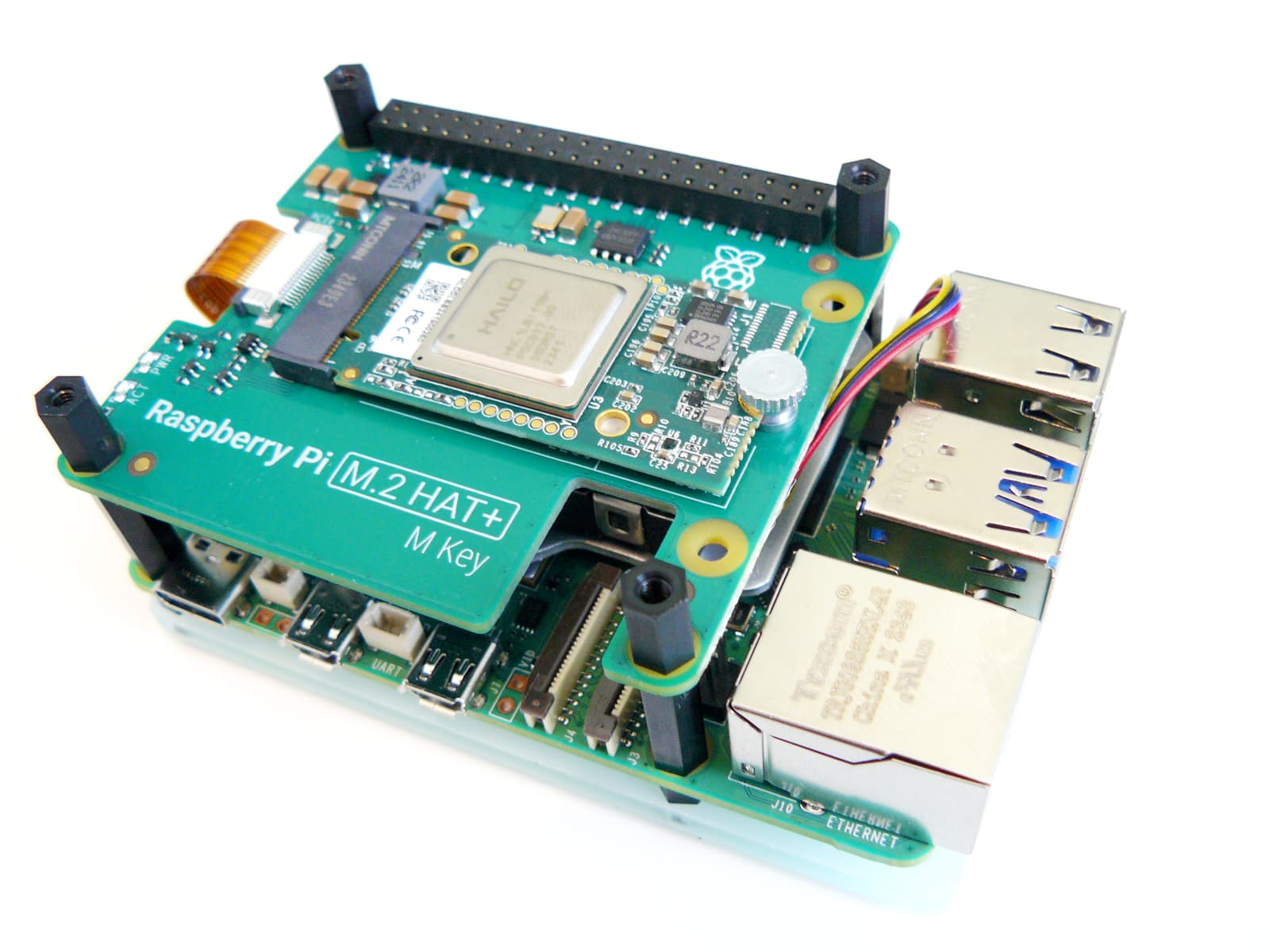
Edge AI Accelerators: Inference Without the Cloud
An Edge AI accelerator is a specialized, low-power chip that runs AI models directly on a device, skipping the cloud. It's used for real-time tasks like object detection where latency and privacy are critical.
Image Thresholding: Separating Foreground from Background
Image thresholding turns a grayscale image into black and white by setting a brightness cutoff. It's used to isolate features for analysis, like finding text on a page.

Perspective Transformation: Making 3D Look Right on a 2D Screen
Perspective transformation is like looking through a camera lens; it makes distant objects smaller to create the illusion of depth on a flat screen. It's essential for 3D games and computer vision.

BRIEF: Fast, Compact Binary Feature Descriptors
BRIEF describes image features as a compact binary string instead of a complex vector. This makes it extremely fast for real-time matching on low-power devices. The footgun: its raw form isn't rotation-invariant, trading that robustness for raw speed.
We are hiring for this. Every open role lists the topics its interview covers, so you can prepare for the real thing rather than guessing.
See open roles