Advanced everything in LLMs & Generative AI, page 3
Flamingo: Few-Shot Learning for Vision-Language Models
Flamingo is a vision-language model that learns new visual tasks from a few examples, like a child seeing a picture book before the zoo. It can tackle multiple tasks without needing massive, task-specific datasets.
BLIP: Bootstrapping Better Vision-Language Models
BLIP is a pre-training framework that masters both image understanding and generation by creating its own training data. It uses a captioner and filter to generate clean image-text pairs from noisy web data.
Latent Diffusion Models (LDM)
Latent diffusion models denoise in a compressed latent space instead of raw pixels. A pretrained autoencoder shrinks the image first and expands it back after, cutting compute enough to make text to image generation practical on consumer hardware.

Hierarchical AI Agents: The Org Chart for AI
Think of a corporate org chart for AI. A top-level agent breaks a big goal into smaller tasks and delegates them to specialized, lower-level agents. This is used for complex problems like automating software development. The main risk is coordination overhead.
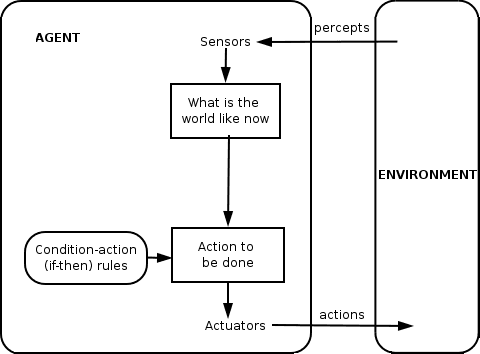
Multi-Agent Systems: A Team of AIs, Not a Monolith
Instead of one giant AI, a Multi-Agent System is a team of specialized AIs that collaborate on a complex problem. This appears in LLM-powered coding assistants and complex simulations.

Graph RAG: Answering Questions with Connected Facts
Graph RAG answers complex questions by exploring a map of connected facts (a knowledge graph) instead of just searching flat text. Use it for queries needing synthesis, like finding drugs for a disease made by companies in a specific country.
HyDE: Find Documents by Embedding a Fake Answer
Instead of embedding a short query, HyDE uses an LLM to generate a full, hypothetical answer document. This vector, representing an ideal answer, is then used to find similar real documents, improving zero-shot retrieval. The generated document is fictional.
Self-Querying Retriever: Let an LLM Write Its Own Filters
A self-querying retriever uses an LLM to turn a natural language question into a structured query with metadata filters. It lets users ask things like "Find documents about Python from before 2020," which a simple vector search can't do.
QLoRA: Finetune Huge LLMs on a Single GPU
QLoRA lets you finetune massive LLMs on one GPU by freezing the model in a 4-bit state and only training tiny adapter layers. Use it to adapt a 65B model with limited hardware. The footgun: performance hinges on high-quality data, not just the technique.
Proximal Policy Optimization (PPO): Stable RL Updates
PPO prevents destructive updates in reinforcement learning by "clipping" how much a policy can change at once, like a governor on an engine. It's a default for training LLMs with RLHF or robotics agents where stability is key.
Adapter Modules: Efficient LLM Fine-Tuning
Adapters are small modules plugged into a frozen LLM to avoid costly full fine-tuning. This lets you specialize a base model for many tasks by training tiny, swappable plugins instead of duplicating the entire model for each task.

ReAct: Teaching LLMs to Think, Act, and Observe
ReAct teaches an LLM to solve problems by interleaving thought, action, and observation. This is key for agents that search the web or query APIs to answer questions with external data.
Tree of Thoughts: LLM Reasoning Beyond a Single Path
Tree of Thoughts (ToT) lets an LLM explore multiple reasoning paths at once, like a human brainstorming. It generates several 'thoughts' and pursues the most promising ones. This is crucial for planning tasks where one wrong turn fails.
Self-Consistency: Majority Rules for LLM Reasoning
Self-consistency makes an LLM solve a problem multiple ways, then picks the most common answer. It's like asking a committee of experts for their reasoning and taking a vote. This boosts accuracy on complex math and logic puzzles.
Least-to-Most Prompting: Solving Hard Problems Incrementally
Least-to-most prompting guides an LLM by breaking a hard problem into a sequence of simpler steps. It excels at complex math or logic where chain-of-thought fails, solving each subproblem using the answer to the previous one.

Tensor Parallelism: Split Layers, Not Just Models
Tensor Parallelism splits a single large model layer, like a weight matrix, across multiple GPUs to run in parallel. This is crucial for inference with models whose layers exceed a single GPU's VRAM.
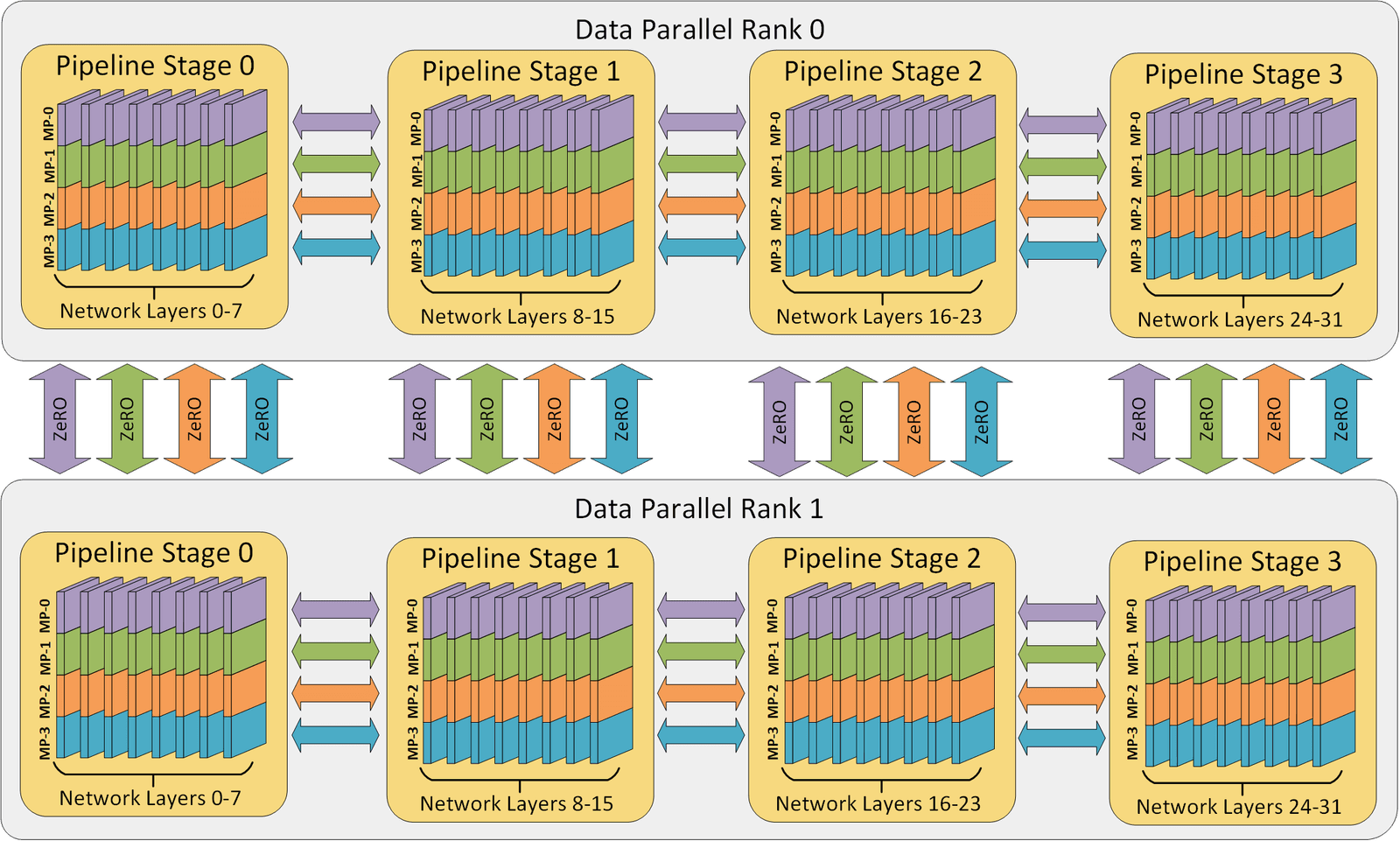
Pipeline Parallelism: An Assembly Line for Your Model
Think of training a huge model like an assembly line. Pipeline parallelism splits a model's layers into stages across multiple GPUs, allowing you to train models too large for one device.
What is a Large Language Model (LLM)?
An LLM is a neural network trained on vast text data to process and generate human-like language. It's the core technology behind chatbots, enabling them to generate, summarize, and translate text. Its reliability depends entirely on its training data.
Transformer Preprocessing: From Text to Tensors
Transformers don't read text; they read numbers. A tokenizer is the translator, converting sentences into numerical tensors the model understands. This is the mandatory first step for any NLP task. The footgun is using a tokenizer that doesn't match the model.
Cross-Attention: How Models Connect Two Ideas
Cross-attention lets a model, like a translator, focus on relevant parts of an input (e.g., a sentence) to generate an output (the translation). It's used in machine translation and image captioning. The footgun is confusing it with self-attention.
We are hiring for this. Every open role lists the topics its interview covers, so you can prepare for the real thing rather than guessing.
See open roles