Intermediate concepts in MLOps & Infrastructure, page 2
Parameter Servers for Distributed ML Training
A parameter server splits the work in distributed training: central servers hold the model's parameters, while worker nodes pull parameters, compute gradients on data subsets, and push updates back. This enables training models too large for one machine.
Horovod: Scale ML Training Across Many GPUs
Horovod scales a single-GPU training script to hundreds of GPUs with minimal code changes, slashing training time. It's used when models are too big for one machine.
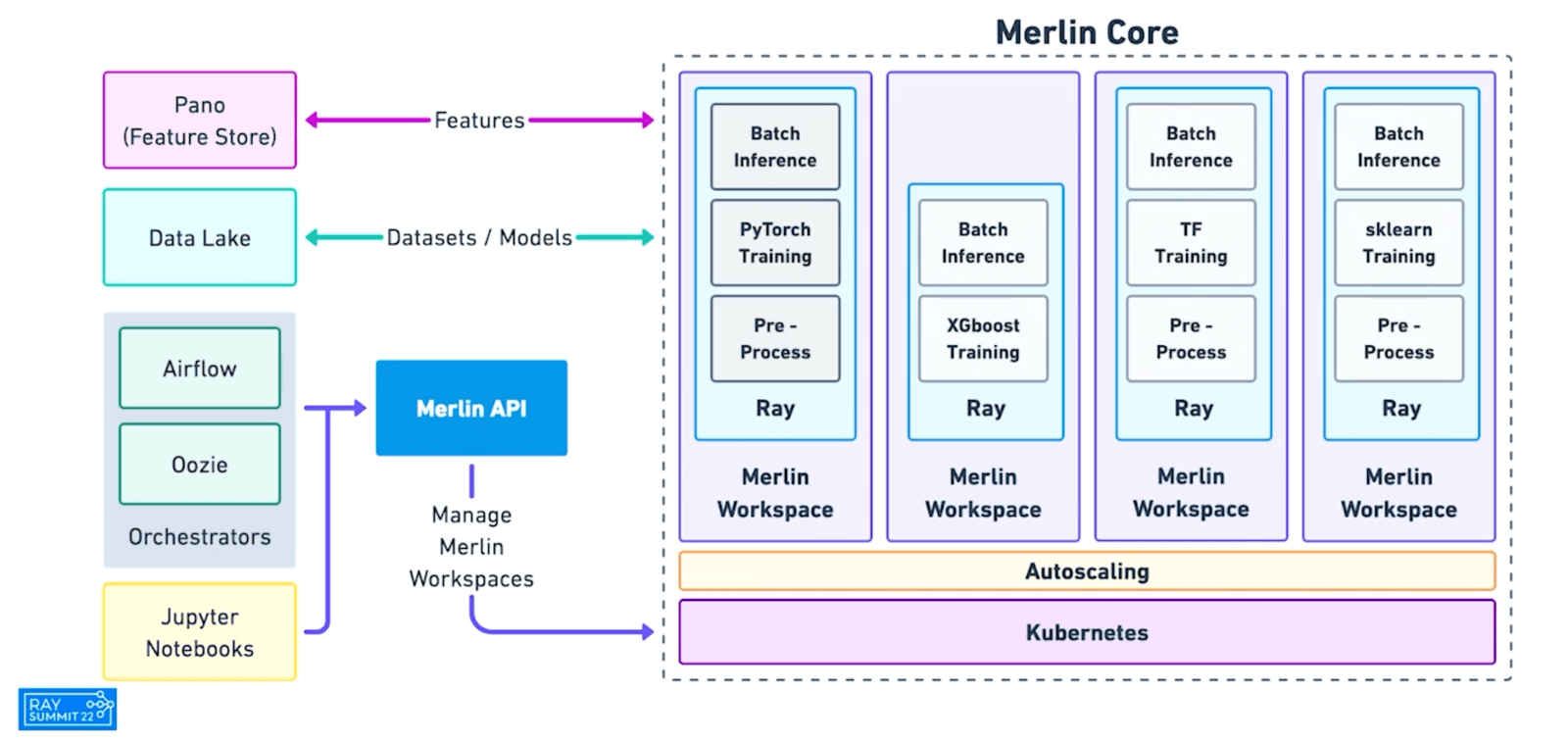
Ray AI Runtime (AIR): A Unified ML Toolkit
Ray AIR is a unified toolbox for the ML lifecycle, bundling libraries for data, training, tuning, and serving. It's for scaling end-to-end ML workflows on one distributed platform.
Kubeflow: MLOps on Kubernetes
Kubeflow brings the declarative, container-based world of Kubernetes to the entire ML lifecycle. It provides tools for building portable and scalable ML workflows, from development to production serving.
Slurm: The Job Scheduler for Supercomputers
Slurm is the reservation system for a shared supercomputer, queuing up jobs and assigning them to available nodes. It's the backbone of high-performance computing clusters in science and ML.
Elastic Training: Training Models on Unreliable Hardware
Elastic Training lets ML training jobs survive worker nodes being added or removed mid-run. It's like a construction crew that adapts to a changing number of workers, making it ideal for training large models on cheap but unreliable cloud spot instances.

Shadow Deployment: Test Models on Real Traffic
Shadow deployment runs a new model on real traffic without serving its predictions, letting you catch data drift before users are affected. It is the safest production validation method, but teams often forget to monitor its latency and resource costs.
Automating MLOps with GitHub Actions
Treat your ML workflow like any other CI/CD pipeline. GitHub Actions automates MLOps tasks—like training, testing, and deployment—triggered by events in your repo. Use it to run validation on PRs or deploy models on merge.
Model Server: The MLOps Deployment Bridge
A model server bridges ML training and production, operationalizing models within your release cycle. Use it when models must become first-class CI/CD citizens. The footgun is treating deployment as a one-time handoff rather than repeatable infrastructure.
Serverless Inference: Run ML Models Without Managing Servers
Serverless inference treats ML prediction like a function call, abstracting away servers. You pay for compute time per prediction, not for idle infrastructure.
Streaming Inference: Real-Time Model Predictions
Streaming inference makes predictions on data in-flight, not from a database. It's for real-time recommendations or fraud detection where millisecond decisions are critical. The footgun is assuming a single server can handle the load; you must build for scale.
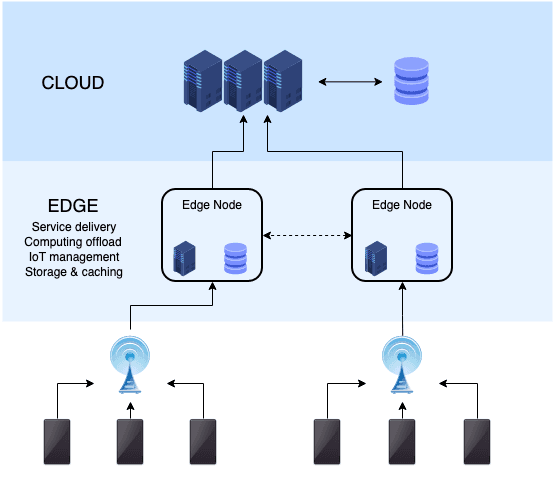
Edge AI: Running Models Where the Data Is
Edge AI runs machine learning models directly on devices, not in a distant cloud. This enables real-time, offline applications like smart cameras or voice assistants. The footgun is underestimating device hardware limits; models must be small and efficient.

Inference Batching: Grouping Requests for Throughput
Think of inference batching as a carpool for your ML model. Instead of sending each request in its own car, you wait a few microseconds to fill a bus, dramatically improving GPU efficiency.

Autoscaling ML Inference Endpoints
Autoscaling matches your ML model's compute to real-time demand, like an elastic container for your inference service. It handles spiky traffic for online endpoints, scaling up for peaks and down to save costs.
BentoML: Packaging Models for Production APIs
BentoML is a standardized shipping container for your ML models, packaging them into production-ready API endpoints. Use it to deploy LLMs or RAG systems without managing complex infrastructure. Its focus is purely on inference, not model training.
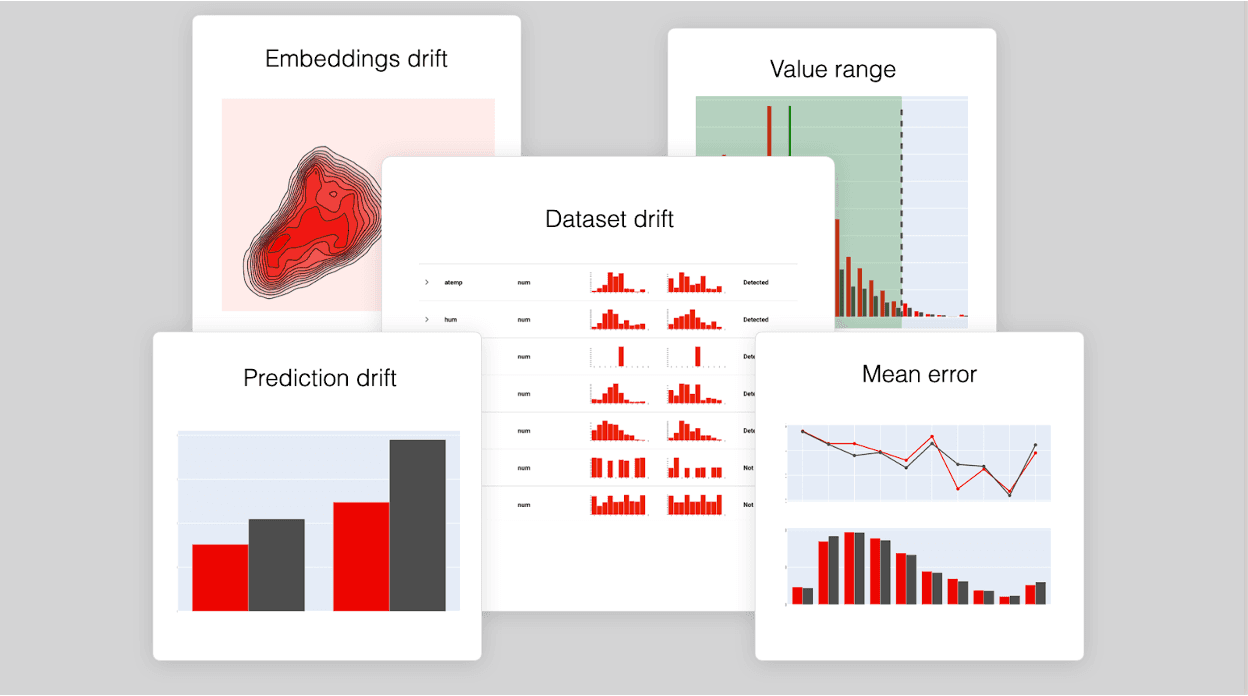
ML Monitoring Dashboards: Your Model's Health Chart
An ML monitoring dashboard is a health chart for your production model, showing how its performance decays. It tracks silent failures like data drift or concept drift, where user behavior changes and makes your model obsolete.

Population Stability Index (PSI): Quantifying Data Drift
The Population Stability Index (PSI) gives you a single number to quantify data drift between training and live data. It's used in MLOps to monitor model health, especially in finance. The footgun is ignoring a high PSI, which signals silent prediction decay.
TensorFlow Extended (TFX): Production ML Pipelines
TFX is an end-to-end platform for building production ML pipelines, like an assembly line for your models. It automates data validation, training, analysis, and serving. The footgun: TFX is not one tool, but a suite of libraries you must learn and connect.
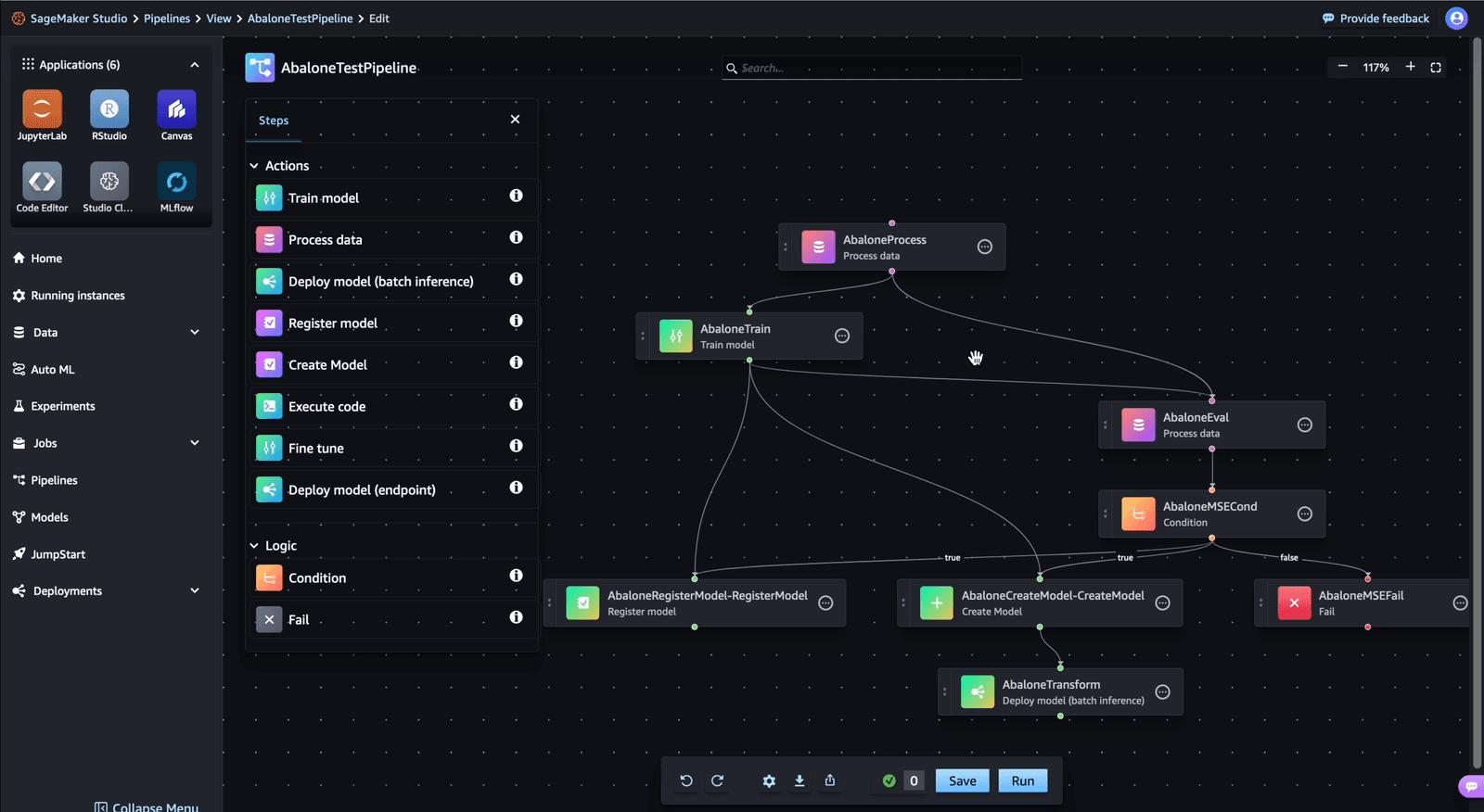
Amazon SageMaker Pipelines: Repeatable ML Workflows
Think of SageMaker Pipelines as a CI/CD pipeline for ML models, automating workflows from data prep to deployment. Use it for reproducible training and automated retraining.
Vertex AI Pipelines: Orchestrating ML Workflows
Think of it as an assembly line for your machine learning models, automating everything from data prep to deployment. Use it to build reproducible, production-grade ML systems on Google Cloud.
We are hiring for this. Every open role lists the topics its interview covers, so you can prepare for the real thing rather than guessing.
See open roles