Easy concepts in Product Management, page 7
Stationarity: A Time Series's Stable Personality
A time series is stationary if its statistical personality, like its average and spread, remains constant over time. Many forecasting models require this stability to work correctly.
Stakeholder Communication Plan: Who Gets Told What, and When
A stakeholder communication plan is a roadmap for who needs to know what, when, and how. It's used to keep executives, dependent teams, and users aligned on project progress. The biggest footgun is a one-size-fits-all approach; tailor updates to each group.
Lead Time: From Customer Request to Live Code
Lead Time measures the total duration from when a feature is requested to when it's live for users—it's the customer's total waiting time. Teams use it to understand responsiveness and set predictable timelines. The footgun is confusing it with Cycle Time.
Customer Acquisition Cost: What It Costs to Win a Customer
Customer Acquisition Cost (CAC) is the total price you pay in sales and marketing to get one new customer. Businesses use it to see if their model is viable by comparing it to customer lifetime value (LTV). The footgun is forgetting to include all costs.
MRR: The Subscription Heartbeat
MRR is the monthly pulse of a subscription business. SaaS teams use it to forecast growth and measure churn. Counting one-time fees or annual contracts without proration inflates the metric and misleads stakeholders.
SAFe: Scaling Agile Beyond a Single Team
SAFe is a blueprint for applying Agile principles across large organizations, not just single teams. It coordinates many teams into 'Agile Release Trains' that plan and deliver together in fixed cycles, ensuring alignment on complex products.
Net Promoter Score (NPS): A Snapshot of Customer Loyalty
NPS distills customer loyalty into one number by asking, "How likely are you to recommend us?" It's a quick pulse check for product teams. The footgun is treating the score as a diagnosis; it tells you *what* customers feel, but not *why*.
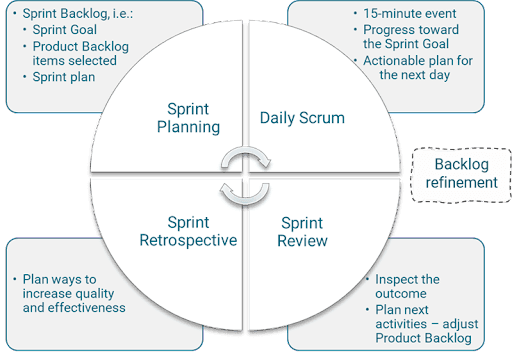
Large-Scale Scrum (LeSS): Scaling Scrum by Descaling the Org
LeSS scales Scrum by simplifying the organization, not adding processes. It applies one-team Scrum principles to multiple teams working on one product. Use it when 2-8 teams need to collaborate on a single product backlog.

Customer Retention Rate: Your Leaky Bucket Metric
Customer Retention Rate measures how many customers you keep over a period, showing how "leaky" your business's bucket is. It's vital for subscription services and e-commerce to gauge loyalty and predict revenue. A high overall rate can hide dangerous churn.
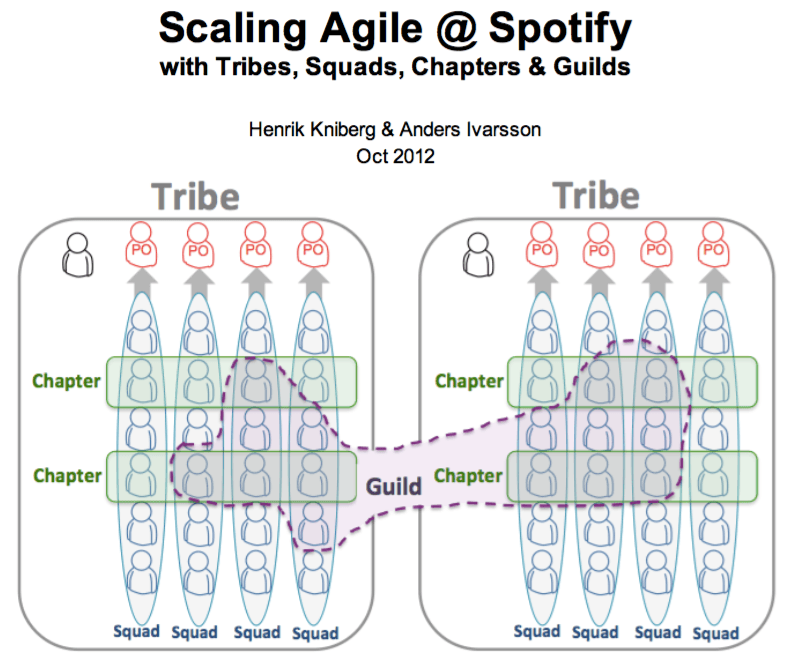
The Spotify Model: Scaling Agile with Autonomy
The Spotify Model organizes teams for autonomy and alignment, using mini-startups (Squads) and skill-based communities (Chapters). It helps scale agile in large orgs, but copying the structure without the culture of trust creates a rigid hierarchy in disguise.
Delegation Poker: Making Delegation a Team Sport
Delegation isn't a binary choice. Delegation Poker is a game where teams discuss and agree on their level of authority for key decisions, moving from 'manager decides' to 'team decides'. It's used to clarify roles and empower teams.
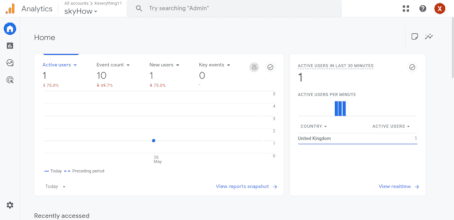
Google Analytics 4
Google Analytics is a service for tracking user activity across websites and mobile apps. It helps measure marketing performance by tracking traffic and user 'events'. The footgun is focusing on raw traffic instead of the events that signal valuable actions.
Gemba Walk: Go See Where the Work Happens
A Gemba Walk means leaving your desk to see where value is actually created. It's about observing real work, not reading reports. Managers use it to understand real bottlenecks. The footgun is observing to judge, not to understand and learn.
Jupyter Notebooks: Interactive Code Sandboxes
Jupyter Notebooks are digital lab notebooks for running code, seeing output, and writing notes in one place. Data scientists use them for exploration, visualization, and prototyping.
Moving Motivators: Uncover What Drives Your Team
Moving Motivators is a card game that reveals a person's core drivers by ranking ten motivations. Use it with a new hire or a team facing change to see how their motivation will be impacted. The footgun is judging motivators, not understanding them.
Google BigQuery: A Serverless Data Warehouse
Think of BigQuery as a massive SQL database you don't have to manage. It's a serverless data warehouse for analyzing huge datasets, like terabytes of application logs. The footgun is treating it like a regular database for real-time transactions.

The Satir Change Model
The Satir Change Model maps a team's emotional journey through disruption. When a new process is introduced, performance doesn't just improve; it first dips into resistance and chaos.
The ADKAR Model for Change Management
The ADKAR Model is a Prosci methodology for managing organizational change. It's applied during large-scale projects like ERP implementations, digital transformations, and mergers across industries like healthcare and finance.
Activation Rate: Measuring the 'Aha!' Moment
Activation rate measures the percentage of users who experience your product's core value, not just sign up. It's a key metric for diagnosing onboarding effectiveness. The common mistake is tracking 'completed onboarding' instead of the 'aha!'
Feature Adoption Rate: Measuring if New Features Deliver Value
Feature adoption rate measures if users actually use specific features, not just log in. It's vital for SaaS products to prove ongoing value for renewals. The footgun: a low rate means customers pay for unused bloat, which actively hurts perceived value and…
We are hiring for this. Every open role lists the topics its interview covers, so you can prepare for the real thing rather than guessing.
See open roles