Intermediate concepts in Product Management, page 9
Developer Evangelism: Building a Movement for Your Tech
Developer evangelism builds a movement for a technology, aiming to make it a standard through network effects. It's used to drive adoption for new platforms, APIs, or frameworks by inspiring developers, not just selling to them.

Growth vs. Fixed Mindset: Your Beliefs Shape Your Abilities
A growth mindset sees ability as a muscle to be built, not a static trait you're born with. It's key when facing tough problems or critical feedback. The footgun is believing you're 'not a natural' at something, which prevents you from even trying.

Make Policies Explicit: Write Down Your Workflow's Rules
Making policies explicit turns your team's unwritten rules into a shared, improvable playbook. Use it to define what 'done' means for each stage or how to handle blocked items.
Exponential Smoothing: Weighting Recent Data More Heavily
Exponential smoothing creates forecasts from a weighted average of past data, where weights decay exponentially for older points. It's used for quick, reliable predictions like inventory demand. The footgun: simple versions ignore trends and seasonality.
Growth Hacking: Marketing via Rapid Experimentation
Growth hacking treats marketing like a science experiment, using rapid, low-cost tests to find what grows a user base instead of relying on big, slow campaigns. It's used by startups to A/B test ideas before investing resources.
Holt-Winters Exponential Smoothing
Forecast time-series data by giving more weight to recent events. Holt-Winters smoothing is used to analyze metrics and make predictions by accounting for user-defined assumptions like seasonality.
The North Star Metric: Your Company's One True Focus
A North Star Metric (NSM) is your company's compass: a single metric capturing the core value you deliver to customers. Spotify uses 'time spent listening' to align teams on user engagement.
ACF vs. PACF: A Time Series Signal and Its Echo
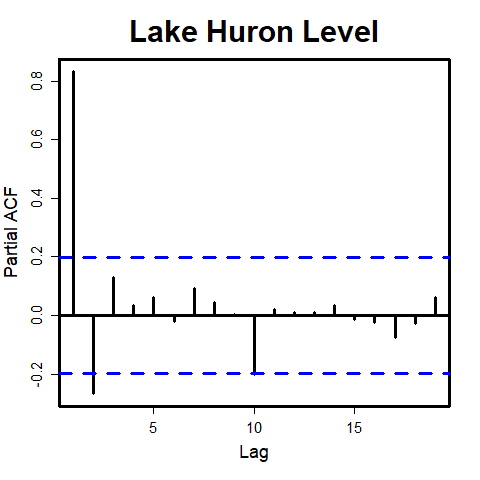
Autocorrelation (ACF) measures a time series's total correlation with its past, including indirect echoes. Partial Autocorrelation (PACF) isolates the direct correlation by removing intermediate effects. They help select forecasting model parameters.
Experiment-Driven Organization: Run Your Org Like a Lab
Treat organizational change like a lab experiment, not a big-bang project. This helps companies adapt by testing new processes on a small scale first, generating evidence before committing to a full rollout. The footgun is mistaking chaos for experimentation.
Time Series Cross-Validation
Unlike standard cross-validation that shuffles data, time series cross-validation respects the arrow of time. It evaluates a forecasting model by training only on past data to predict a future point, then rolling forward. The footgun is using random k-folds.
Managing Up: Be the Co-Pilot, Not Just a Passenger
Managing up isn't flattery; it's making your manager more effective by aligning your work with their goals. This is key for getting projects resourced and ensuring your priorities align with the organization's, preventing wasted effort.

Growth Loops: The Engine of Product Growth
A growth loop is a closed system where outputs are reinvested to generate more inputs, creating compounding growth. Unlike linear funnels, this model unifies product, marketing, and monetization. The footgun is using funnels, which creates silos.

Prophet: Automated Time Series Forecasting
Prophet treats forecasting like decomposing a signal, breaking a time series into trend, seasonality, and holiday effects. It excels at predicting business metrics with strong seasonal patterns, like web traffic.
Strategic Narrative: Your Company's Source Code for Story
A strategic narrative is the source code for your company's story, defining its unique value. It's the blueprint for marketing, sales, and internal decisions, ensuring everyone tells the same story.

AARRR: Pirate Metrics for the Customer Lifecycle
The AARRR framework maps your customer's journey through five key stages: Acquisition, Activation, Retention, Referral, and Revenue. It helps startups diagnose leaks in their growth funnel, from first visit to final sale.
Force-Field Analysis: Map the Tug-of-War of Change
Force-Field Analysis visualizes a decision by mapping 'driving forces' (pros) against 'restraining forces' (cons). Use it to gauge the viability of a change, like a new project. The main footgun is listing forces without scoring their relative strengths.
The K-Factor: Measuring Your Product's Viral Growth
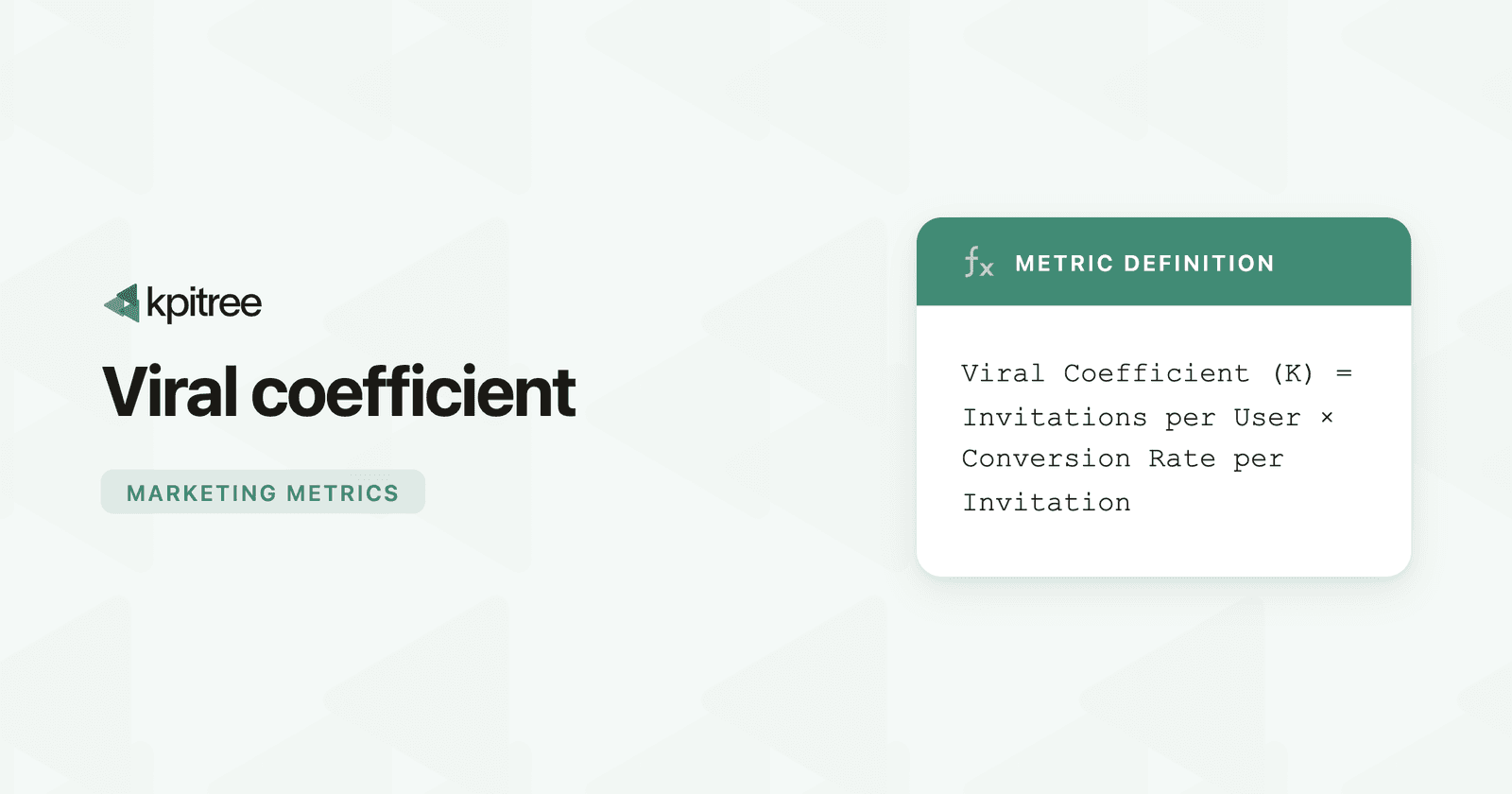
The Viral Coefficient (K-factor) measures how many new users each existing user generates. It's key for products with referrals or sharing. The common mistake is chasing K > 1; even K=0.5 is valuable, as it effectively halves your acquisition cost.
Takt Time: Your Customer's Production Rhythm
Takt time is the production rhythm required to meet customer demand—a metronome for your workflow. It's used to design manufacturing lines or software sprints by setting a target pace.

Instrumentation Plan: Your Analytics Blueprint
An instrumentation plan is the blueprint for what user actions to track. It's like deciding where to put security cameras *before* building, not after a break-in. It's essential for new features and for cleaning up messy analytics.
Escaped Defects Rate: Measuring What Slips to Production
Escaped Defects Rate is your quality report card from users, measuring the percentage of total bugs that your internal testing missed. Teams use it to gauge QA effectiveness. The footgun is using it to blame individuals, which just encourages hiding bugs.
We are hiring for this. Every open role lists the topics its interview covers, so you can prepare for the real thing rather than guessing.
See open roles