Advanced interview questions in Product Management, page 3

Design a data quality framework for a modern data platform.
Tests your ability to design a systematic data quality strategy. A great answer outlines a framework starting with governance (roles), then profiling/assessment, defining standards, and finally implementing pipeline controls.
How do you navigate separating what from how with a prescriptive PO?
Tests Scrum's boundary: PO owns value and what; Developers own how. Strong answers reframe the user outcome, propose the simpler solution in Sprint Planning with tradeoffs, and preserve autonomy without overriding the PO. Red flag: blind obedience or defiance.
How would you instrument events and query a 3-invite aha moment?
Tests taxonomy and stateful aggregation across sessions. Strong answers instrument Teammate Invited with timestamps, compute 7-day per-user counts via stream or SQL windowing, and materialize cohorts.
How to handle a PO defining the technical implementation?
This tests your understanding of Scrum roles and ability to influence stakeholders. A great answer seeks to understand the PO's "why," presents alternatives with data, and reinforces shared goals and responsibilities. A red flag is being confrontational.
How do you separate the 'what' from the 'how' with a Product Owner?
This tests your ability to influence and uphold Scrum roles. A great answer focuses on understanding the PO's goal, framing your simpler solution in terms of business value (cost, risk), and collaborating on the path forward.
Where does accountability lie when acceptance criteria miss the user problem?
Tests your grasp of Scrum's empirical accountability and value inspection. A strong answer cites shared Scrum Team ownership, uses the Sprint Review as the adaptation trigger, and proposes outcome-based refinement with stakeholders.
Who's accountable when an increment fails the user?
Tests your grasp of shared accountability in Scrum. A great answer avoids blame, highlighting the PO's role in value but also the whole team's duty to understand the 'why.' Propose concrete fixes like better backlog refinement.
Accountability When an Increment Fails the User Problem
This tests your understanding of shared accountability versus blame culture. A great answer frames this as a whole-team process failure and proposes specific improvements to backlog refinement and in-sprint feedback loops, rather than blaming the Product…
Outline your strategy for influencing organizational change to remove stage-gated releases.
Tests reframing governance around people readiness versus bureaucratic gates. Answer: map the change landscape; pilot Release on Demand with governance cadences for operational readiness; measure via Release, Stabilise, Measure, Adjust.
How would you change a mandatory, stage-gated release process?
Tests your ability to influence organizational change using data, not just advocate for a technical solution. Start small with a pilot, quantify the business impact (e.g., cycle time), and address stakeholder concerns around risk.
Strategy for Changing a Stage-Gated Release Process
This tests your ability to influence organizational change. A great answer diagnoses the problem with data, understands stakeholder concerns, proposes a small pilot, and scales success. A red flag is complaining or proposing a purely technical fix.
How would you use ML to optimize habit-loop notifications?
Tests blending behavioral psychology and ML to personalize cues without coercion. Good answers use contextual bandits with user-state features and reward habit formation over clicks.
How do you root-cause bad data across microservices and Spark?
This tests structured debugging and observability for distributed pipelines. A strong answer isolates the break via lineage, validates schema and freshness per stage, and compares microservice outputs to Spark inputs.
How do you debug a data quality issue in a complex pipeline?
Tests systematic debugging in distributed systems. A great answer prioritizes containment, traces data lineage from report to source, and proposes specific observability tools.
How would you debug a critical data quality issue in a pipeline?
Tests your systematic debugging of a distributed system under pressure. A great answer contains the impact, traces data lineage backward from the report to the source, and then proposes preventative tooling.
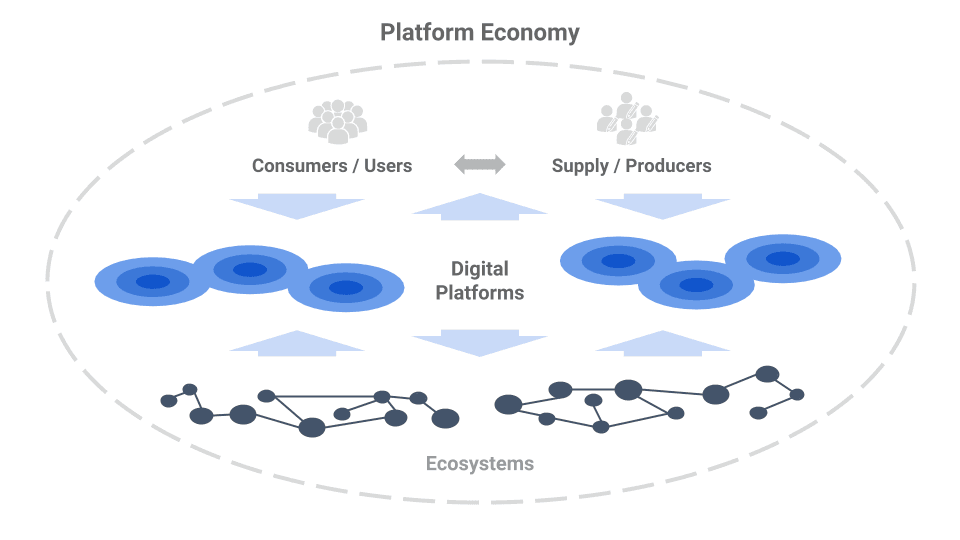
Propose a platform strategy to beat competitor feature velocity
Tests trading feature parity for architectural leverage. Strong answers frame the platform as an intermediary enabling interactions and innovation via self-service APIs, composable primitives, and data loops. Red flag: a shared library creating bottlenecks.
Design a system that detects choice paralysis and dynamically simplifies the interface
Track hover entropy, scroll jitter, and time-to-click; use a contextual bandit to select simplification tiers.
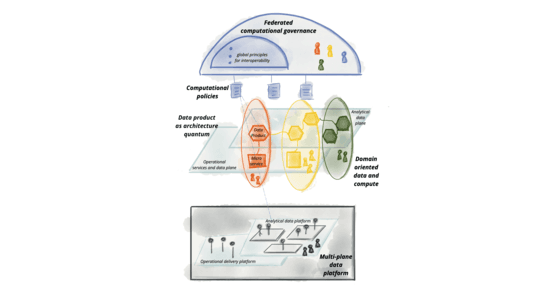
Design a scalable data governance framework balancing autonomy and control
Self-serve platform with domain products, auto-catalog, schema contracts, and policy-as-code access in CI/CD.
Design a Scalable Data Governance Framework
This tests your grasp of decentralized data architectures like Data Mesh. A great answer proposes a federated model with domain ownership, data as a product, and a self-serve platform.
Design a Scalable Data Governance Framework
This tests your grasp of decentralized data governance (Data Mesh). A great answer outlines four principles: domain ownership, data as a product, a self-serve platform, and federated computational governance.
We are hiring for this. Every open role lists the topics its interview covers, so you can prepare for the real thing rather than guessing.
See open roles