Intermediate interview questions in Product Management, page 23
How do you handle a story that's too large for a sprint?
Tests your ability to apply agile principles pragmatically. A great answer prioritizes the Sprint Goal, collaborates with the PO to vertically slice the story into smaller valuable pieces, and then re-plans the sprint backlog.

Architect a Multi-Touch Attribution System
This tests your grasp of modern data challenges like signal loss. A good answer discusses data ingestion, identity resolution, and model trade-offs. A red flag is focusing only on the algorithm and ignoring the data pipeline's fragility.
Handling a user story too large for a sprint
This tests your grasp of vertical slicing and incremental value. A good answer involves collaborating with the PO, splitting the story into smaller, value-delivering slices, and negotiating scope.
Unify behavior, billing, and CRM data
Ingest events, sync Stripe and Salesforce into a warehouse, resolve identities to one customer, model unified metrics.
Why repeatedly extending a test inflates false positives
Repeatedly checking and extending until significance is p-hacking via optional stopping, which inflates the false-positive rate; fix with fixed sample sizes or sequential…

What options exist when a story is too large for one sprint?
This tests vertical-slicing discipline versus architectural decomposition. A strong answer covers splitting by user value, checking INVEST criteria, and avoiding task-like layers. A red flag is proposing horizontal database or UI splits that defer feedback.
Client-Side vs. Server-Side Event Tracking
This tests your grasp of data integrity trade-offs. A great answer advocates for server-side tracking for critical events due to its reliability against ad blockers, using client-side only for supplementary UI events. A red flag is treating them as equal.
A story is too large for one sprint. What are your options?
Tests your grasp of incremental value delivery over just task completion. A great answer first re-validates priority with the PO, then discusses vertical splitting strategies and their trade-offs.
Client-side vs. Server-side Event Tracking: When and Why?
This tests your grasp of data reliability and security trade-offs. A good answer defines both, contrasts reliability (ad blockers) vs. implementation ease, and uses a critical event like "Payment Processed" to justify server-side's accuracy.
A high-priority story is too large for one sprint. What are the options?
This tests your ability to deliver incremental value. A good answer prioritizes vertical slicing (end-to-end functionality) over horizontal (task-based) splits. Discuss trade-offs of different splitting patterns.
Decommission a depended-on API gracefully
Map consumers and usage, provide a migration target, announce a versioned timeline, decommission only after traffic hits zero.
Investigating analytics vs database count gaps
Causes include ad-blocker loss, differing identity logic, timezone mismatches, filtering, and pipeline delay; investigate by aligning definitions and tracing one user.
Handle interaction effects on a shared page
Combined variants may produce effects neither has alone; use mutual exclusion for likely interactions, orthogonal designs with interaction monitoring otherwise.
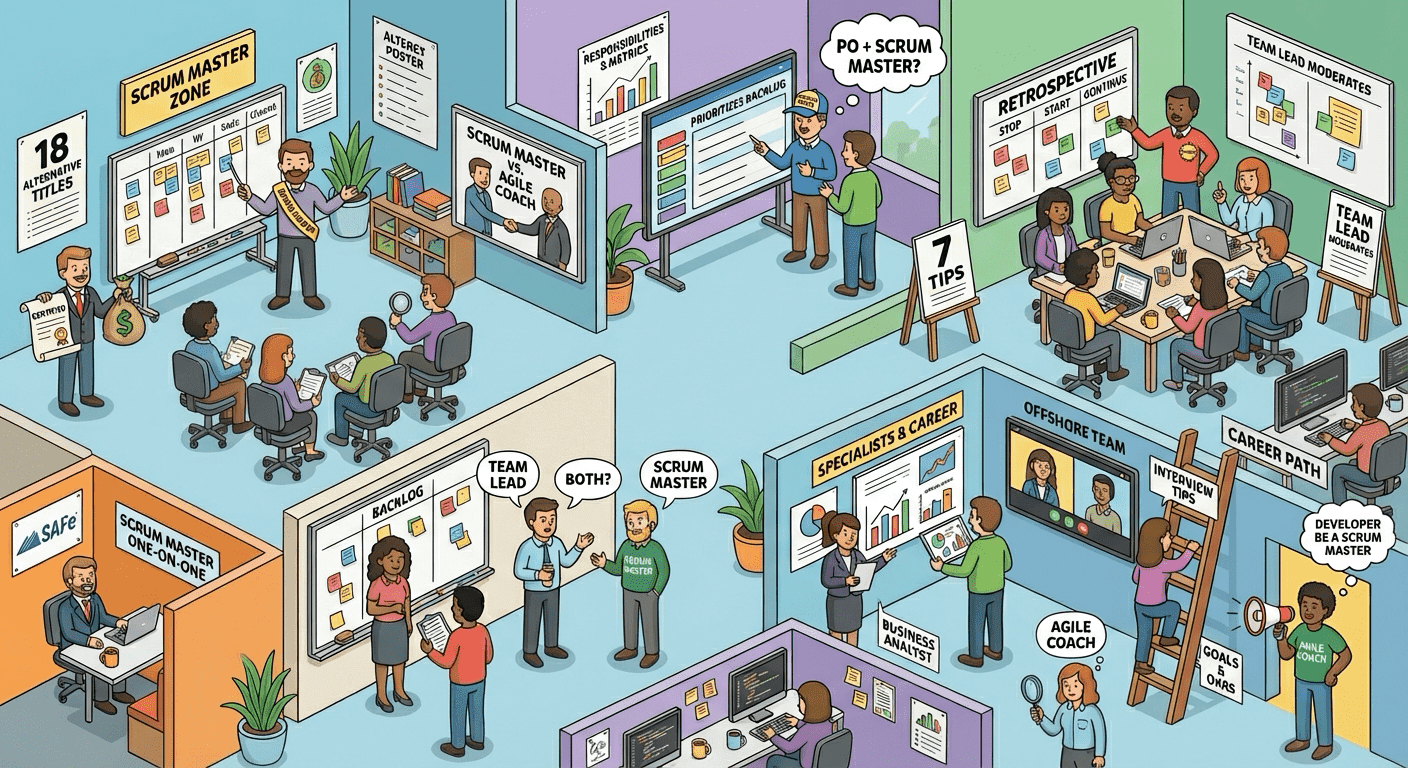
Manager wants to attend your Sprint Retrospective. Risk and response?
This tests your grasp of psychological safety in retrospectives. A strong answer cites the observer effect, proposes an alternative forum first, and sets ground rules if attendance is required.
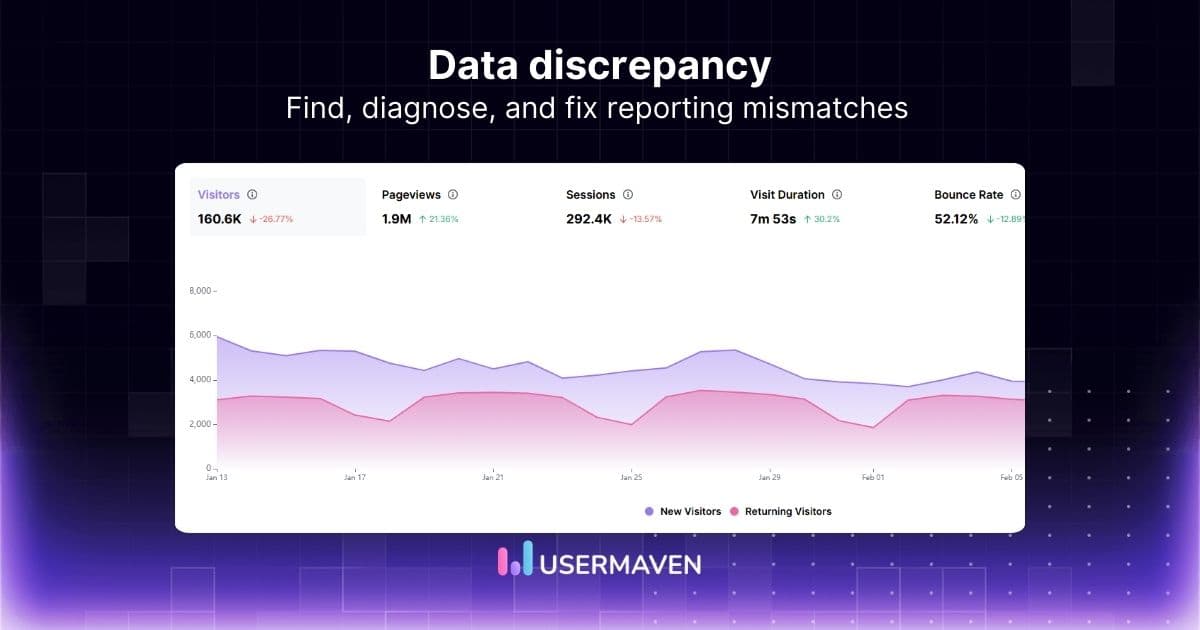
Why do our analytics and backend user counts not match?
This tests your ability to systematically debug data integrity issues. A great answer first defines the metric, then investigates tracking implementation, privacy blockers, and time zone settings. A red flag is blaming one tool without a structured plan.
Manager Wants to Attend Your Sprint Retrospective. How Do You Respond?
Tests your grasp of psychological safety and stakeholder management. A good answer identifies the risk to open feedback, proposes other ways to inform the manager, and suggests a structured, one-time experiment if they must attend.
Why don't analytics and backend user counts match?
This tests your systematic debugging and understanding that 'user' has different definitions. A good answer first defines 'user' in each system, then investigates tracking implementation, timing differences, and filtering.
A manager wants to attend your team's Sprint Retrospective. What's the risk?
Tests your grasp of psychological safety in Agile and stakeholder management. A great answer identifies the risk of chilled feedback, diagnoses the manager's underlying need, and proposes an alternative forum.
Public API design versus internal API design
Public needs strict versioning, long deprecation, scoped auth like OAuth and API keys, and polished docs; internal can move faster.
Bundled analytics vs warehouse-native trade-offs
Warehouse-native gives one source of truth and SQL flexibility but shifts modeling, performance, and UX onto your team; bundled tools are turnkey but siloed.
We are hiring for this. Every open role lists the topics its interview covers, so you can prepare for the real thing rather than guessing.
See open roles