Intermediate interview questions in Product Management, page 6
How do you create a 'golden record' for customers?
Tests your grasp of data governance and systems thinking. A strong answer defines master data, outlines a phased approach (discovery, rule-setting, implementation), and covers ongoing stewardship.

How would you design a system to monitor competitors' technical changes?
Monitor public bundles and DNS; diff over time; alert on strategic pivots like new checkout APIs.
What is your responsibility when frontend developers are overloaded?
Tests cross-functional accountability and shared Sprint Goal ownership. Strong answer: own the goal collectively; pair, test, or learn simpler frontend tasks; raise the blocker at the Daily Scrum.
What's your responsibility when only frontend work remains?
This tests your commitment to collective ownership over individual tasks. A great answer prioritizes the Sprint Goal, offers to help overloaded frontend devs directly (e.g., testing, pairing), and avoids the red flag of starting future work before helping the…
What do you do when only frontend work remains in a sprint?
This tests your commitment to team ownership over role specialization. A great answer prioritizes the Sprint Goal, offers to help the frontend devs directly (pairing, testing), and finds other ways to unblock them.
How should the team handle a PO adding urgent work mid-sprint?
This tests your grasp of agreed goals and the Scrum Master role. A strong answer covers: inspecting the current work selection, negotiating swaps, and having the Scrum Master foster conversation.
How do you handle a PO adding work mid-sprint?
Tests your ability to protect the Sprint Goal via collaboration, not conflict. A good answer uses the Retrospective to discuss impact, proposes a 'one-in, one-out' policy for the Sprint Backlog, and involves the Scrum Master.
How do you handle a PO adding work mid-sprint?
This tests your ability to protect the Sprint Goal collaboratively. A good answer acknowledges the PO's intent, proposes a scope swap to make trade-offs visible, and uses the Retrospective for long-term fixes.
Slow dashboard querying a large fact table: first three checks?
This tests systematic diagnosis of fact-table query latency. A strong answer checks the execution plan and indexing, evaluates partitioning and data model fit, and inspects caching or pre-aggregation.
How to diagnose a slow dashboard query?
This tests systematic debugging of a data problem. A good answer investigates the query plan first, then the table's physical layout (partitioning/clustering), and finally the BI tool and warehouse load. A red flag is jumping to a solution without diagnosis.
How would you diagnose a slow dashboard query?
This tests your systematic approach to performance tuning. A great answer investigates query optimization, strategic indexing/partitioning, and the data model (like star schema).
Explain RICE scoring and its Confidence factor
Score equals Reach times Impact times Confidence divided by Effort; Confidence discounts uncertain estimates; ground it in evidence tiers.
Why is star schema preferred over 3NF for analytics?
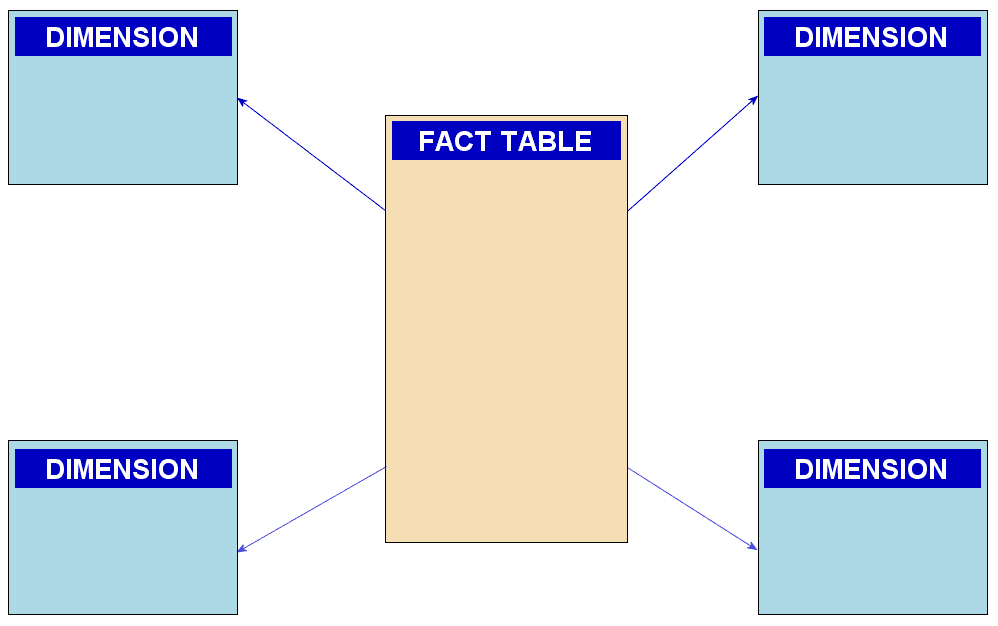
Tests your grasp of the read-performance trade-off in analytical schemas. A great answer names fact and dimension tables, emphasizes fewer joins for aggregations, and cites simpler SQL and faster query plans.
Explain the star schema and its advantages for analytics
This tests your grasp of OLAP vs. OLTP data modeling. A great answer defines fact/dimension tables, explains how denormalization leads to fewer joins and faster queries, and contrasts this with 3NF's focus on write integrity.
Explain a star schema and its advantages for analytics
Tests your grasp of data modeling trade-offs for OLAP vs. OLTP. A good answer defines fact/dimension tables, then explains how denormalization and fewer joins improve query speed for analytics. A red flag is confusing it with a snowflake schema.
How do you analyze and present performance trade-offs against a trust vision?
Tests if you frame technical risk through the trust vision. Strong answers quantify speed versus trust cost, present mitigated options with staged rollouts, and assign business risk owners.

Develop a testable hypothesis for a 40% email verification drop-off
This tests structured hypothesis formation under uncertainty. Strong answers: segment the 40% drop by device and latency; build a Customer Theory from data; isolate one lever; draft a four-part MECLABS hypothesis. Red flag: skipping diagnosis to guess fixes.
How do duplicate events bias COUNT(*) and daily login reports?
Tests idempotency in streaming analytics. COUNT(*) overcounts; fix with unique event ID dedup via idempotent writes or COUNT(DISTINCT id), plus daily partition reconciliation. Red flag: SELECT DISTINCT * without a stable key or no reporting safeguard.

How would you break a large epic into sprint-ready user stories?
This tests decomposing scope into vertical, shippable slices. A strong answer maps user journeys, slices end-to-end functionality, applies INVEST, and sequences by risk and value. Red flag: horizontal layers like database, API, then UI.
How do you handle duplicate events in an analytics pipeline?
Tests your grasp of data integrity and idempotent processing. Explain how duplicates inflate COUNT(*), then propose adding a unique event_id and using a stateful stream processor to track seen IDs. Mention query-time COUNT(DISTINCT event_id) as an alternative.
We are hiring for this. Every open role lists the topics its interview covers, so you can prepare for the real thing rather than guessing.
See open roles