Interview questions in Product Management, page 10
What validation checks would you implement for an email field?
Tests your understanding of practical validation vs. theoretical purity. A great answer prioritizes user experience, uses simple syntax checks (like a single '@'), and relies on sending a verification email as the ultimate test.
Who's accountable when an increment fails the user?
Tests your grasp of shared accountability in Scrum. A great answer avoids blame, highlighting the PO's role in value but also the whole team's duty to understand the 'why.' Propose concrete fixes like better backlog refinement.
How would you validate user-submitted email addresses at ingestion?
Tests your understanding of data validation beyond simple regex, focusing on robustness and system-level thinking. A good answer covers format checks, DNS/MX record validation, and blocking disposable services.
Accountability When an Increment Fails the User Problem
This tests your understanding of shared accountability versus blame culture. A great answer frames this as a whole-team process failure and proposes specific improvements to backlog refinement and in-sprint feedback loops, rather than blaming the Product…
What technical steps estimate effort to build a competitor's missing feature?
Tests whether you decompose unknown scope before guessing timelines. A strong answer covers: reverse-engineering the user flow, mapping integration points, sizing unknowns, and validating with a spike.
How would you design a near real-time social proof notification system?
This tests low-latency event pipeline design with bounded load. A strong answer uses a fire-and-forget beacon, stream processor, and cache with TTL; it favors approximate counts and windowed aggregation.

What is a data schema and why enforce it at ingestion?
Tests schemas as contracts and ingestion validation as a quality gate. Strong answers cite blueprints with constraints, fail-fast ingestion catching type errors upstream, and downstream trust. Red flag: treating schemas as optional docs affecting only storage.
Daily Scrum runs over 15 minutes; what facilitation techniques realign it?
This tests if you view the Daily Scrum as an inspection and adaptation event. A strong answer proposes a parking lot, coaches self-management of the timebox, and keeps talk focused on adapting the plan. A red flag is asking the Scrum Master to extend the.
What is a data schema and why enforce it on ingestion?
This tests your understanding of data contracts. A great answer defines a schema as a data blueprint, then explains how early enforcement prevents bad data, ensuring consistency and reliability for analytics. A red flag is only defining the term.
How do you fix a Daily Scrum that runs too long?
This tests your understanding of the Daily Scrum's purpose (inspection, not problem-solving). A good answer involves re-educating the team, using a 'parking lot' for deep dives, and coaching individuals.
What is a data schema and why enforce it on ingestion?
This tests your grasp of data governance. Define a schema as a data blueprint. Explain that enforcement on ingestion prevents "garbage in, garbage out" by validating types and formats, ensuring data is usable for analytics.
How to fix a Daily Scrum that runs over its timebox?
Tests your understanding of the Daily Scrum's purpose: inspection and adaptation, not problem-solving. A good answer re-centers the team on the Sprint Goal, uses a 'parking lot' for deep dives, and addresses the root cause offline.
How would you leverage microservices to out-maneuver a monolithic competitor?
Tests turning architecture into product velocity. Exploit competitor's release cycle with independent service teams shipping features in days not months via domain boundaries. Red flag: seeing microservices as purely technical or suggesting big-bang rewrite.
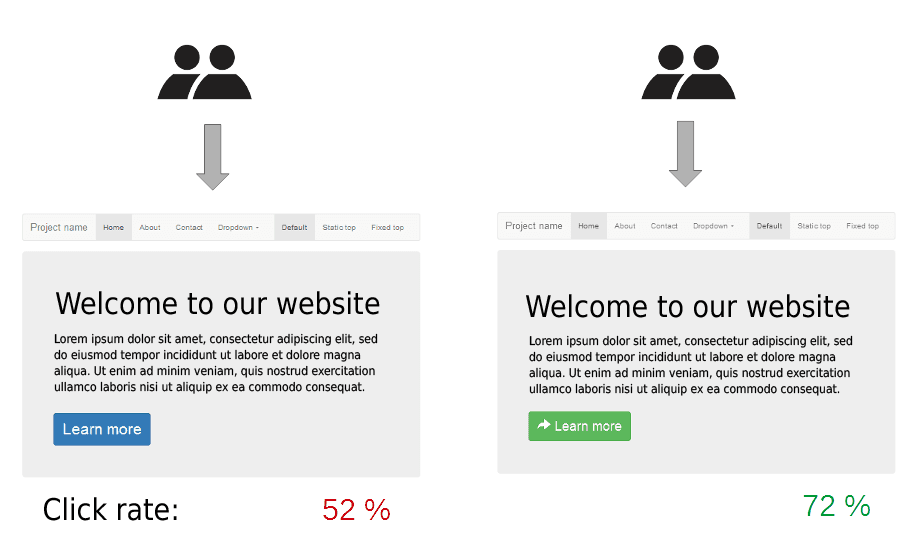
Design an A/B test for loss aversion versus gain framing at checkout
Tests whether you can isolate framing effects from checkout confounders. Strong answers detail user-level randomization, event logging, and guardrail metrics like revenue per visitor. Red flag: a conversion-only analysis with no unit of diversion defined.
How would you implement data lineage for microservices analytics?
Tests end-to-end provenance tracking, not just docs. Strong answers cover automated metadata capture at service boundaries, a central catalog such as DataHub or OpenLineage, and column-level tracing.
How would you coach a developer skipping backlog refinement?
Coach one-on-one to find blockers; tie skipped refinement to planning delays; adapt format with the team.
Explain data lineage and how you would implement it
This tests your ability to design for data observability. Define lineage (origin, transformation, movement), then propose a solution using metadata extraction (OpenLineage) and a central graph store/UI (Marquez) to trace data from microservices to analytics.
How do you coach a dev who skips backlog refinement?
This tests your ability to coach and connect process to outcomes. First, diagnose the 'why' in a 1:1. Then, frame refinement as a solution to their pain points (e.g., fewer interruptions). A red flag is quoting Scrum rules or immediately escalating.
Explain data lineage and how you'd implement it
Tests your practical data governance knowledge. Define lineage (origin, transforms, movement), then outline a solution: metadata collection from services, a central store (graph DB), and a visualization tool (Amundsen/OpenLineage).
How to coach a developer who skips backlog refinement?
This tests your coaching skills and ability to influence peers. First, understand their 'why' in a 1-on-1. Then, frame refinement as an investment to reduce future rework. A red flag is immediately escalating to a manager or being overly dogmatic.
We are hiring for this. Every open role lists the topics its interview covers, so you can prepare for the real thing rather than guessing.
See open roles