Interview questions in Product Management, page 28

Train-Test Split vs. Time-Series Cross-Validation
This tests your grasp of data leakage in temporal data. A good answer explains why random splits create lookahead bias, then details how rolling-origin validation respects time. A red flag is just describing methods without explaining *why* one is necessary.

How would you implement Classes of Service in Kanban?
This tests your understanding of risk management and differentiated service delivery. A good answer defines the 4 classes (Expedite, Fixed Date, Standard, Intangible), explains their different pull policies, and gives a risk-based example.
Train-test split vs. time-series cross-validation?
Tests if you see why temporal data breaks random splits. Contrast random sampling with sequential 'walk-forward' validation, where you only use past data to predict the future.
How would you implement Classes of Service in Kanban?
Tests your grasp of risk management and flow optimization in Kanban. A good answer defines classes (Expedite, Fixed Date), explains implementation via swimlanes and WIP limits, and gives an example showing trade-offs.
Which classical baseline model handles weekly seasonality and upward trend?
Tests matching model structure to data characteristics. Name Holt-Winters triple exponential smoothing; map its level, trend, and seasonal equations to weekly period. Red flag: jumping to SARIMA without explaining why ETS is the natural baseline.
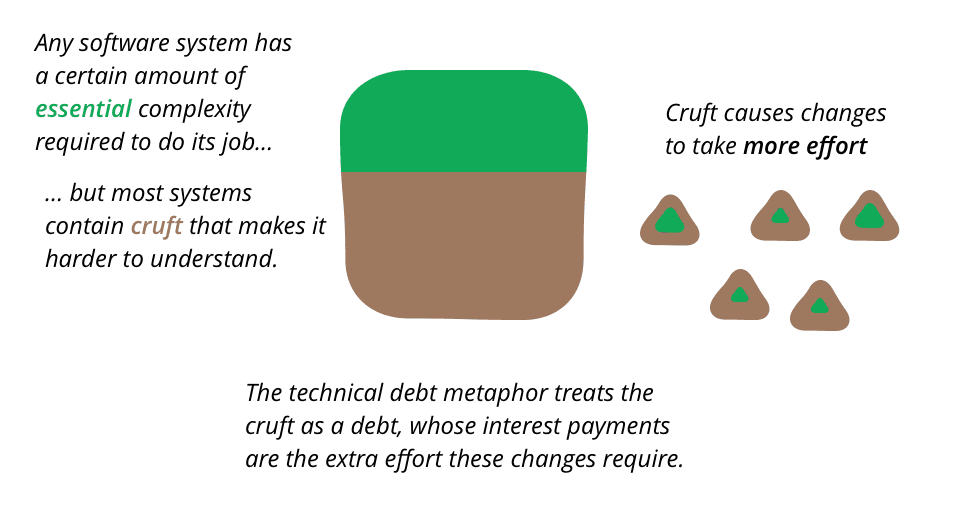
How do you justify API refactoring over new features to stakeholders?
Tests turning technical drag into business cost. Frame cruft as interest on velocity; quantify incident cost, MTTR, and lead time; advocate incremental cleanup with product work. Avoid demanding a six-month rewrite without product tie-in.

Design referral tracking from invite to conversion
Tests data modeling for multi-stage conversion tracking. Strong answers separate codes from conversion events, model status transitions, and enforce unique constraints. Weak answers merge invite and reward into one table or store denormalized counts on users.

CFD Testing band widens: what does it indicate and what experiments?
This tests flow metric literacy. A widening Testing band means arrivals exceed departures; propose experiments like smaller batches, automation, or dev-test swarming, then measure cycle time. Red flag: blaming testers or demanding headcount without data.
Which model for forecasting with seasonality and trend?
This tests your knowledge of classical time series models. A good answer names Holt-Winters, explaining its level, trend, and seasonal components. It also discusses choosing between additive and multiplicative methods. A red flag is jumping to complex models.
Diagnosing a Widening CFD 'Testing' Band
Tests your ability to interpret a CFD and propose data-driven experiments. A widening 'Testing' band means work enters faster than it leaves. Diagnose with experiments (e.g., tracking test failures, environment downtime) before proposing solutions.
Forecasting inventory with trend and weekly seasonality?
This tests mapping a business problem to a statistical tool. A good answer names Holt-Winters, explains its level, trend, and seasonal components, and discusses additive vs. multiplicative seasonality.
CFD shows a widening 'Testing' band. What does it mean?
This tests your ability to interpret process metrics and propose data-driven solutions. First, define the bottleneck: work enters testing faster than it leaves. Then, propose experiments to diagnose the cause before suggesting solutions.
Diagnosing model degradation over time
Name it model drift, split data vs concept drift; diagnose by comparing distributions and ruling out pipeline bugs; fix via monitoring and retraining.
How does a fixed marketing launch date change your development approach?
Acknowledge the business case, fix time and flex scope via Iron Triangle, front-load risk.

How would you enforce a 3-project freemium limit and handle upgrades?
Tests entitlement and growth tradeoffs. Strong answers use API-level enforcement, atomic checks to prevent concurrent overages, soft upsell prompts preserving context, and async billing webhooks. Red flag: UI checks or limits in the projects table.
Design an Upstream Kanban process for product ideas before development
Tests your grasp of pre-commitment demand shaping. A strong answer maps an option-discovery board, defines the commitment point and triage policies, and ties early filtering to reduced downstream variability.
How do you diagnose and fix a model's degrading performance?
Tests your MLOps process for handling model decay. Name it "concept drift," then outline a plan: diagnose by comparing data distributions, solve with a targeted retraining strategy, and implement proactive monitoring. A red flag is just saying "retrain it."
Design and Implement an Upstream Kanban Process
Tests your understanding of managing demand vs. capability. A great answer defines Upstream Kanban as a pre-commitment filter, outlines board stages and policies, and explains how vetting work improves downstream predictability.
How do you handle model performance degradation over time?
This tests MLOps lifecycle awareness. Name concept drift, outline a systematic diagnosis of data and error patterns, discuss retraining strategies, and propose a monitoring plan. A red flag is just saying 'retrain the model' without any diagnosis.
Design an Upstream Kanban for Product Ideas
Tests managing work before commitment. A good answer defines the commitment point, visualizes options on a board, and applies triage discipline to refine ideas. A red flag is describing a simple 'to-do' list without a structured filtering and decision process.
We are hiring for this. Every open role lists the topics its interview covers, so you can prepare for the real thing rather than guessing.
See open roles