Easy everything in Product Management, page 18
Timeboxing: Fix the Time, Flex the Scope
Timeboxing fixes the duration for a task, not the scope. You work for a set period and then stop, forcing focus and preventing endless work. It's the core of Agile sprints and daily stand-ups. The footgun is treating it as a hard deadline to cram.
Information Radiator: Your Team's Public Billboard
An information radiator is a large, public display that broadcasts key project info to anyone walking by. It's used for build statuses or task boards to keep the team aligned without meetings. The footgun is cluttering it until it becomes ignorable noise.
INVEST: The Checklist for High-Quality User Stories
INVEST is a checklist for quality user stories: Independent, Negotiable, Valuable, Estimable, Small, and Testable. Use it in backlog grooming to ensure work is clear and sprint-ready.
Epic: The Agile Placeholder for Big Ideas
An Epic is a large user story that's too big for a single sprint, acting as a placeholder for a major feature. Use it to group related stories for features like 'user profile management.'

Burndown Chart: A Project's Fuel Gauge
A burndown chart is a project's fuel gauge, showing work left versus time. Scrum teams use it to track sprint progress and predict completion. The footgun is treating it as a performance report instead of a conversation starter about blockers.
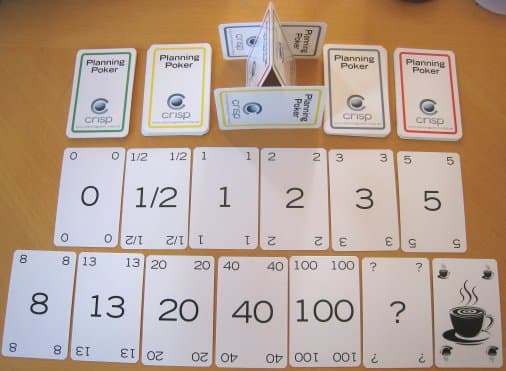
Planning Poker: Avoid Groupthink in Estimates
Planning poker avoids groupthink in effort estimation. Team members reveal estimates simultaneously using cards, preventing the first number spoken from anchoring everyone else. It's used in Agile to size up tasks.
Technical Debt: The Hidden Cost of Shipping Fast
Technical debt is like a loan on your codebase: you ship faster now by taking a shortcut, but pay 'interest' later as slower development. It's often a choice to meet a deadline. The footgun is thinking all debt is bad; strategic debt is fine if.
Servant Leadership: Serve First, Lead Second
A servant-leader inverts the power pyramid, focusing on their team's growth over their own power. This is common in Agile, where scrum masters remove blockers to help developers perform at their best.
Minimum Viable Product (MVP): Learn Faster with Less Code
An MVP is the smallest product version that delivers value to early users and provides feedback for future development. Use it to test a business hypothesis with minimal resources, like a single-feature app.
User Stories: Features from the User's Perspective
A user story is an informal, natural language description of a software feature from the end user's viewpoint. Used in agile development, they're written by stakeholders like clients or developers on Post-its or in apps.
User Stories: What Users Want, and Why
A User Story is a simple description of a feature from the user's perspective, focusing on the 'who, what, and why' instead of technical details. It's the primary unit of work in Agile, building a shared understanding of what to build.
The Daily Scrum: A 15-Minute Team Sync
The Daily Scrum isn't just a status update; it's a 15-minute planning session for the next 24 hours. Team members sync on progress, identify blockers, and adjust their plan for the day. The footgun is treating it as a report to a manager.
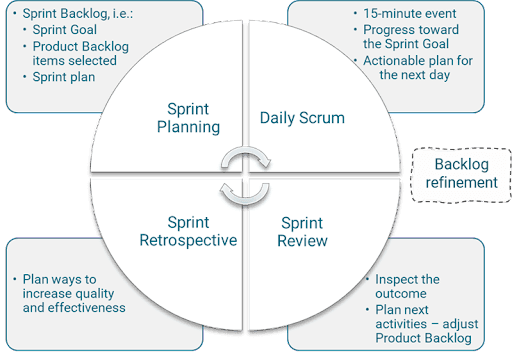
The Sprint: A Timeboxed Rhythm for Work
A sprint is a fixed-length container, typically 1-4 weeks, where a team turns ideas into a valuable product increment. Sprints give a predictable rhythm to software teams and marketing campaigns. The footgun is treating a sprint as a mini-waterfall project.
Waterfall Model: Build Software Like a Building
The Waterfall model treats software development like building a house: each phase is fully completed before the next begins. It suits projects with fixed requirements, but its major footgun is that late-stage changes can force a costly restart from the…
The Agile Manifesto: A Shift in Software Values
The Agile Manifesto is a value system, not a rigid process. It prioritizes people, working software, customer collaboration, and adapting to change over rigid plans and documentation. This philosophy underpins frameworks like Scrum.
We are hiring for this. Every open role lists the topics its interview covers, so you can prepare for the real thing rather than guessing.
See open roles