Easy concepts in Product Strategy
Product Strategy: The 'Why' Behind Your Product
Product strategy is the 'why' behind your product, connecting its vision to business goals. It's the compass that guides development, not the feature-by-feature map. The common footgun is confusing strategy (the why) with the roadmap (the what and when).

Strategy vs. Tactics: The Map vs. The Directions
Strategy is your destination and why you're going; tactics are the turn-by-turn directions. A product strategy defines the long-term goal, like 'capture the enterprise market,' while tactics are the specific feature launches to get there.
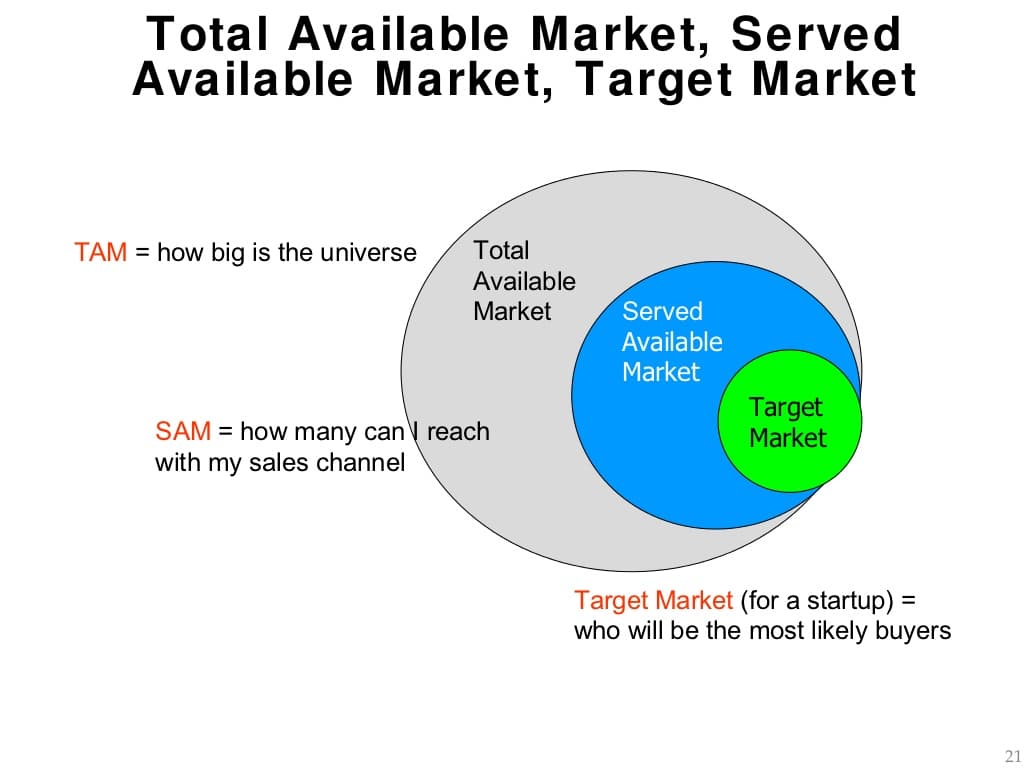
TAM, SAM, SOM: Sizing Your Market Opportunity
TAM, SAM, and SOM are nested filters for market size. TAM is the total demand, SAM is the segment you can serve, and SOM is what you can realistically capture. It's how you go from 'everyone' to 'our first 1,000 users'.
PESTLE Analysis: Mapping Your Business's External World
PESTLE analysis is a strategic checklist for scanning the external world for threats and opportunities you can't control but must react to. It's used for market entry strategy and product development.

User Personas: Build for a 'Who', Not a 'What'
Personas are fictional character sheets for your ideal users, grounding product decisions in human needs, not just features. They guide choices from UI to marketing by asking "What would our user do?".
Qualitative vs. Quantitative: The 'Why' and the 'How Many'
Quantitative research counts and measures ("how many?"), while qualitative research explores and understands ("why?"). Use quantitative for A/B tests to get statistical proof, and qualitative for user interviews to uncover motivations.
Problem Statement Framing: Define the 'Why' Before the 'What'
Don't just solve the problem, solve the *right* one. Problem framing forces you to deeply understand a user's need before building. It's the first step in product development, ensuring teams don't build something nobody wants.

How Might We: Frame Problems, Not Solutions
“How Might We” questions turn research insights into broad prompts for brainstorming. Use them after user research to frame design challenges before ideating. The biggest footgun is embedding a solution in the question, which kills creativity.

The Competitive Matrix: Visualizing Your Strategic Edge
A competitive matrix is a map of your market, plotting your product against rivals on key axes like price and features. Use it to spot market gaps, justify new features, or refine pricing.
Perceptual Mapping: Charting How Customers See Your Brand
A perceptual map charts your brand's position based on customer views, not your own. It's a reality check on how you're perceived against competitors on axes like price vs. quality. The biggest footgun is mapping based on internal beliefs, not customer data.
Your Product's North Star: The Mission Statement
A product mission is your team's compass: a short statement of why the product exists, who it serves, and its core goal. It aligns stakeholders and guides development. The footgun is confusing it with a vision; a mission is what you do now, not a.
Positioning Statement: Your Product's Internal Compass
A positioning statement is an internal compass, not a public slogan. It defines your product's unique place in the market for a specific customer, guiding all marketing and product decisions.
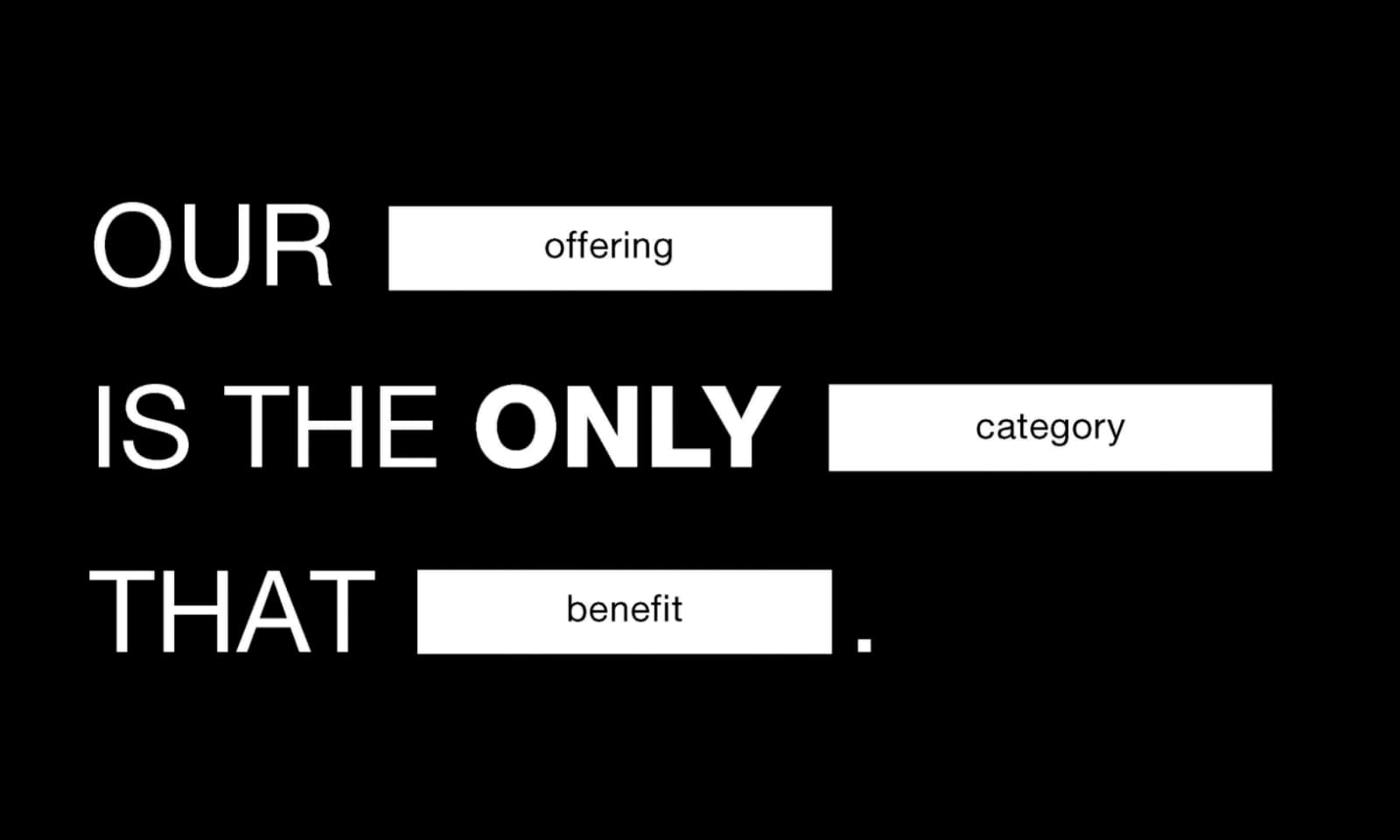
The Onlyness Statement: What Makes You Unique?
The Onlyness Statement forces you to define what makes your product the *only* choice in its category. It's a test of your core business, not just marketing. Use it in strategy meetings to clarify your unique value.

Business Model Canvas: Your Business on a Single Page
The Business Model Canvas puts your entire business strategy onto a single page, showing how value, customers, and money connect. It's used by startups to map out a plan or by established companies to launch new products.
Cost-Plus Pricing: Set Price Based on Cost, Not Value
Cost-plus pricing sets a product's price by adding a fixed percentage markup to its unit cost. It's common in government contracts where costs are clear. The footgun is that it ignores what customers are willing to pay, leaving money on the table.

SMART Goals: From Vague Hopes to Actionable Plans
SMART goals turn fuzzy ambitions into concrete plans by forcing clarity. It's a checklist for ensuring a goal is Specific, Measurable, Assignable, Realistic, and Time-bound. Use it for project planning or performance reviews to create trackable progress.
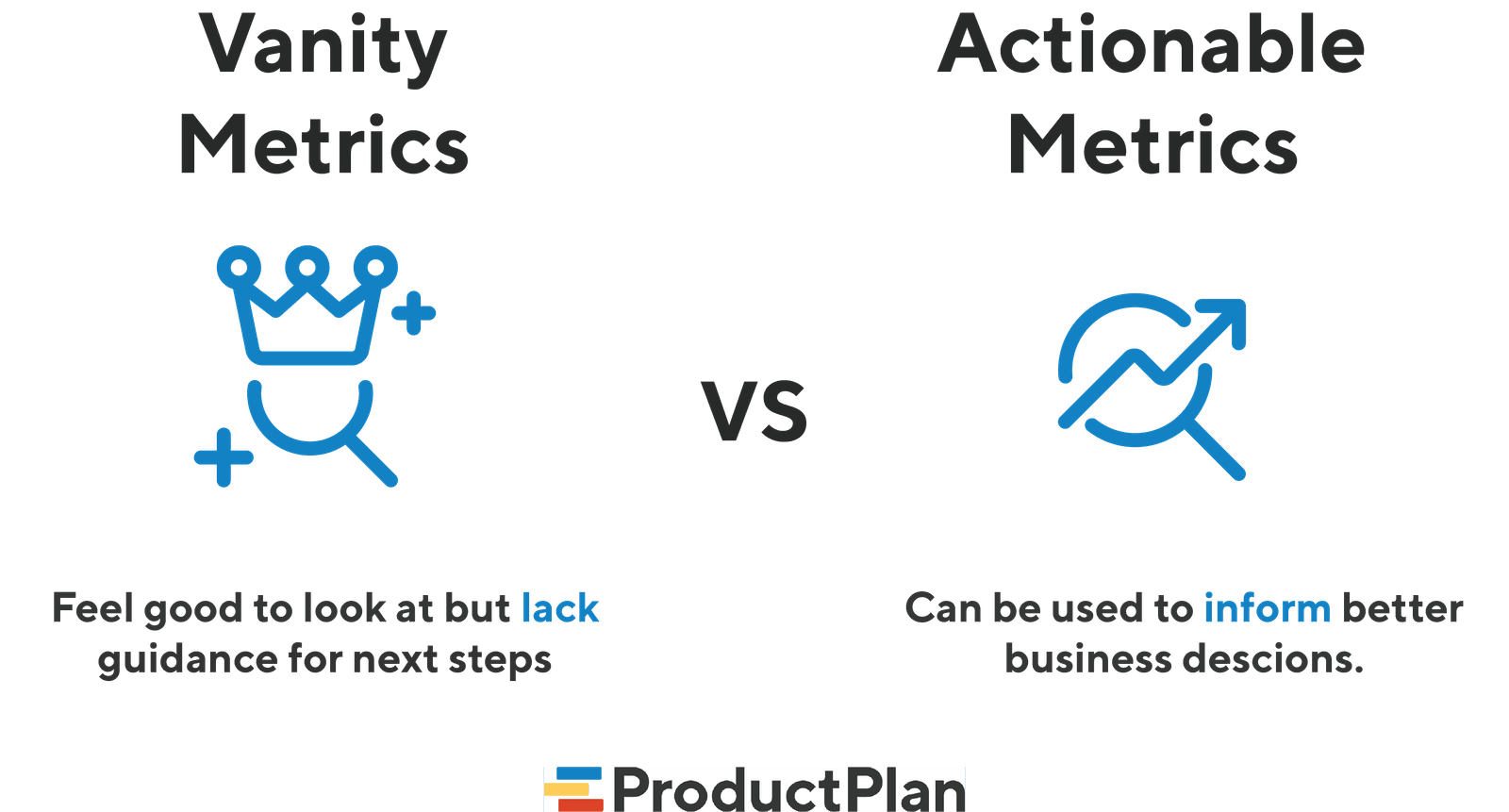
Vanity vs. Actionable Metrics: Measure What Matters
Vanity metrics look impressive but don't inform decisions (e.g., total downloads). Actionable metrics tie to business goals and guide your next move (e.g., conversion rate). This helps product teams focus on real growth, not just impressive-looking charts.

Product Roadmap vs. Backlog: Strategy vs. Tactics
A roadmap is your strategic travel plan showing major destinations (product goals), while the backlog is the turn-by-turn navigation for the current leg of the journey (development tasks). The footgun is cluttering the roadmap with backlog details.
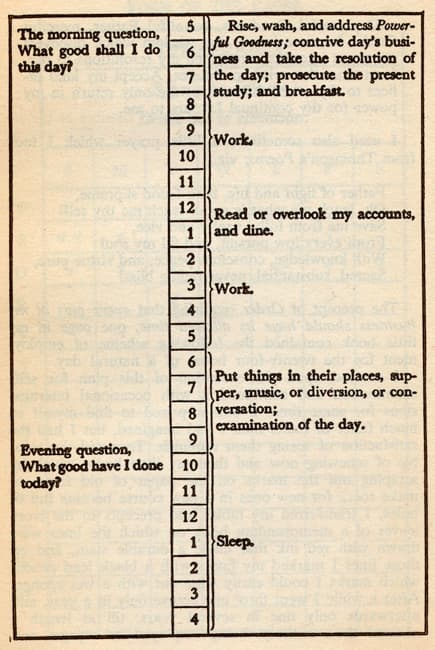
The Eisenhower Matrix: Urgent vs. Important
The Eisenhower Matrix sorts tasks by urgency and importance, not just deadlines. Use it for daily or weekly planning to focus on what truly moves the needle. The biggest footgun is letting 'urgent but not important' tasks dictate your day.
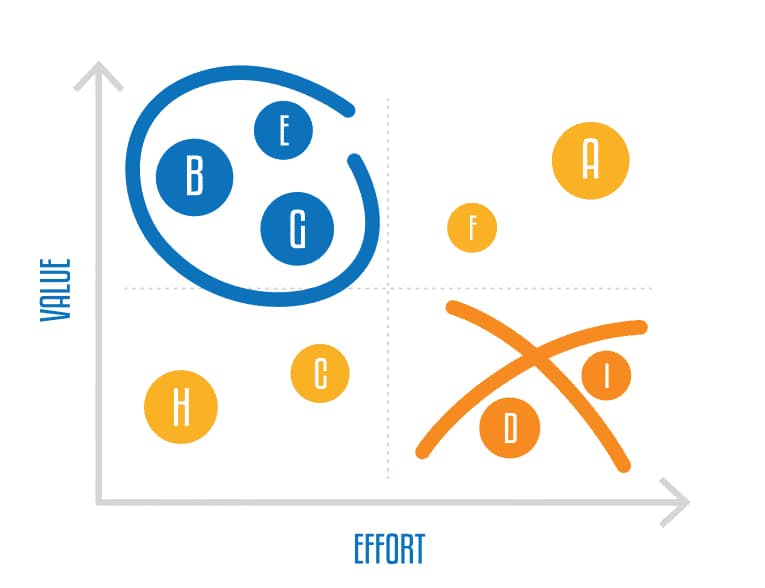
Value vs. Effort Matrix: Prioritize What to Build Next
A Value vs. Effort matrix is a 2x2 grid for deciding what to build, plotting features by their potential value against implementation complexity. Product teams use it to prioritize roadmaps and justify resource allocation.
We are hiring for this. Every open role lists the topics its interview covers, so you can prepare for the real thing rather than guessing.
See open roles