Interview questions in Product Strategy
How vision, strategy, and roadmap relate
Vision is the long-term aspiration, strategy is the chosen path to it, the roadmap is time-bound execution that delivers the strategy.
What are the risks of a roadmap without product strategy?
Risks include building wrong things fast, orphaned features, and tradeoff paralysis.
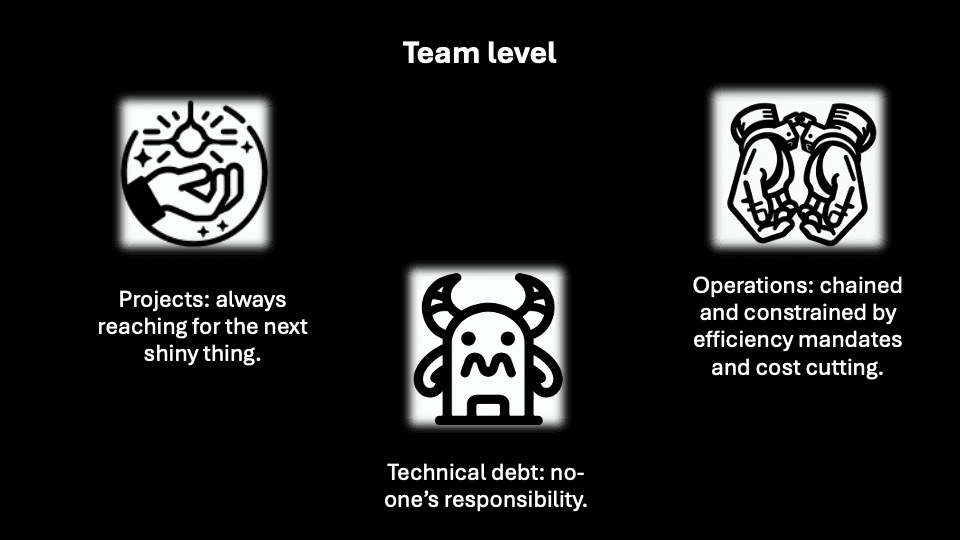
How would you frame a major refactoring proposal using product strategy?
Reframing tech debt as delivery risk, not engineering chore. Tie refactoring to velocity loss and firefighting; shift accountability from dev-vs-ops fights to product ownership.

How do you assess architecture impact during a corporate pivot?
Tests business-technical alignment under strategic uncertainty. Strong answers map new outcomes to capability gaps, assess debt and migration cost, then co-own replanning with product. Red flag: proposing a full rewrite before understanding limits or ROI.

How would you validate strategic assumptions through shipped software?
Tests whether you embed validation into engineering delivery rather than treating it as pre-work. Strong answers cover assumption mapping, instrumented MVPs, tiered rollouts, kill criteria, and product-engineering feedback loops.

Critique the statement that product strategy should be fixed for two years
It tests adaptive strategy versus rigid roadmaps. A great answer notes short-term architecture stability, then details systemic risks: feature factories, wasted talent, telemetry blindness, and lock-in.

How would you estimate user base for a new feature before coding?
Sizing an opportunity with proxy data before coding. A strong answer defines the behavioral profile, then triangulates internal segments, competitor analogs, and market data to bound the estimate with stated assumptions.
Technical principles for building a learning-focused MVP
Validate the riskiest assumption first, use off-the-shelf and manual where possible, instrument for learning, defer scalability and polish.

How do you analyze a major technology trend for product impact?
This tests strategic discernment. A strong answer frames a time-boxed analysis across feasibility, user-value, cost, and risk, separating hype from capability. Red flag: jumping to build or dismiss without structured criteria or user evidence.

How would you use telemetry and logs to refine SAM calculation?
Tests bridging telemetry to SAM. A strong answer maps API usage and feature flags to fit, uses performance logs to expose delivery limits, and rebuilds SAM from qualified accounts. Red flag: calling all logs demand without checking constraints.
Technically analyzing a competitor's product
Probe their stack, performance, APIs, and architecture via public signals and ethical inspection, identify gaps and parity needs, feed differentiation and risk into the…

How do you frame monolith vs microservices trade-offs under market uncertainty?
Connecting architecture to business strategy under uncertainty. Strong answers say monoliths offer cheap optionality when markets are unknown, but winner-take-all makes speed existential; microservices are a post-PMF scaling tax.

How do user personas and stories inform technical design and edge cases?
Tests if you translate product requirements into technical constraints and failure modes. Strong answers map persona pain points to architecture, derive unhappy paths from preconditions, and validate edge cases through vertical slices.
What technical steps would you take to investigate a user's workflow frustration?
Tests if you can turn qualitative user pain into structured technical investigation. Strong answer: reproduce the exact workflow, then inspect logs and traces for errors or latency spikes, and segment by the user's environment.
Differentiate functional and non-functional requirements with user research examples.
This tests separating specific behaviors from measurable quality criteria. A strong answer defines functional requirements as behaviors and non-functional requirements as quality attributes with examples. A red flag is vague NFRs like fast.
How would you instrument front-end and back-end to quantify reported slowness?
This tests translating vague complaints into end-to-end telemetry. A strong answer covers front-end Web Vitals, back-end traces, and segments by user or page to isolate pain points. A red flag is focusing only on server CPU or logs without real user timings.

Describe a technical MVP approach to validate user engagement quantitatively
Pick a KPI and cheapest viable prototype, like a fake door; instrument events with a control group; set kill criteria upfront.

How do you assess trade-offs between a simpler implementation and validated design?
Tests whether you separate user outcomes from implementation fidelity. Great answers quantify deviation against the core job, model cost and speed savings, and propose a scoped experiment with rollback criteria.
Engineering input in a Jobs to be Done workshop
Frame the underlying job and measurable outcomes the user wants, decouple from any solution, then let features compete to serve them.
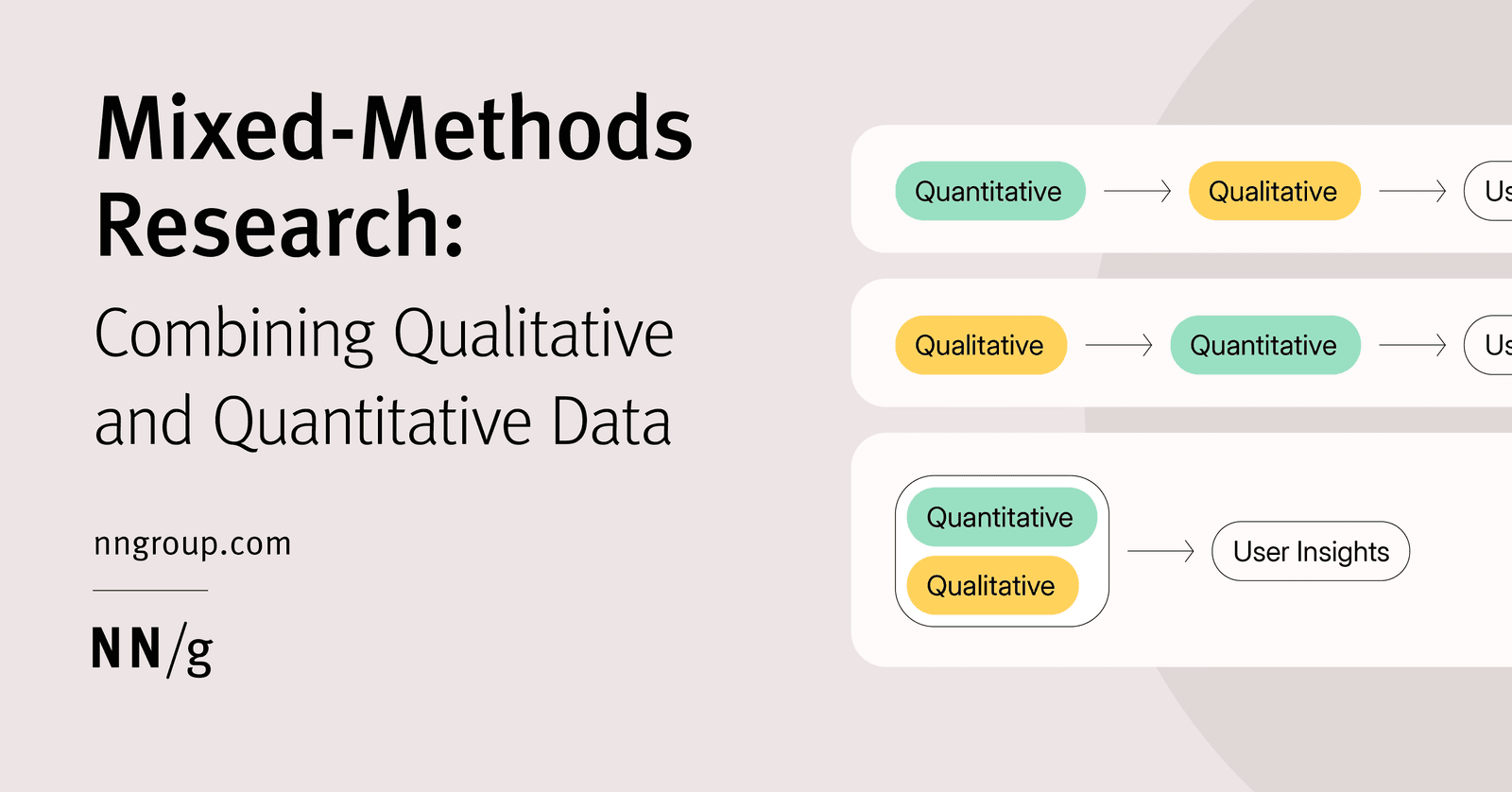
Design a follow-up experiment to resolve conflicting qualitative and quantitative data
This tests mixed-methods integration. Strong answers sequence experiments: observe users in the low-engagement flow for friction, then run a higher-fidelity quantitative test with behavioral metrics tied to stated intent.
We are hiring for this. Every open role lists the topics its interview covers, so you can prepare for the real thing rather than guessing.
See open roles