Easy interview questions in UX Research

What is the primary purpose of UX research before starting development?
Tests if you see pre-dev research as risk reduction. Strong answer: it validates real user needs before code, exposes unknown requirements while changes are cheap, and avoids building for imaginary users.

Explain qualitative vs quantitative user data with engineering examples
Contrast the two modes and give one example per type.
What is PII and how to keep it out of logs
Define PII, redact or mask at the logging boundary, and avoid logging sensitive fields at the source.

Implement verifiable informed consent before a remote usability test
This tests whether you treat GDPR consent as an architectural gate. Strong answers cover CMP-powered pre-session disclosure, gating the test on active consent, server-side recording for auditability, and first-party data alignment.
Explain data minimization and how to apply it to a survey schema
Tests translating GDPR adequacy into schema design. Strong answers: define survey purpose first, map each column to a specific need, exclude PII unless essential, and plan periodic review.

What trade-offs matter between moderated usability tests and surveys?
Whether you align research method to product risk and insight type. Great answers contrast surveys for scalable opinions against moderated tests for behavioral observation, weighing fidelity and speed.

Essential UX research plan components for engineering scope
Name parts—problem, goals, method, users, timeline, metrics, risks—and map them to scope, workload, or instrumentation.
Design a screener survey to identify non-Feature X mobile users
Ask broad frequency first, use indirect disqualifiers for Feature X without naming it, add attention checks, and over-recruit 7-8 to secure 5.

What is the goal of contextual inquiry and what do engineers gain?
Tests grounding engineering in observed user behavior. Goal: watch users in their environment to uncover tacit work practices, workarounds, and mental models. Engineers learn system constraints, integrations, and reliability gaps.

Your role and pitfalls as an engineer note-taker in interviews
Observe to leverage researcher expertise; pitfalls are skipping prep, academic framing, and inflexible features.

Usability vs A/B testing: when should engineers advocate for each?
Tests qualitative versus quantitative UX methods. Outline: usability observes why users struggle and finds bugs; A/B compares live variants to optimize conversions. Choose usability for unknown friction, A/B for known tweaks.
Describe heuristic evaluation and two heuristics that guide UI components
Tests if you bridge UX research and frontend decisions. Define heuristic evaluation as expert review against rules of thumb, cite two NN/G heuristics, and map each to a concrete component behavior. Red flag: listing heuristics without code impact.

What user struggles indicate code bugs versus design flaws?
This tests triage judgment in usability testing. Bug signals: crashes, broken interactions, data loss. Design flaws: confused navigation, ignored elements, excessive effort. Red flag: blaming users or labeling every issue a UI problem without checking logs.
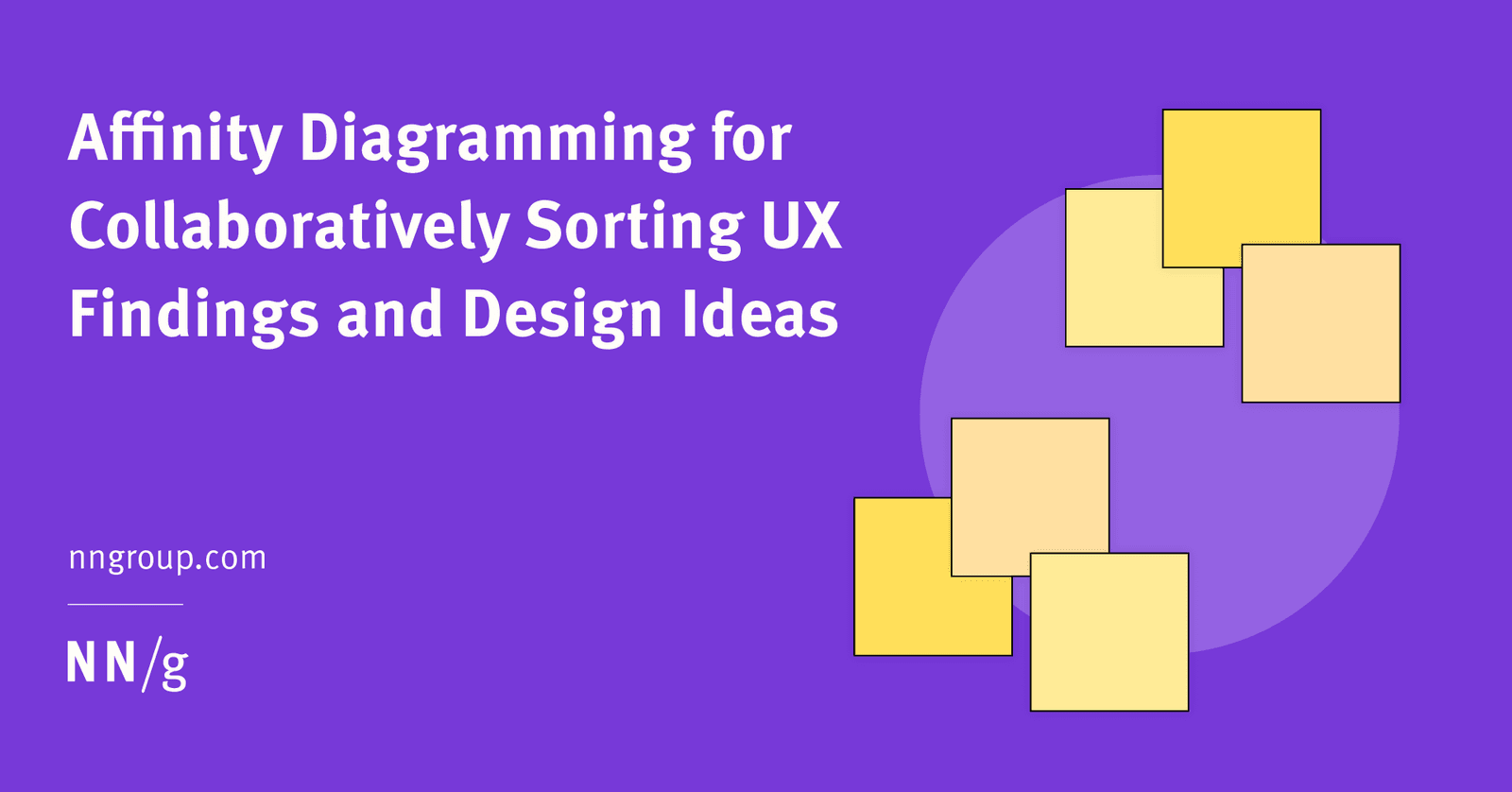
Walk me through your next steps after five user interviews
Extract observations onto sticky notes, cluster into themes as a team, then prioritize for next steps.
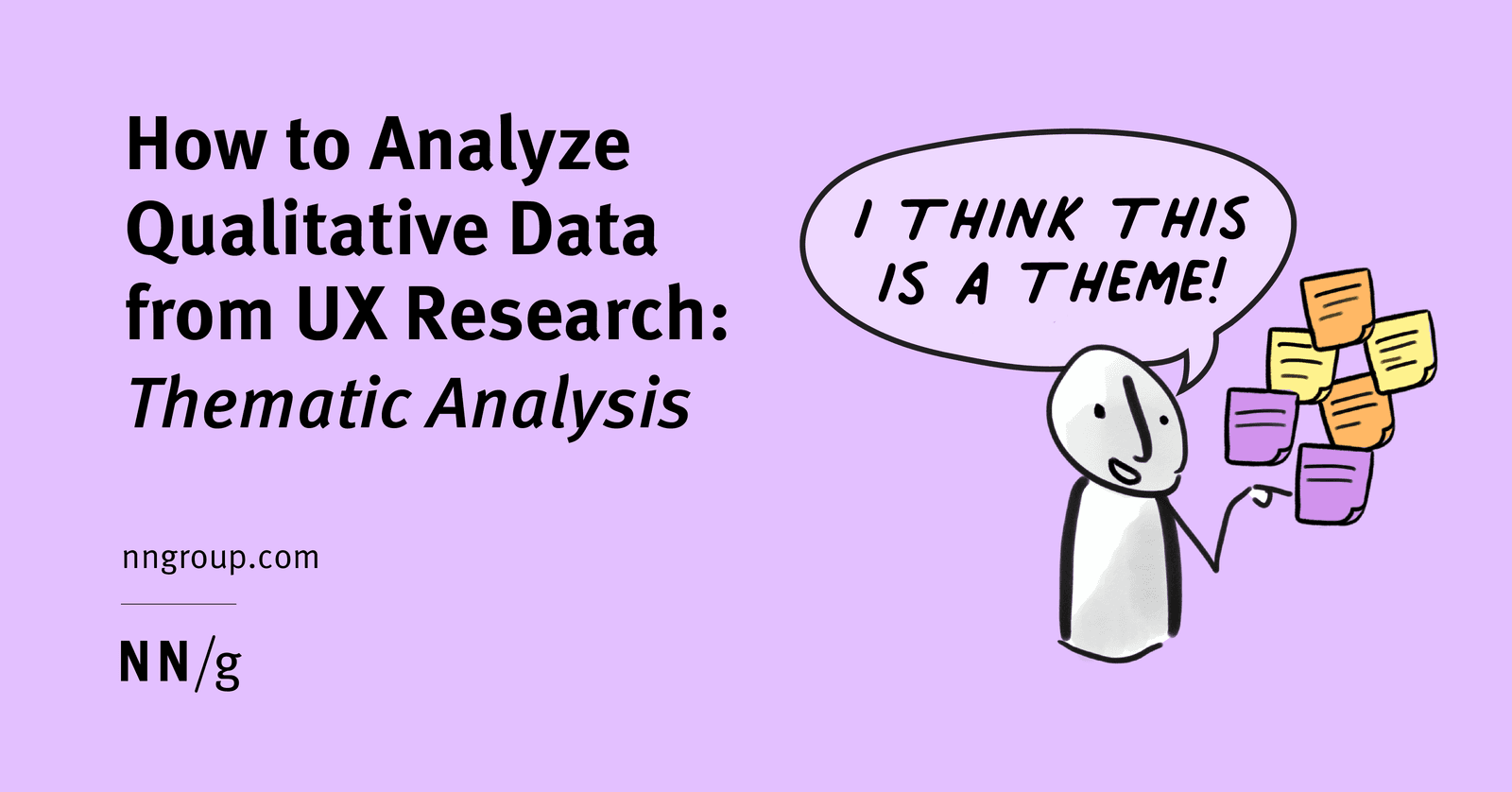
Explain coding in qualitative analysis and your codebook process
Tests systematic tagging of observations/quotations to discover themes, not ad-hoc skimming. Strong answers mention uploading transcripts to software or affinity diagramming, and stress that themes emerge across multiple participants.
Mean, median, and mode: which measure for task completion times?
This tests whether you know task times are skewed and sample size drives the mean-versus-median choice. A strong answer cites the under-25 rule, contrasts mean outlier sensitivity with median robustness, and dismisses mode. Red flag: defaulting to the mean.
Explain what a p-value represents in an A/B test and interpret 0.03
This tests frequentist hypothesis testing literacy. It is the chance of seeing a result this extreme if the null of no effect were true; 0.03 means 3% chance of such data under the null, not 97% chance the variant wins. Red flag: saying 97% likely.
Are 1-5 satisfaction ratings continuous or discrete?
Tests knowledge of measurement scales. A strong answer calls 1-5 ratings discrete and ordinal, notes intervals may be unequal, and prefers medians or non-parametric tests over means unless equal spacing is defensible.
First technical questions to scope a journey-map pain point
Ask how widespread and severe it is, where in the system it originates, and what constraints bound a fix.
Design a database schema for a research participant panel
Your ability to normalize relational data without over-engineering. Propose a participants table for contact and demographics; a participation_history table with foreign keys; and a consent_log table.
We are hiring for this. Every open role lists the topics its interview covers, so you can prepare for the real thing rather than guessing.
See open roles