All bites
The whole library, newest first. Filter by what you are here for, or pick a topic if you already know.
4247 bites
Page 71
Experiment Knowledge Base: Don't Repeat Failed Tests
An Experiment Knowledge Base is your company's collective memory for A/B tests, centralizing hypotheses, results, and learnings. It prevents re-running old tests and surfaces past insights.
OKRs: Frame Growth Goals as Measurable Outcomes
OKRs separate your ambitious goal (Objective) from the measurable results that prove you're there (Key Results). Growth teams use this to align on what success looks like.

Growth Squads: Centralized vs. Decentralized
A growth squad is a trade-off between speed and cultural change. A centralized team optimizes for velocity with dedicated members, while a decentralized (embedded) team spreads the growth mindset by borrowing staff.
The Traditional Career Ladder: A Single Path Up
The traditional career ladder is a single, vertical track for promotion, moving from entry-level to executive. It's common in large, established organizations with well-defined roles. The footgun is its rigidity, forcing experts into management to advance.

Growth vs. Fixed Mindset: Your Beliefs Shape Your Abilities
A growth mindset sees ability as a muscle to be built, not a static trait you're born with. It's key when facing tough problems or critical feedback. The footgun is believing you're 'not a natural' at something, which prevents you from even trying.
Growth Hacking: Marketing via Rapid Experimentation
Growth hacking treats marketing like a science experiment, using rapid, low-cost tests to find what grows a user base instead of relying on big, slow campaigns. It's used by startups to A/B test ideas before investing resources.
The North Star Metric: Your Company's One True Focus
A North Star Metric (NSM) is your company's compass: a single metric capturing the core value you deliver to customers. Spotify uses 'time spent listening' to align teams on user engagement.
Experiment-Driven Organization: Run Your Org Like a Lab
Treat organizational change like a lab experiment, not a big-bang project. This helps companies adapt by testing new processes on a small scale first, generating evidence before committing to a full rollout. The footgun is mistaking chaos for experimentation.

Growth Loops: The Engine of Product Growth
A growth loop is a closed system where outputs are reinvested to generate more inputs, creating compounding growth. Unlike linear funnels, this model unifies product, marketing, and monetization. The footgun is using funnels, which creates silos.

AARRR: Pirate Metrics for the Customer Lifecycle
The AARRR framework maps your customer's journey through five key stages: Acquisition, Activation, Retention, Referral, and Revenue. It helps startups diagnose leaks in their growth funnel, from first visit to final sale.
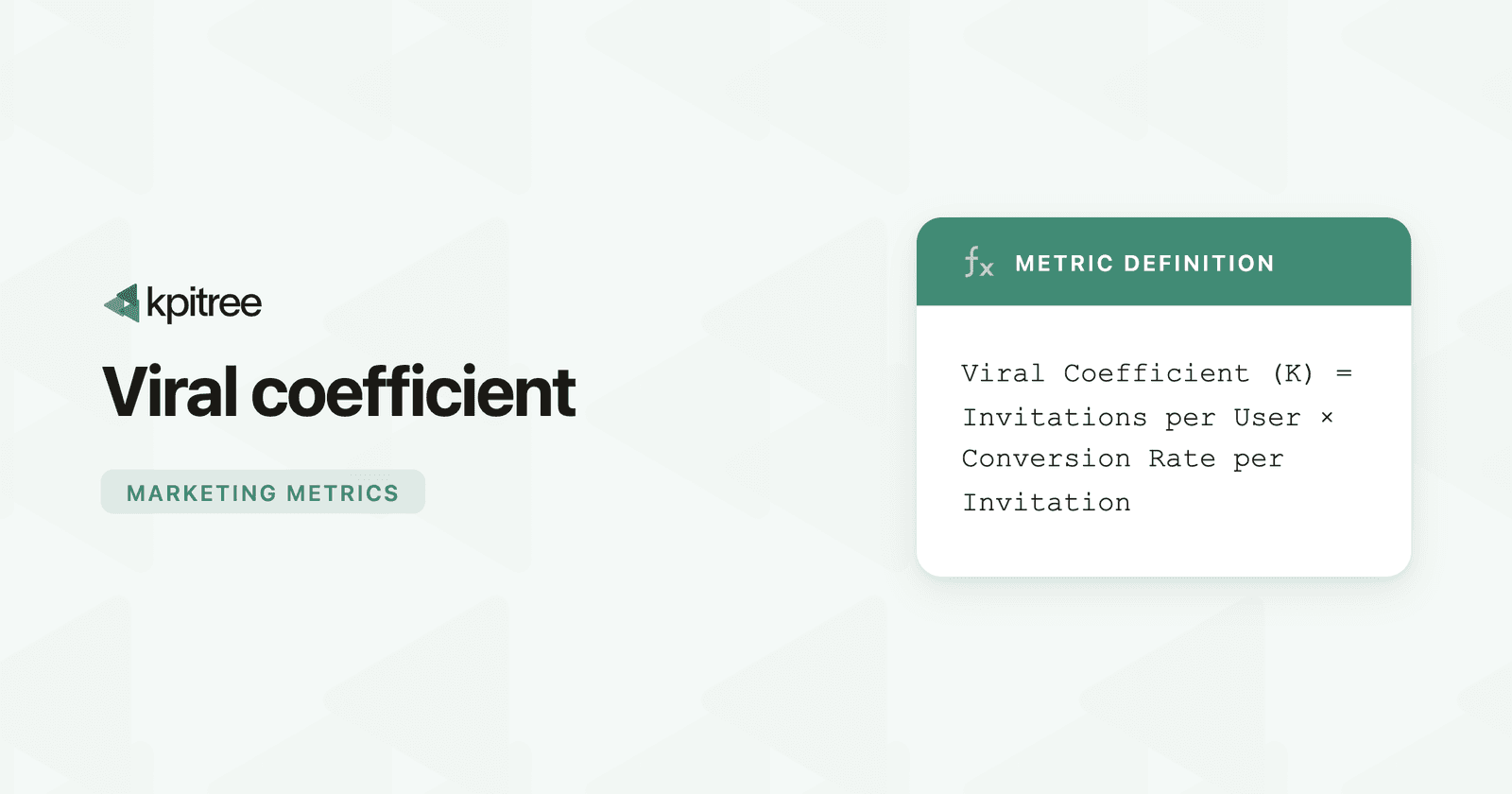
The K-Factor: Measuring Your Product's Viral Growth
The Viral Coefficient (K-factor) measures how many new users each existing user generates. It's key for products with referrals or sharing. The common mistake is chasing K > 1; even K=0.5 is valuable, as it effectively halves your acquisition cost.

Instrumentation Plan: Your Analytics Blueprint
An instrumentation plan is the blueprint for what user actions to track. It's like deciding where to put security cameras *before* building, not after a break-in. It's essential for new features and for cleaning up messy analytics.
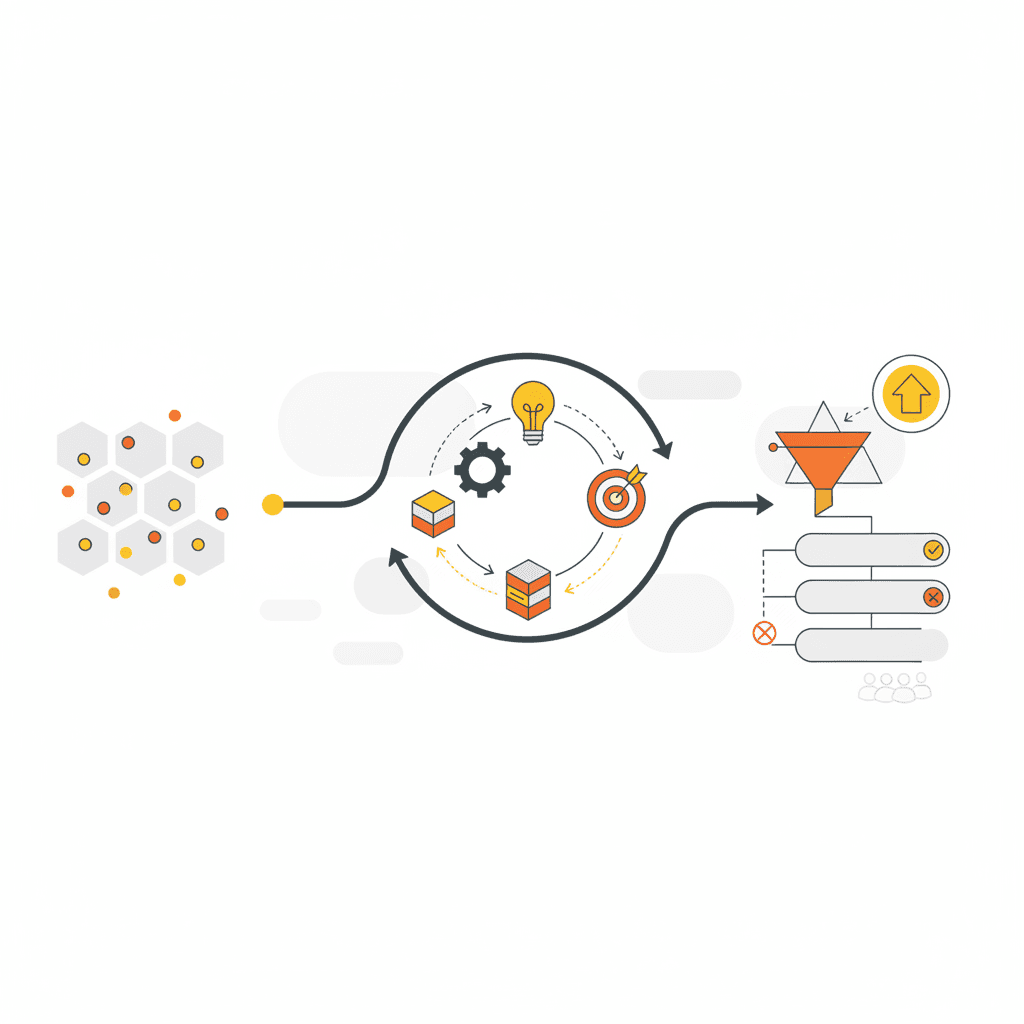
Managing Growth with an Experiment Backlog
An experiment backlog is a prioritized list of testable ideas that turns strategy into action. Agile teams use it to manage projects, using business intelligence to measure performance and ensure ideas deliver value. The footgun is a lack of governance.

The PIE Framework: Prioritizing What to Test Next
The PIE framework ranks A/B test ideas by scoring them on Potential, Importance, and Ease. It helps teams decide where to experiment first, focusing limited resources on high-impact changes.

Guardrail Metrics: Don't Win the Battle to Lose the War
Guardrail metrics are your experiment's safety net, ensuring a win in one area doesn't cause a loss elsewhere. During A/B tests, you monitor them to catch negative side effects on site speed or revenue.

Time to Value (TTV): From Signup to 'Aha!'
TTV measures the time from signup to a user's first "aha!" moment. Product teams track it to reduce early churn, as faster value builds trust. The footgun is defining "value" as completing setup, not a real user win.

Empty State
An empty state is the screen a user sees before any data exists, like a new account with no projects or a search with no results, and treating it as a real design surface rather than a blank gap is a high leverage move for activation.

Expansion MRR: Growing Revenue from Existing Customers
Expansion MRR measures new monthly recurring revenue from your existing customers. It's how you grow through upgrades, add-ons, or cross-sells, not just new signups. The footgun is mixing it with new business MRR, which hides your product's retention power.

Product-Led Growth (PLG): Let Your Product Sell Itself
Product-Led Growth (PLG) makes the product the primary engine for acquiring and converting users. It relies on a mix of free features, virality, and a smooth upgrade path to paying tiers, letting users experience value before they buy.
Product-Led Sales: Your Product is Your Best Salesperson
Product-Led Sales (PLS) treats your product as the primary lead generator. Instead of cold calls, sales teams engage users who show buying intent through their product usage, guiding them to a natural upgrade.