Concepts in Agile & Scrum, page 5

Design Sprint: From Idea to Prototype in 5 Days
A Design Sprint fast-forwards you to see customer reactions without building a real product. In one week, your team goes from a big question to a realistic prototype and user feedback.
OKRs: Set Direction, Not Tasks
OKRs connect ambitious vision (Objectives) to measurable progress (Key Results). Used by companies to align quarterly efforts on high-level goals, not just a feature list.
Dual-Track Agile: Discovery Before Delivery
Dual-Track Agile runs two parallel streams: a Discovery track to quickly validate ideas and a Delivery track to build releasable software. It prevents waste by testing concepts with cheap prototypes before writing code.

Pretotyping: Build The Right It, Not Just It Right
Pretotyping tests if anyone wants your product before you build it, ensuring you build 'The Right It.' Use it to validate market demand with minimal resources, gathering real data. The footgun is confusing it with prototyping, which tests implementation.
Product-Market Fit: Why Market Trumps Team and Product
Product-market fit is when a great market pulls a viable product out of a startup, not when a great product creates a market. You'll know you have it when customers are beating down your door.
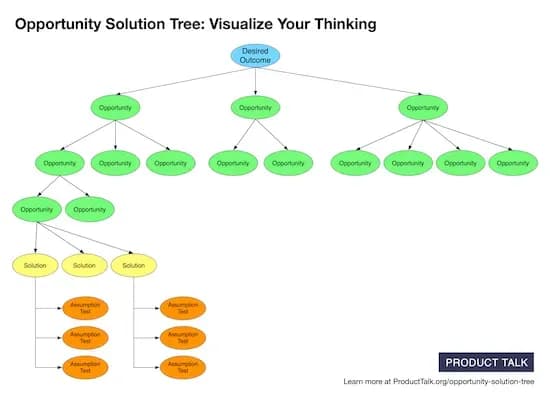
The Opportunity Solution Tree: Connecting Outcomes to Solutions
An Opportunity Solution Tree is a visual map connecting a business goal to the customer problems you could solve to achieve it. Product teams use it to explore paths to an outcome, ensuring features address real user needs.
.png&w=1600&q=75)
Kanban: A Strategy for Optimizing Flow
Kanban isn't just a board with columns; it's a strategy for optimizing the flow of value through your process. It helps teams visualize work, manage bottlenecks, and deliver value predictably.

Kanban Board: Visualize Your Workflow
A Kanban board is a visual system for managing work as it moves through a process, making bottlenecks obvious. It's used in software development to track features from 'To Do' to 'Done'.

Pull System: Make Only What's Needed, When It's Needed
A pull system works like a restaurant kitchen: you only start work when the next step in the process places an order. This approach, core to lean manufacturing and Kanban, prevents overproduction. The footgun is pulling new work before finishing old tasks.

Make Policies Explicit: Write Down Your Workflow's Rules
Making policies explicit turns your team's unwritten rules into a shared, improvable playbook. Use it to define what 'done' means for each stage or how to handle blocked items.
Little's Law: Why Adding More Work Slows You Down
Little's Law shows that average task completion time is proportional to the work in progress (WIP). For a stable team, Cycle Time = WIP / Throughput. It's used in Kanban to predict delivery times. The footgun is adding more WIP to go faster; this always.
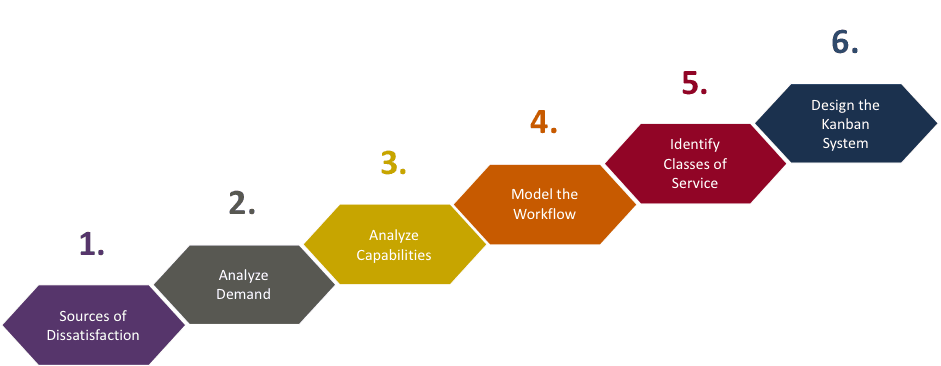
STATIK: Designing a Kanban System from First Principles
STATIK is a diagnostic recipe for designing a Kanban system tailored to your team's actual work, not just copying a template. Use it when starting a new implementation or when an existing process is stuck. The footgun is skipping the analysis.
Lead Time: From Customer Request to Live Code
Lead Time measures the total duration from when a feature is requested to when it's live for users—it's the customer's total waiting time. Teams use it to understand responsiveness and set predictable timelines. The footgun is confusing it with Cycle Time.
Takt Time: Your Customer's Production Rhythm
Takt time is the production rhythm required to meet customer demand—a metronome for your workflow. It's used to design manufacturing lines or software sprints by setting a target pace.
Escaped Defects Rate: Measuring What Slips to Production
Escaped Defects Rate is your quality report card from users, measuring the percentage of total bugs that your internal testing missed. Teams use it to gauge QA effectiveness. The footgun is using it to blame individuals, which just encourages hiding bugs.
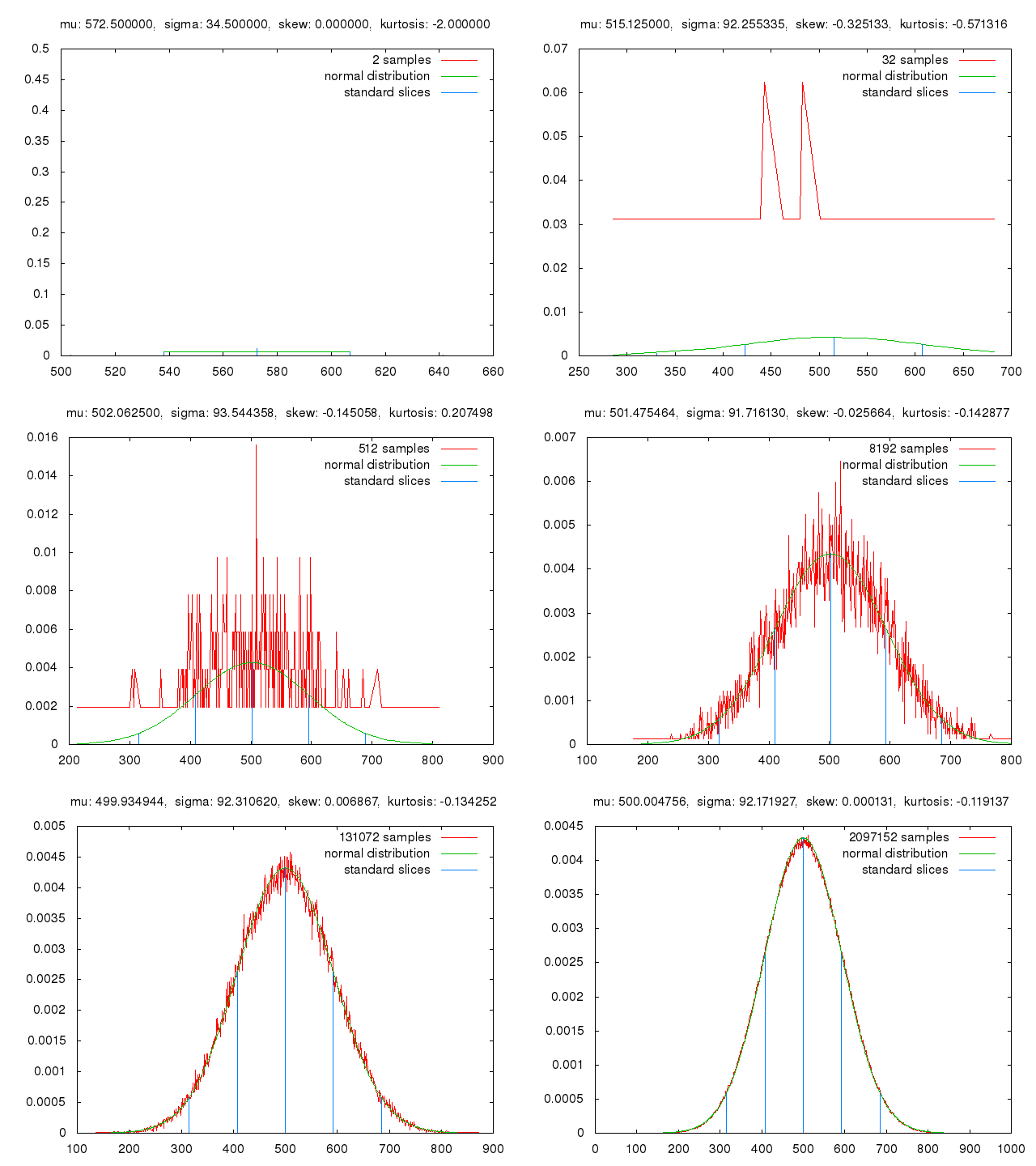
Monte Carlo Forecasting: Probabilities, Not Promises
Monte Carlo forecasting trades a single due date for a set of probabilities. By running thousands of random simulations based on past performance, it generates a range of likely completion dates, not a single guess.
Flow Debt: The Hidden Cost of Workflow Inefficiency
Flow Debt is the invisible cost of process bottlenecks that slow down delivery. It shows up as work waiting for handoffs, reviews, or decisions. The footgun is blaming individuals for system-level delays instead of optimizing the workflow itself.
SAFe: Scaling Agile Beyond a Single Team
SAFe is a blueprint for applying Agile principles across large organizations, not just single teams. It coordinates many teams into 'Agile Release Trains' that plan and deliver together in fixed cycles, ensuring alignment on complex products.
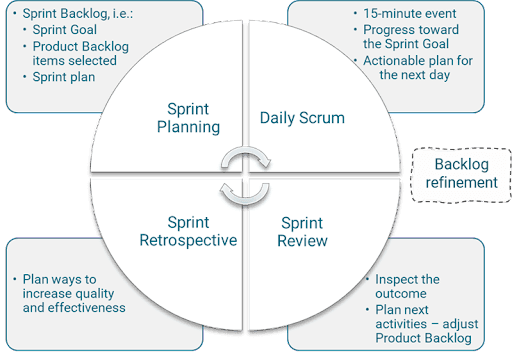
Large-Scale Scrum (LeSS): Scaling Scrum by Descaling the Org
LeSS scales Scrum by simplifying the organization, not adding processes. It applies one-team Scrum principles to multiple teams working on one product. Use it when 2-8 teams need to collaborate on a single product backlog.
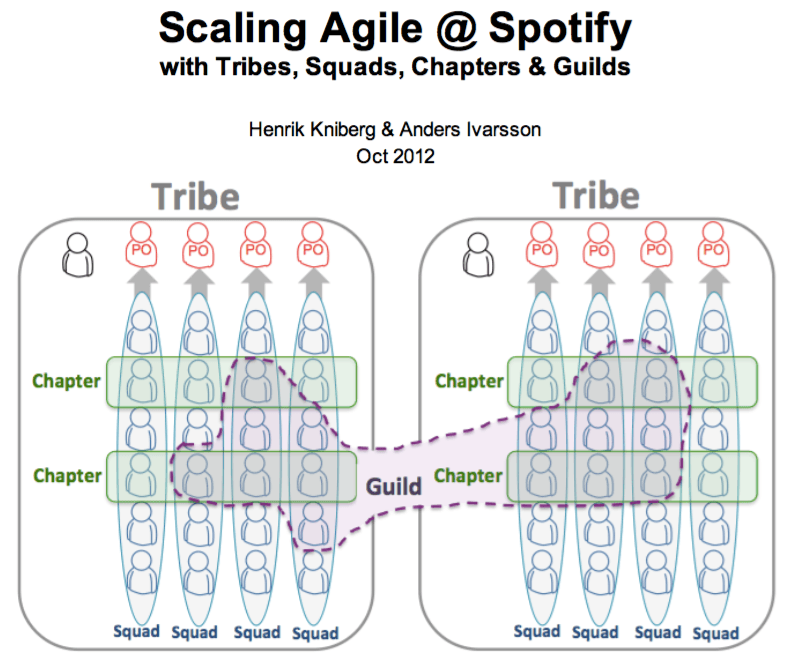
The Spotify Model: Scaling Agile with Autonomy
The Spotify Model organizes teams for autonomy and alignment, using mini-startups (Squads) and skill-based communities (Chapters). It helps scale agile in large orgs, but copying the structure without the culture of trust creates a rigid hierarchy in disguise.
We are hiring for this. Every open role lists the topics its interview covers, so you can prepare for the real thing rather than guessing.
See open roles