Concepts in Agile & Scrum, page 7
Kotter's 8-Step Change Model
Kotter's 8-Step Model treats organizational change as a campaign, not a memo. It's used for major shifts like mergers or new AI strategies. Skipping steps like creating urgency or celebrating small wins is a common failure mode, causing momentum to fizzle out.

Bimodal IT: Running Your IT Org at Two Speeds
Bimodal IT runs IT at two speeds: a stable, predictable "Mode 1" for core systems and an agile, experimental "Mode 2" for innovation. This allows enterprises to build new digital products without breaking the essential legacy systems that run the business.
The Flight Levels Model: Connecting Strategy to Execution
The Flight Levels model visualizes work at three altitudes: strategic initiatives (Level 3), cross-team coordination (Level 2), and team execution (Level 1). It helps ensure high-level strategy translates to daily work.
Holacracy: An Operating System for Your Organization
Holacracy replaces a management hierarchy with a formal constitution, vesting authority in roles, not people. It provides a structured way to scale self-management.
Sociocracy 3.0: A Pattern Library for Agile Governance
Think of Sociocracy 3.0 (S3) as a modular toolkit of patterns for agile collaboration, not a rigid process. It helps organizations adapt incrementally without a massive overhaul. The main footgun is adopting patterns without understanding the core principles.

The Unfix Model: An Org Design Pattern Library
The Unfix Model treats org design like a Lego set, not a pre-built model. It's a library of patterns for companies moving beyond rigid agile frameworks to build dynamic, self-managed teams. The footgun is treating it as another framework to install wholesale.
The 12 Agile Principles: Guiding Values, Not Rigid Rules
The 12 Agile Principles are values that prioritize customer satisfaction, working software, and team collaboration over rigid plans. They inform daily stand-ups and retrospectives, helping teams adapt to change.
WIP Limits: Stop Starting, Start Finishing
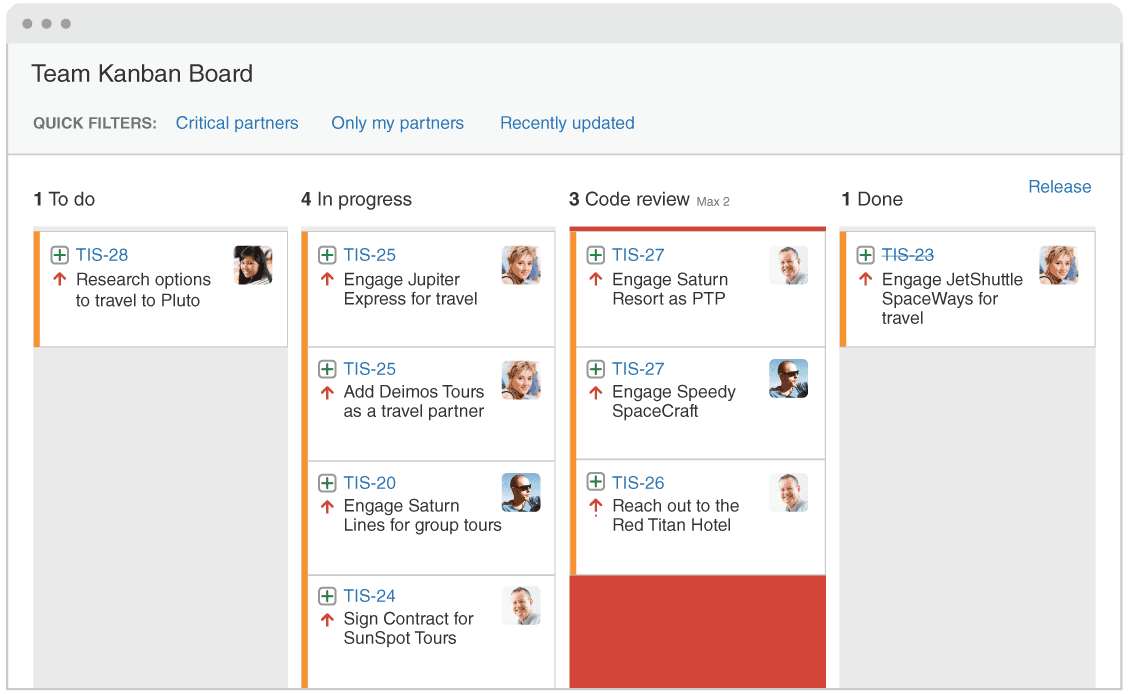
WIP limits force teams to finish existing work before starting new work, creating a pull system that exposes bottlenecks. This is a core Kanban practice to reduce context switching and shorten lead times.
Sprint Planning: Committing to a Goal, Not Just Tasks
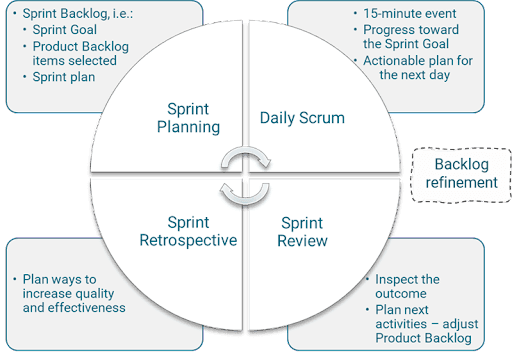
Sprint Planning isn't just picking tasks; it's the team committing to a valuable Sprint Goal. This ceremony kicks off every sprint, aligning everyone on what to build and why.

Conflict Management in Agile Teams
Agile's tight, high interaction cadence, standups, planning, retros, surfaces disagreement constantly. Conflict management means treating friction as raw material for a better decision, resolved openly, not avoided to keep the sprint looking smooth.
Systems Thinking: Optimize the Whole, Not the Parts
Systems thinking means optimizing the entire system, not just its individual parts. In large-scale development, siloed teams create local efficiencies that harm the overall delivery pipeline.
Agile Velocity: A Forecasting Tool, Not a Target
Agile velocity isn't about speed; it's a measure of a team's predictable output per iteration. It's used to forecast how much work can be done in future sprints and to estimate release dates. The footgun is treating it as a productivity KPI.
Agile Spikes: Time-Boxed Research to Reduce Uncertainty
A spike is a time-boxed investigation to answer a question or reduce uncertainty. It's a story whose deliverable is knowledge, not shippable code. Spikes are used to de-risk complex stories or evaluate technical options.
The 3 Cs: Card, Conversation, Confirmation
A user story isn't a spec; it's a promise for a conversation. The 3 Cs model this: the Card is a placeholder, the Conversation clarifies requirements, and the Confirmation defines "done" with acceptance criteria.
Story Points: Estimating Effort, Not Time
Story points measure effort, not hours. They combine a task's complexity, uncertainty, and volume into a single relative number. Agile teams use them to forecast work capacity.
Story Splitting: Delivering Value in Smaller Slices
Story splitting breaks large user stories into smaller, independent pieces that still deliver value, like slicing a cake vertically so each piece has all layers. This is crucial for fitting work into a sprint and getting faster user feedback.

The Scrum Board: Visualizing the Sprint's Workflow
A Scrum board is a visual snapshot of a team's work in a sprint, making progress and bottlenecks obvious. Teams use it to track tasks from "To Do" to "Done," ensuring alignment. The footgun: mistaking the board for Scrum itself; it's a helpful tool, not.
Swarming: The Team Tackles One Thing at Once
Swarming focuses the entire team's effort on a single work item to finish it fast, rather than having everyone work on separate tasks. Use it to unblock a critical feature or push the most important story over the finish line at the end of a.
The North Star Metric: Your Product's One True Focus
A North Star Metric (NSM) is the single number that best captures the core value your product delivers. It's a compass for long-term growth, guiding sprint planning and backlog prioritization.
Service Delivery Review: The Missing Agile Feedback Loop
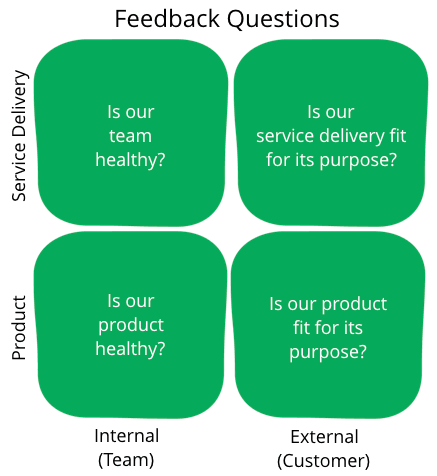
A Service Delivery Review shifts focus from *what* was built to *how* it was delivered. It's a regular meeting where teams and customers review quantitative metrics like lead time and blockers.
We are hiring for this. Every open role lists the topics its interview covers, so you can prepare for the real thing rather than guessing.
See open roles