More in AI & ML — page 53
Conditional Random Fields: Labeling with Context
A Conditional Random Field (CRF) makes predictions that know their neighbors, enforcing that nearby pixels in an image get similar labels. It cleans up raw segmentation outputs by considering local context.

DeepLab: Pixel-Level Semantic Image Segmentation
DeepLab assigns a class label like 'road' or 'person' to every pixel in an image. This powers features like smartphone portrait mode by precisely outlining objects. The key challenge is achieving sharp object boundaries, not just coarse bounding boxes.
Panoptic Segmentation: A Unified View of a Scene
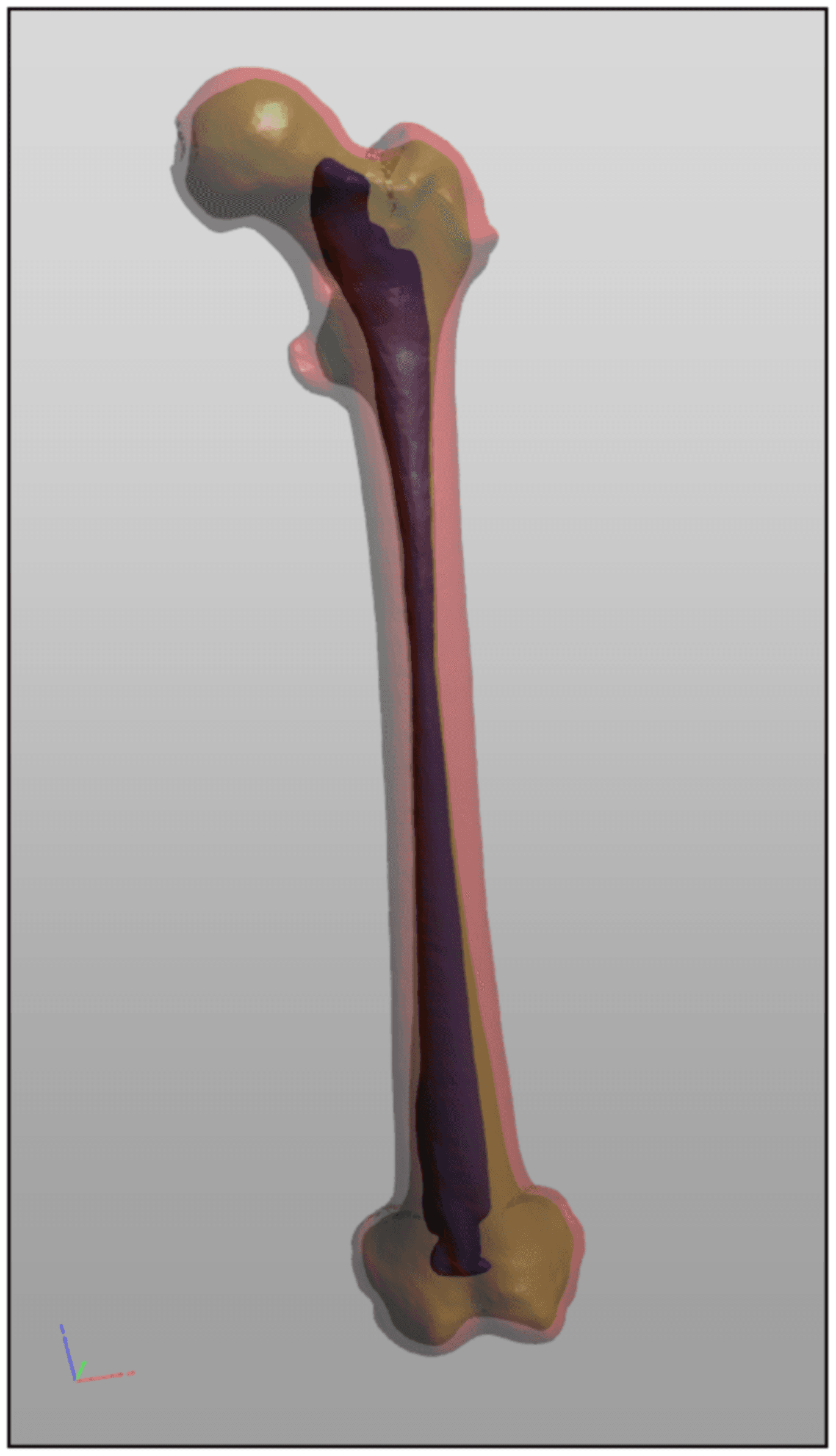
Panoptic segmentation unifies two tasks: it labels every pixel with a class ('stuff' like road, sky) and also identifies individual object instances ('things' like car 1, car 2). It provides a complete scene understanding for autonomous driving and robotics.

Dice Loss: Measuring Overlap for Image Segmentation
Dice Loss measures pixel overlap between predicted and true segmentation masks, like a Venn diagram for images. It excels in medical imaging with imbalanced classes, like finding a small tumor. The footgun: it can be unstable with very small objects.

Dilated Convolution: A Wider View Without More Parameters
Dilated convolution gives a filter a wider view by skipping pixels, like reading every Nth word to get the gist. This helps models in semantic segmentation see broader context without the resolution loss of pooling.
Fully Convolutional Networks: From Image to Segmentation Map
An FCN turns a standard image classifier into a pixel-level labeler by replacing its final layers with convolutions to preserve spatial data. It's used for semantic segmentation, like identifying all cars and roads in a street scene.
Instance Segmentation: Counting and Outlining Objects
Instance segmentation identifies and outlines each distinct object in an image, labeling 'car 1' and 'car 2' separately. It's crucial for self-driving cars tracking individual pedestrians.
Focal Loss: Forcing Models to Learn from Hard Examples
Focal Loss tells your model to ignore the easy examples during training and focus on the hard ones. This is critical for object detection, where thousands of background patches can overwhelm the few actual objects, creating a massive class imbalance.
YOLO: Real-Time Object Detection in a Single Pass
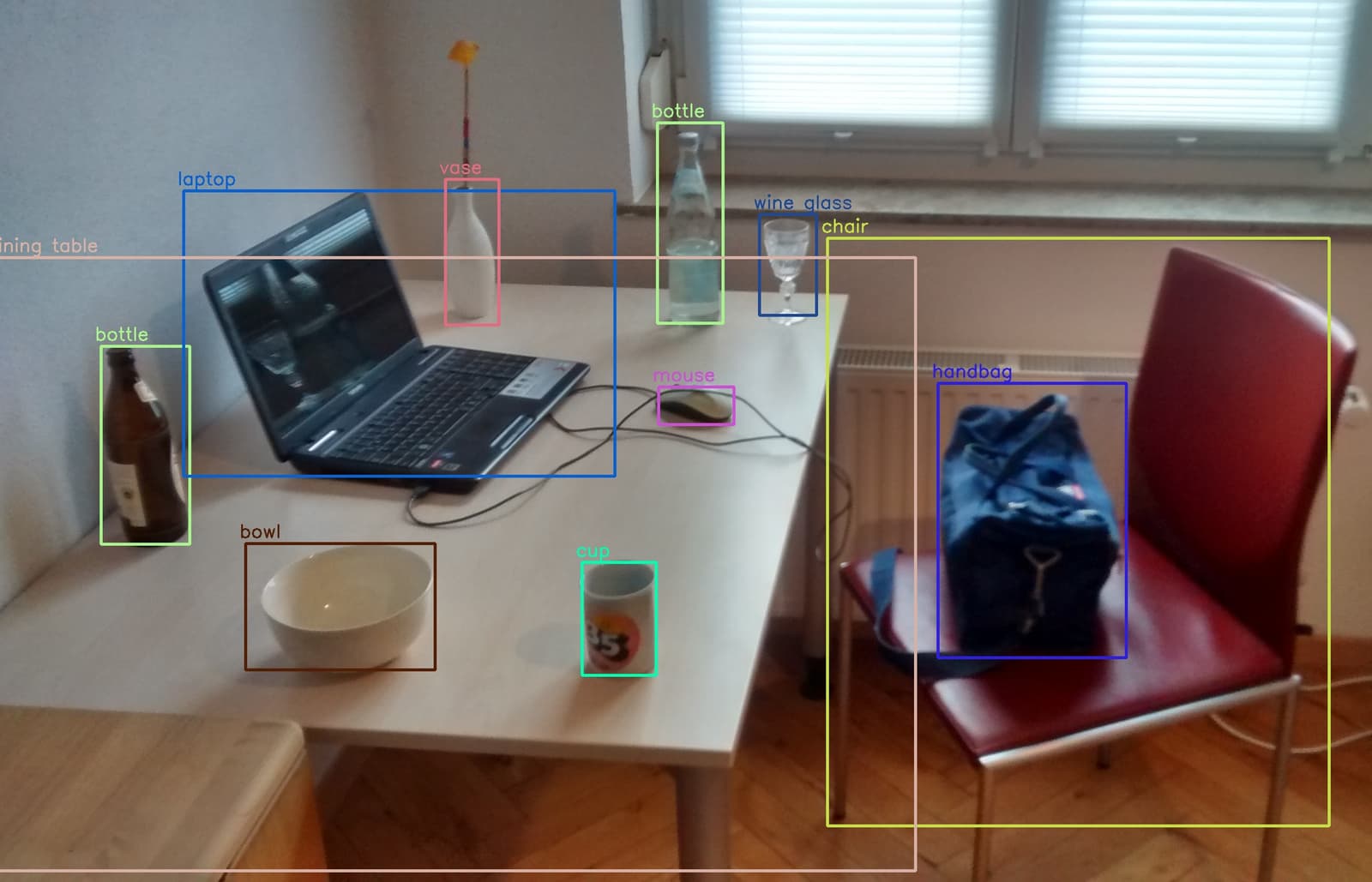
YOLO treats object detection as a single regression problem, looking at an image once to predict all bounding boxes and classes. This makes it extremely fast, perfect for real-time video analysis.
Region Proposal Network (RPN): The 'Where to Look' Engine
An RPN is an 'attention' mechanism for object detection, telling the model where to look. It replaces slow, external proposal methods in systems like Faster R-CNN for autonomous driving.

Intersection over Union (IoU): How Good is Your Bounding Box?
Intersection over Union (IoU) scores how well a predicted box matches the real one by dividing their overlap area by their total area. It's vital for object detection in self-driving cars and medical imaging.
Localization vs. Detection: One Box or Many?
Object localization draws one box around an image's main object. Object detection finds and boxes *every* instance of a class, like all pedestrians. Use localization for single-subject tasks, detection for finding everything.

Transfer Learning: Don't Train Vision Models from Scratch
Don't train a vision model from scratch. Transfer learning reuses a model trained on a huge dataset (like ImageNet) as a starting point for your specific task. This lets you achieve high accuracy on new image types with much less data and compute.
GoogLeNet's Inception Module: Wider, Not Just Deeper
Instead of choosing one filter size, GoogLeNet's Inception module runs 1x1, 3x3, and 5x5 convolutions in parallel. This lets the network capture features at multiple scales at once. The footgun is forgetting the crucial 1x1 'bottleneck' convolutions.
Residual Networks (ResNets): Go Deeper, Not Worse
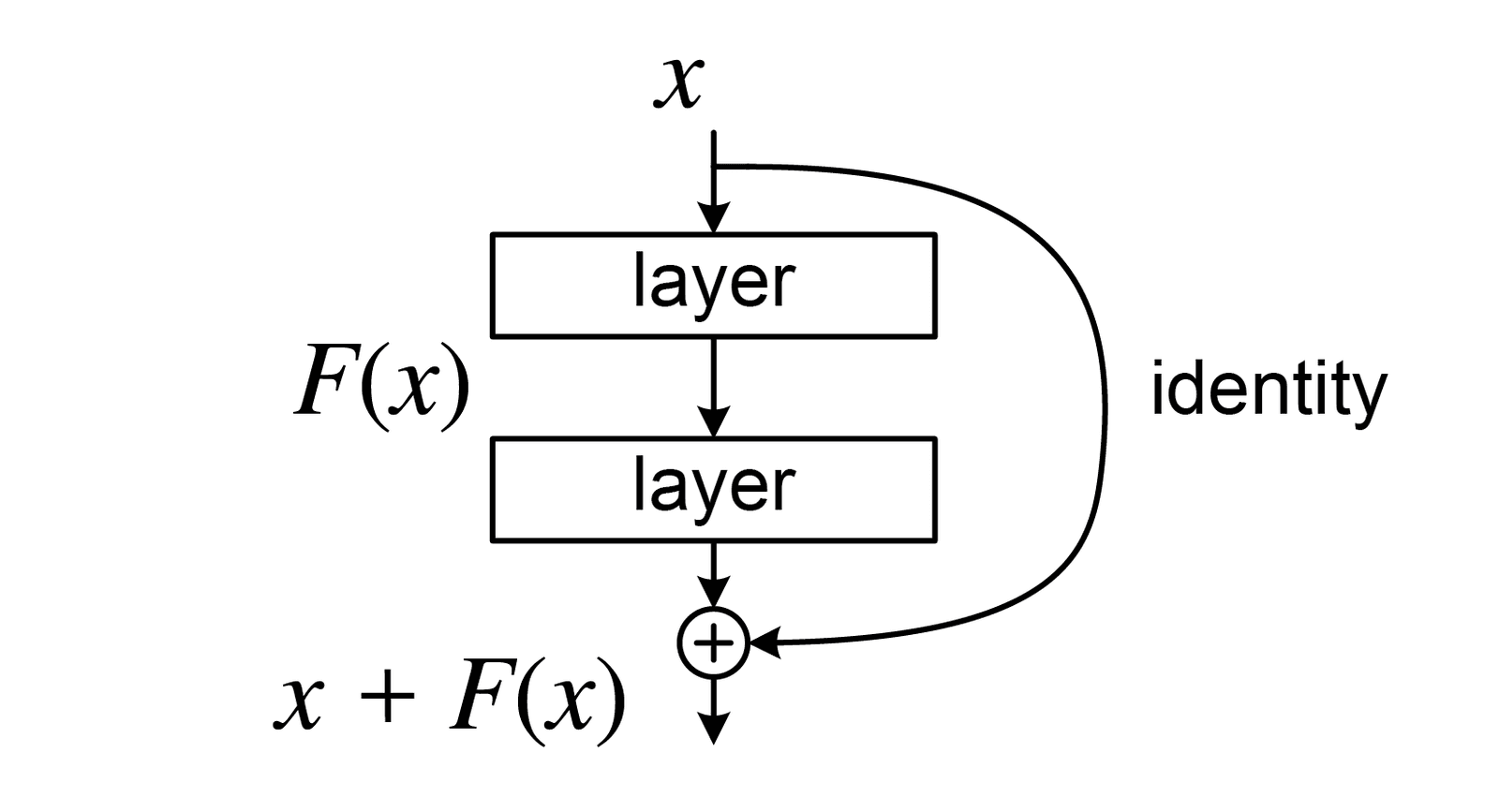
ResNets let you train extremely deep networks by learning what to *change*, not the entire output. They use 'skip connections' to bypass layers, which helps solve accuracy degradation in deep vision models. The footgun is thinking deeper is always better.
Batch Normalization: Stabilizing Neural Network Training
Batch Normalization regulates data flow in a neural network by re-centering and re-scaling inputs to each layer. This stabilizes deep network training, allowing higher learning rates.

AlexNet: The CNN That Sparked the Deep Learning Boom
AlexNet is the blueprint that proved deep CNNs could master image recognition, kicking off the modern AI boom. Its architecture is foundational for modern computer vision. The footgun is thinking it was just bigger; its novelty was combining new techniques.
Dropout: Forcing a Network to Generalize
Dropout prevents overfitting by randomly zeroing out a fraction of neurons during training. This forces the network to learn more robust features instead of relying on specific neurons. It's a standard regularizer for large, dense layers.
Data Augmentation: Getting More Images for Free
Data augmentation creates "fake" training data by modifying existing images—flipping, rotating, or color-shifting them. This fights overfitting when your dataset is small, forcing the model to generalize.
Backpropagation: How Neural Networks Learn from Mistakes
Backpropagation is how a network learns from its mistakes. It works backward from the output error, calculating how much each weight contributed and adjusting it. This is the core training loop for most deep learning models.