Advanced concepts in Design & UX
UX Ethics: A Professional Code of Conduct
UX ethics formalizes your responsibility to users. It's about centering human well-being, being transparent with data, and actively preventing harm. This guides decisions from research to launch.
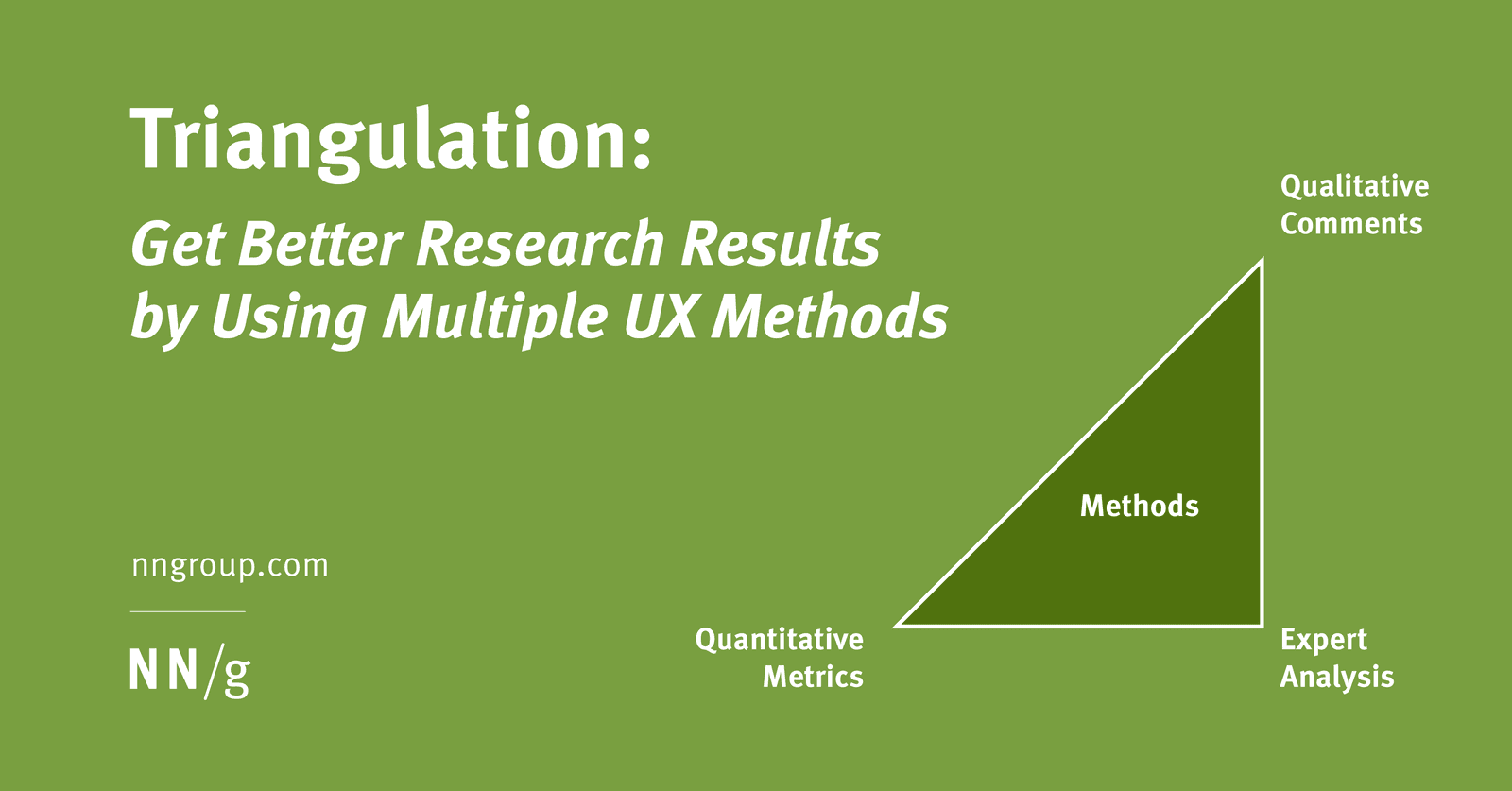
Triangulation: Stronger UX Insights from Multiple Angles
Triangulation strengthens research by combining methods to cover each one's blind spots. For example, pair a quantitative study showing *what* users do with a qualitative one explaining *why*. The footgun is treating a single data source as definitive proof.

UX Research Repository: Your Team's Shared Brain
A research repository is your team's shared brain for user insights, preventing knowledge from getting lost. It centralizes reports, recordings, and notes, making them searchable to prevent duplicate studies. The main footgun is poor adoption.

Fitts's Law: Bigger, Closer Targets Are Faster to Hit
Fitts's Law predicts that the time to hit a target depends on its distance and size. This is why mobile buttons are large and context menus appear at your cursor. The footgun is making everything huge, which sacrifices information density and visual hierarchy.

Measuring Design System Health and ROI
A design system isn't a one-off project; it's a product that decays without measurement. Track metrics like component adoption and design-to-code parity to prove its value and guide maintenance.

StoryBrand: Make the Customer the Hero of Your Message
Stop talking about your company; make the customer the hero of a story where your brand is the guide. Use this for website copy and sales pitches to turn a confusing message into one that drives growth. The footgun is making your brand the hero.
Hick's Law: More Choices, Slower Decisions
Hick's Law states that decision time increases logarithmically with the number of choices. It's why complex menus slow users down, forcing them into analysis paralysis.
System of Systems: Managing Design Systems at Scale
A "system of systems" isn't one giant design system, but a fleet of interconnected ones. It's how large organizations manage multiple brands or products without total fragmentation.

Readability Formulas: Scoring Text Complexity
Readability formulas are like a linter for prose, scoring your text's complexity based on sentence and word length. They're used to check if documentation or UI copy is appropriate for the target audience.
"Miller's Law" is Ambiguous and Often Misused
"Miller's Law" isn't one rule, but a name for four distinct, unrelated principles. This ambiguity causes confusion in fields like psychology and computer science.
Institutional Review Board (IRB): Your Research Ethics Checkpoint
An IRB is an ethics committee that acts as a mandatory checkpoint for research involving human subjects. Before running user studies or surveys, especially in academic or medical settings, you must get their approval.
Cognitive Load: Don't Make Users Think (Too Hard)
Think of a user's brain like a computer with limited RAM; cognitive load is the processing power your UI demands. High load from cluttered interfaces slows users down, causing them to miss details or abandon tasks.

GDPR for UX Research: Beyond the Consent Form
GDPR forces you to treat user data with respect: collect only what you need for a specific purpose and keep it safe. It applies to all research involving personal data from EU residents. The biggest footgun is collecting data "just in case."
Deception: The Core Concept
Deception is the act of convincing someone of untrue information that the sender knows is false. It's often done for personal gain and relies on the receiver's lack of knowledge about the truth.
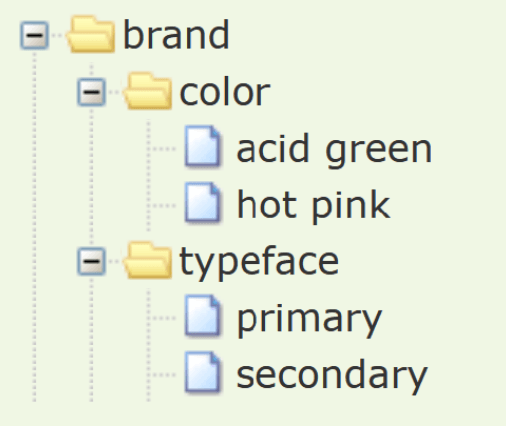
Token Tiers: From Raw Values to Component Properties
Token tiers layer your design system from abstract to concrete: raw values become semantic names, which then style components. This lets you change a core color and see it update everywhere.

LCH Color: More Vivid, Predictable UI Colors
LCH is a color space that aligns with human perception. It fixes HSL's broken lightness and unlocks 50% more vivid colors on modern screens. The footgun: LCH hue angles don't match HSL's; 0° is magenta, not red, so you can't just swap them.
Automated Token Pipelines: A Single Source of Truth
Automated token pipelines turn design decisions into code, using a standard format to sync styles from design tools to production. This is critical for multi-platform systems, preventing drift.

Kerning, Tracking, and Leading: Spacing in Typography
Kerning adjusts space between two letters, tracking adjusts space across a whole word, and leading controls vertical line spacing. These are used in UI and branding to improve readability. The footgun is confusing kerning (pairs) with tracking (groups).
Voice of the Customer: Build What People Actually Want
Voice of the Customer (VoC) means capturing user needs in their own words, not your team's jargon. It's used to prioritize features and write marketing copy that resonates. The footgun is treating it as a one-off survey instead of a continuous feedback loop.
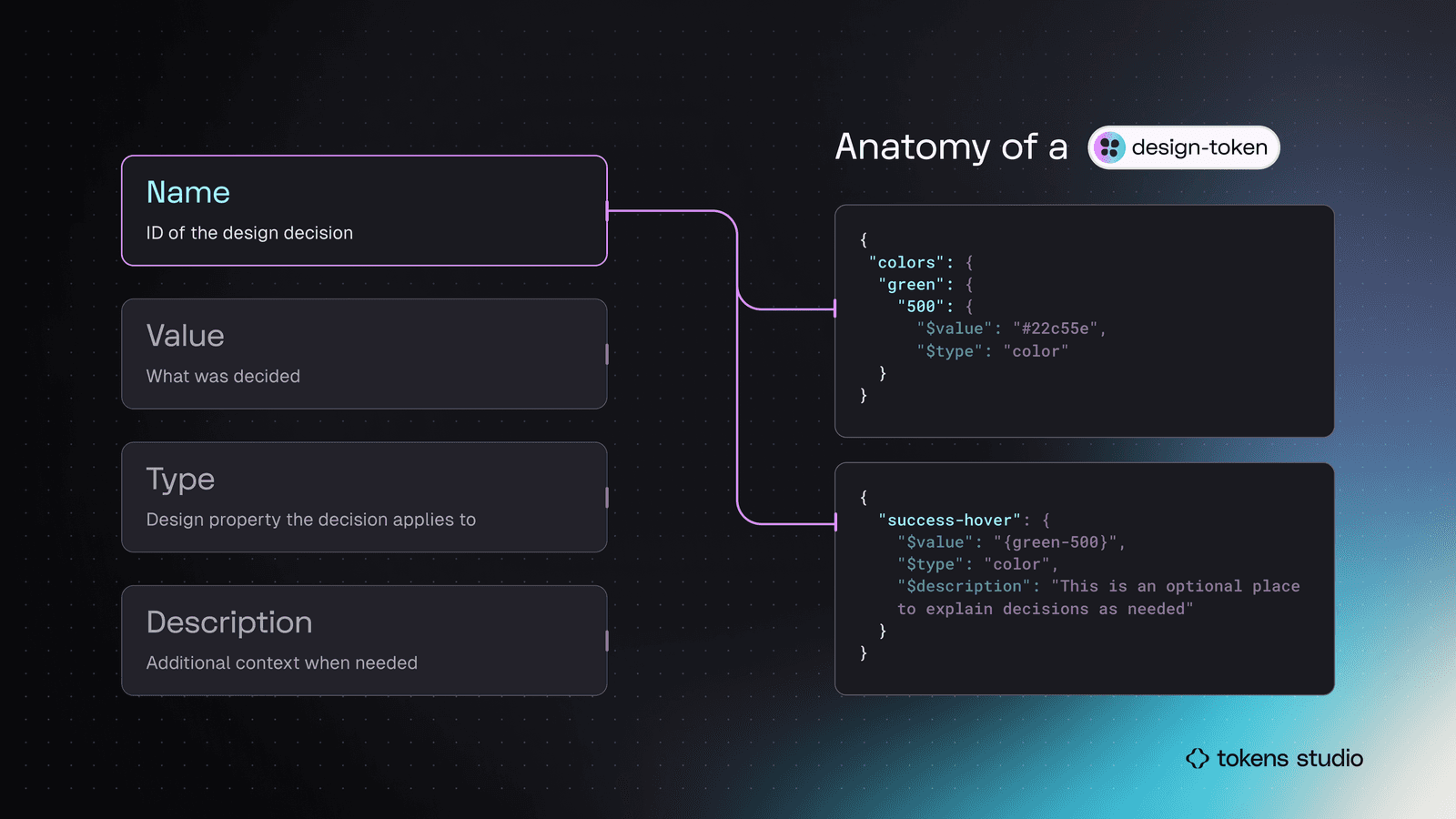
Semantic Naming for Design Tokens
Don't name a token by its value (blue-500); name it by its job (color.action.primary). This decouples design intent from implementation, making systems scalable. It's key for theming and avoiding "lie" variables when designs change.
We are hiring for this. Every open role lists the topics its interview covers, so you can prepare for the real thing rather than guessing.
See open roles