Advanced everything in Design & UX, page 7

Design a system to detect keyword cannibalization
Query-page-position data, intent clustering, and rank volatility.
Design a system to automate the content lifecycle
This tests time-based state modeling and scheduler choice at scale. A strong answer names a workflow engine or cron-plus-queue, separates analytics ingestion, and requires idempotency. Red flag: a single cron script with no backpressure or failure handling.
Architect a large-scale real-time recommendation system with data pipelines
Tests multi-stage ML serving under 200ms latency. Strong answers use a funnel: two-tower embeddings with ANN retrieval, ranking, and guardrails, plus separate batch and real-time pipelines. Red flag: scoring the full catalog per request without approximation.

Design a highly scalable headless CMS architecture
Tests write-heavy authoring versus read-heavy delivery separation at scale. Strong answers outline dual-cluster isolation, event-driven invalidation, and CDN edge caching. Red flag: a monolithic service with only database query caching.
Propose an NLP approach to audit brand voice and build a dashboard
This tests turning brand principles into measurable NLP features. A strong answer uses readability for simplicity and agency verbs for empowerment, scores copy via LLM classifiers, and visualizes trends by product area.

Design a secure templating engine for user notifications
Tests balancing creator flexibility with defense-in-depth security and i18n. Strong answers cover context-aware auto-escaping, a restricted AST grammar, ICU MessageFormat for pluralization, and sandboxed execution.

Propose a multi-armed bandit system to optimize headlines faster
This tests online learning and the explore-exploit tradeoff. Answers contrast fixed A/B with adaptive allocation, sketch a Bayesian bandit service with a min exploration rate, and note delay.
MaxDiff Analysis: Find True Preferences, Not Just Ratings
MaxDiff finds what people truly value by asking them to pick the "best" and "worst" from a small set, not just rate them. Use it to rank features or messages without the ambiguity of 1-5 scales.
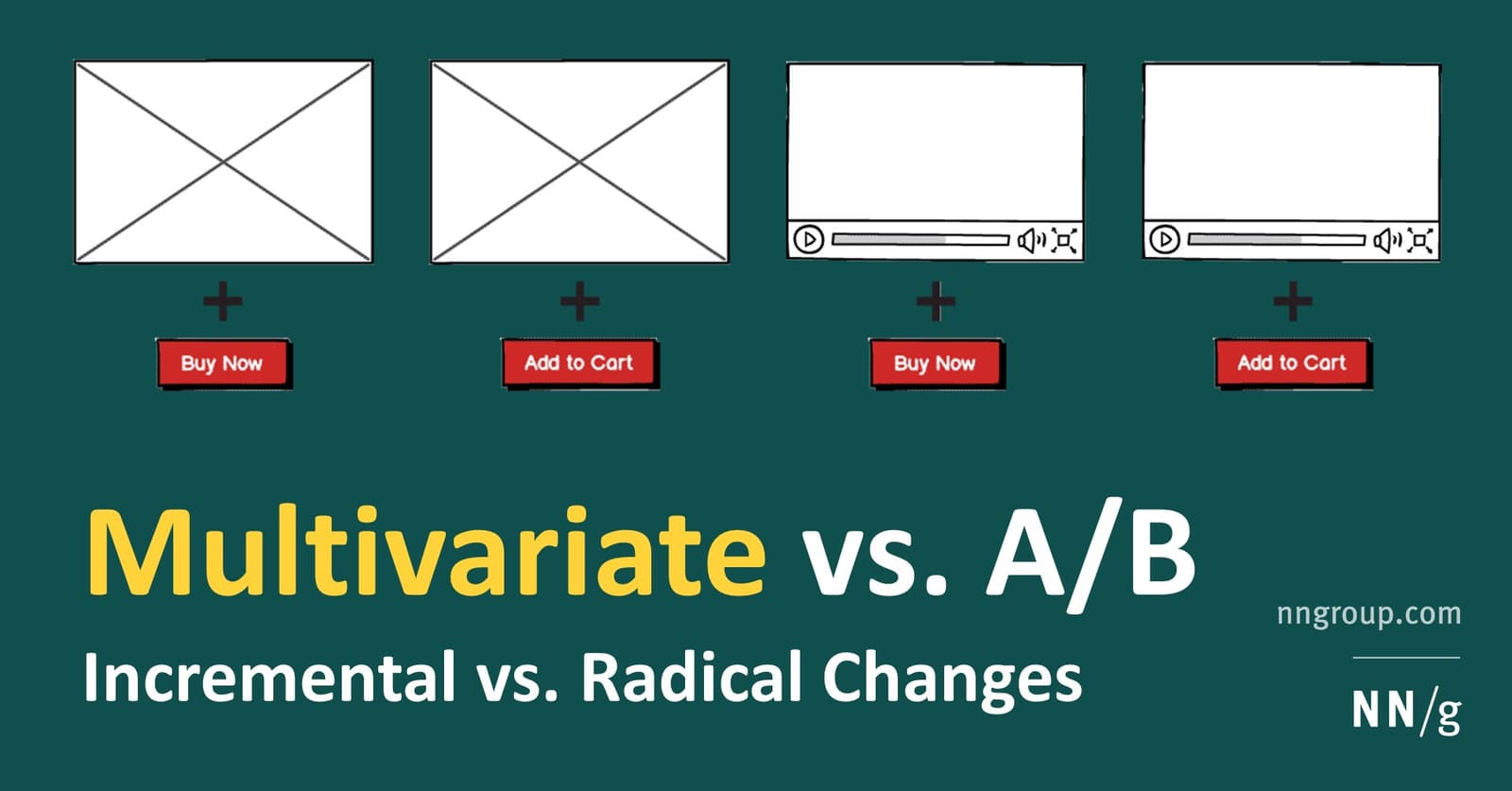
Multivariate Testing: Find Which UI Changes Interact
Multivariate testing finds the best *combination* of UI changes, not just which single design wins. Use it to see how a new headline interacts with a new button on a high-traffic page. The footgun: it requires far more traffic than A/B testing to get a.
Pluralistic Walkthrough: Diverse Roles, One User Task
A pluralistic walkthrough is a group critique where developers, users, and UX pros role-play as end-users to find flaws in a design. It's used early to catch issues cheaply. The footgun is letting developers defend their work instead of listening.
GOMS Model: Predicting User Performance as a Script
The GOMS model predicts expert user performance by breaking down tasks into a script of Goals, Operators, Methods, and Selection rules. It's used to get quantitative estimates of task efficiency, but its footgun is assuming a perfect user who never makes…
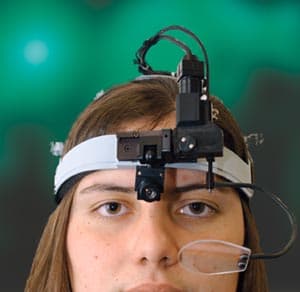
Eye Tracking: See What Your Users Actually See
Eye tracking reveals what users actually look at, not just what they say they do. It's used in UX to generate heatmaps showing which UI elements draw the eye. The footgun: a long gaze can mean interest, but it can also mean confusion.
Desirability Testing: Quantifying User Feelings
Desirability testing quantifies user feelings with a controlled vocabulary, asking them to pick words from a list that describe a design. It measures emotional response to visual appeal or UX, often with just a screenshot.
Cultural Probes: Inspire, Don't Analyze
Cultural probes are like a creative care package for users, designed to capture inspirational moments, not to collect analyzable data. They help designers understand a user's world and values early in a project.
User Mental Models: What Users Believe About Your System
A user's mental model is their internal story of how your system works, based on belief, not facts. It shapes every interaction, from predicting button actions to checkout flows.
Longitudinal Study: Watching Change Over Time
Think of it as a movie, not a snapshot. A longitudinal study tracks the same users over time to see how behavior evolves, revealing cause and effect. It's used to measure long-term feature adoption or churn.
Deception: The Core Concept
Deception is the act of convincing someone of untrue information that the sender knows is false. It's often done for personal gain and relies on the receiver's lack of knowledge about the truth.

GDPR for UX Research: Beyond the Consent Form
GDPR forces you to treat user data with respect: collect only what you need for a specific purpose and keep it safe. It applies to all research involving personal data from EU residents. The biggest footgun is collecting data "just in case."
Institutional Review Board (IRB): Your Research Ethics Checkpoint
An IRB is an ethics committee that acts as a mandatory checkpoint for research involving human subjects. Before running user studies or surveys, especially in academic or medical settings, you must get their approval.

UX Research Repository: Your Team's Shared Brain
A research repository is your team's shared brain for user insights, preventing knowledge from getting lost. It centralizes reports, recordings, and notes, making them searchable to prevent duplicate studies. The main footgun is poor adoption.
We are hiring for this. Every open role lists the topics its interview covers, so you can prepare for the real thing rather than guessing.
See open roles