Everything in Growth & Experimentation, page 6
When increasing CTA clicks, what side-effects and guardrails should you consider?
This tests balancing growth with business safety. Name guardrails like retention, revenue, fraud, load time; set NI thresholds pre-launch; and include SRM checks. A red flag is treating guardrails as optional success metrics instead of hard stop limits.

Develop a testable hypothesis for a 40% email verification drop-off
This tests structured hypothesis formation under uncertainty. Strong answers: segment the 40% drop by device and latency; build a Customer Theory from data; isolate one lever; draft a four-part MECLABS hypothesis. Red flag: skipping diagnosis to guess fixes.

What framework decides between low-effort/low-impact and high-effort/high-impact experiments?
This tests structured experiment sequencing beyond gut instinct. A strong answer picks ICE, RICE, or PIE; scores both experiments by impact, confidence, and effort or reach; then weighs opportunity cost and bandwidth.

Which three data sources would you analyze to improve activation?
This tests whether you ground hypotheses in diverse evidence before experimenting. A strong answer names qualitative feedback, funnel metrics, and behavioral analytics as distinct inputs.
Design a system that detects choice paralysis and dynamically simplifies the interface
Track hover entropy, scroll jitter, and time-to-click; use a contextual bandit to select simplification tiers.
How would you use ML to optimize habit-loop notifications?
Tests blending behavioral psychology and ML to personalize cues without coercion. Good answers use contextual bandits with user-state features and reward habit formation over clicks.
Design the data model and backend for a 7-day trial at scale
Tests state machine design for time-bound entitlements at scale. A strong answer covers: an idempotent enrollment API, a trial ledger with timezone-aware expiration, and an event-driven expiration pipeline.

Design a variable daily-login reward system with anti-gaming controls
Tests server-side reward probabilities and idempotency in distributed systems. Strong answers cover: configurable weights, idempotent tokens with DB unique constraints, rolling windows, and server-side grants.
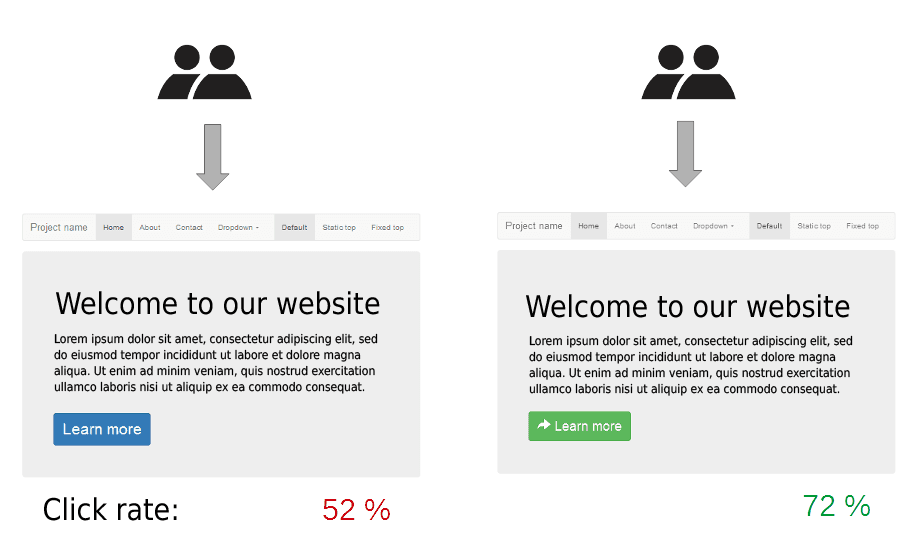
Design an A/B test for loss aversion versus gain framing at checkout
Tests whether you can isolate framing effects from checkout confounders. Strong answers detail user-level randomization, event logging, and guardrail metrics like revenue per visitor. Red flag: a conversion-only analysis with no unit of diversion defined.
How would you design a near real-time social proof notification system?
This tests low-latency event pipeline design with bounded load. A strong answer uses a fire-and-forget beacon, stream processor, and cache with TTL; it favors approximate counts and windowed aggregation.
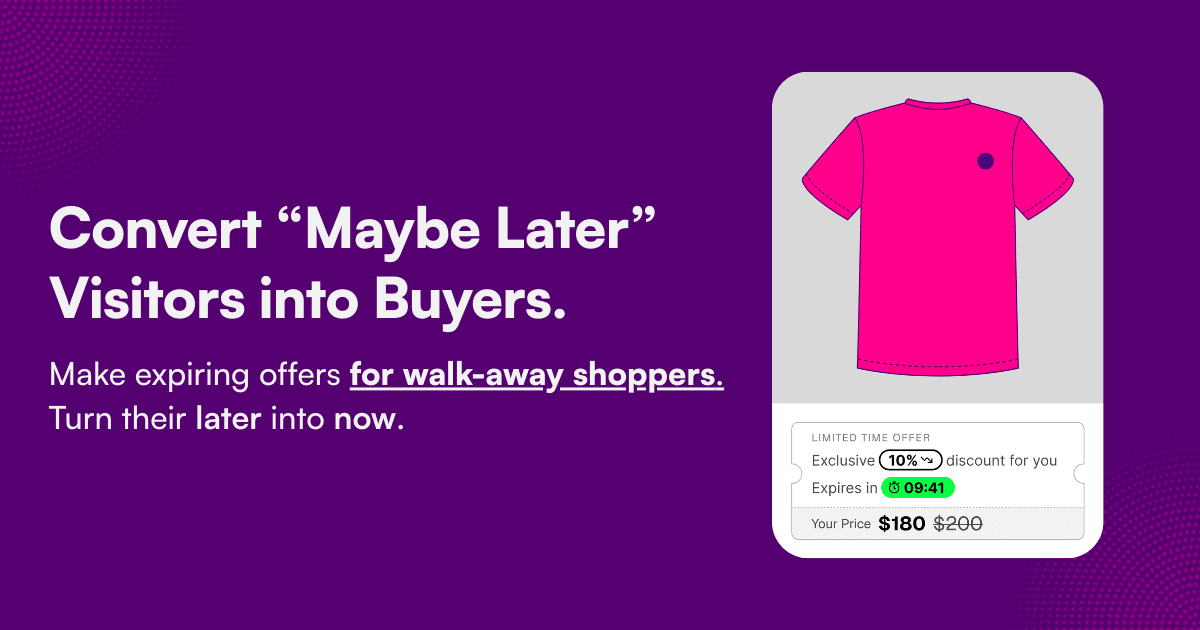
How would you implement a timezone-safe, tamper-proof offer countdown?
Tests distrust of the client and server-side UTC enforcement. Outline: server owns canonical end time; client syncs clock offset to render remaining time; checkout re-validates expiry. Red flag: using local Date.now or localStorage.
How would you instrument events and query a 3-invite aha moment?
Tests taxonomy and stateful aggregation across sessions. Strong answers instrument Teammate Invited with timestamps, compute 7-day per-user counts via stream or SQL windowing, and materialize cohorts.
Design a near real-time user interaction tracking and analytics system
Tests decoupling ingestion from querying with justified tech choices. Outline: client → Kafka → Flink → ClickHouse → API; budget sub-30s latency and backpressure per stage. Red flag: one monolithic RDBMS or batch ETL handling both writes and reads.
Explain user identity stitching across devices and SDK roles
Tests event-level identity resolution. A strong answer covers anonymousId per device, the identify call binding anonymous events to userId, and backend merge handling out-of-order events. Red flag: claiming cookies alone stitch mobile and web.

What causes client order_completed events to diverge from backend records?
Tests end-to-end event reliability. Separate client failures (network, ad blockers, duplicates) from backend gaps (idempotency, validation, races) and propose timestamped join analysis. Red flag: blaming users or fixing before measuring gap direction.

What is a conversion funnel? Instrument a three-step onboarding funnel with events.
This tests translating business funnels into concrete event instrumentation. A strong answer outlines three ordered steps, names exact events like user_signed_up and project_created, and notes unique-user counting.
How would you track a 'Sign Up' button click end-to-end?
It tests your ability to instrument a custom event and validate the pipeline. Attach a gtag listener to the button, fire a sign_up_click event, then confirm the hit in GA4 DebugView or real-time reports.
How do you architect a global notification holdback group?
Tests persistent control-group isolation without breaking critical flows. Strong answers use deterministic sticky bucketing by user ID, separate marketing and transactional namespaces, and audit holdout bleed.

Describe the architecture for multi-touch attribution with time-decay
Stitch IDs, stream events to warehouse, sessionize journeys, then apply decay weights in SQL.

How do you instrument client and server to debug payment drop-offs?
Tests designing telemetry that distinguishes intent from errors across the stack. Strong answers use visibility pings for abandonment, validation events for client errors, and gateway status codes for backend failures.
We are hiring for this. Every open role lists the topics its interview covers, so you can prepare for the real thing rather than guessing.
See open roles