Intermediate concepts in LLMs & Generative AI

Regularization: Penalizing Complexity to Prevent Overfitting
Regularization penalizes model complexity to prevent overfitting. It's used in training to help models generalize to new data, rather than just memorizing training examples. The footgun is applying too much, causing the model to become too simple and underfit.
Word2Vec: Word Meaning as a Point in Space
Word2Vec turns words into numerical vectors, where semantic similarity becomes spatial proximity. It powers synonym detection and analogy tasks by learning from a word's context in a large text corpus.
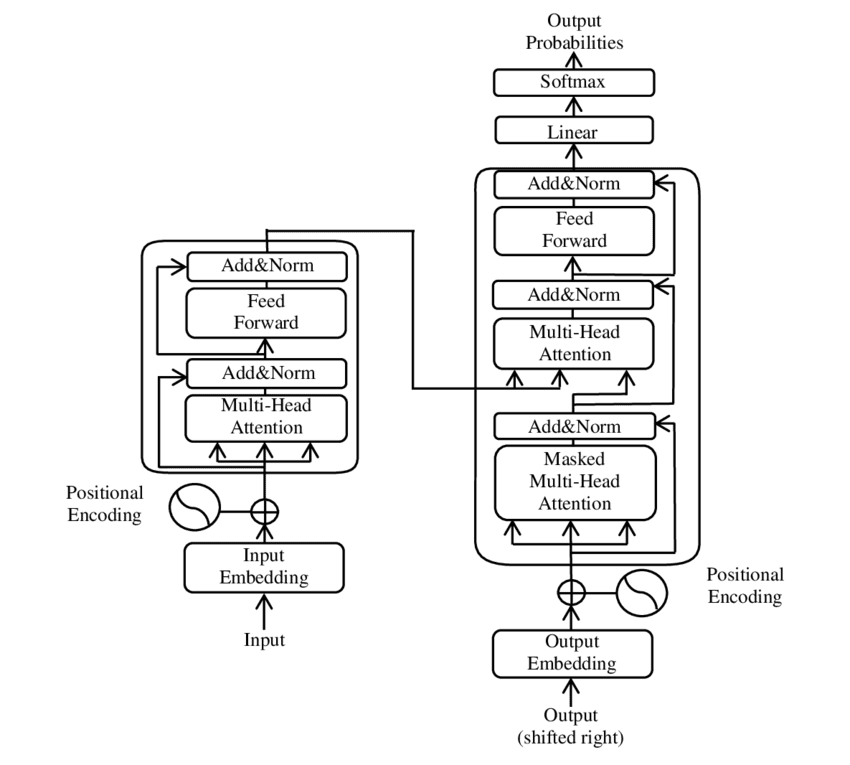
Self-Attention: The Transformer's Core Idea
Self-attention lets a model weigh the importance of different words in a sequence to understand context. This core mechanism of the transformer architecture powers LLMs for translation and generation.
Residual Connections & Layer Norm: The Transformer's Stabilizers
Residual connections are shortcuts that let information bypass layers, while Layer Normalization rescales a layer's outputs. Together, they prevent training from breaking in very deep networks like Transformers, enabling signals to flow without vanishing.
Mixed-Precision Training: Faster Training with Less Memory
Mixed-precision training is like using rough estimates (FP16) for most math and a calculator (FP32) for critical steps. This speeds up deep learning on GPUs by cutting memory use, but naively switching can cause training to fail as small gradients vanish.
AdamW: Decoupling Weight Decay for Better Generalization
AdamW fixes a flaw in the Adam optimizer by decoupling weight decay from the gradient update, improving model generalization. It's a go-to for training large networks like Transformers. The footgun is thinking it's the same as Adam with L2 regularization.

Learning Rate Scheduling: A Gearbox for Model Training
Think of a learning rate schedule as a training 'gearbox,' starting fast and slowing for precision. It's used when fine-tuning large models to adapt them without breaking them.
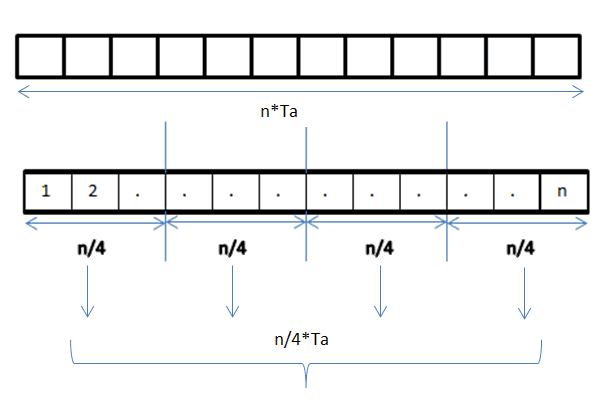
Data Parallelism: One Task, Many Data Chunks
Data parallelism splits a huge dataset across multiple processors, each running the same task on its own chunk. It's how large models are trained on massive datasets, with each GPU handling a different batch of data.

In-Context Learning: Teaching a GPT Without Retraining
In-context learning is like giving an LLM a cheat sheet in the prompt. You provide examples of a task, and the model follows the pattern for your new query without any permanent changes. Use it for one-off tasks like reformatting text or classifying sentiment.
Few-Shot Prompting
Few-shot prompting embeds task examples directly in the prompt to guide output format without retraining. It excels at niche tasks and consistent formatting, but mismatched examples degrade performance more than no examples at all.
Chain-of-Thought Prompting: Making LLMs 'Show Their Work'
Chain-of-Thought (CoT) prompting gets better answers from LLMs by asking them to 'show their work.' It's best for complex reasoning like math problems or logic puzzles where breaking the problem down helps.
PEFT: Fine-Tune Large Models on a Budget
Parameter-Efficient Fine-Tuning (PEFT) adapts huge models without retraining everything. It's like adding a task-specific cheat sheet to a genius brain. Use it to specialize LLMs on consumer GPUs.

Instruction Fine-Tuning: Teaching LLMs to Follow Orders
Instruction fine-tuning teaches a base LLM to follow commands, not just predict the next word. It turns a raw text-completion engine into a helpful assistant, enabling it to answer questions or summarize text. The footgun: it learns style, not facts.
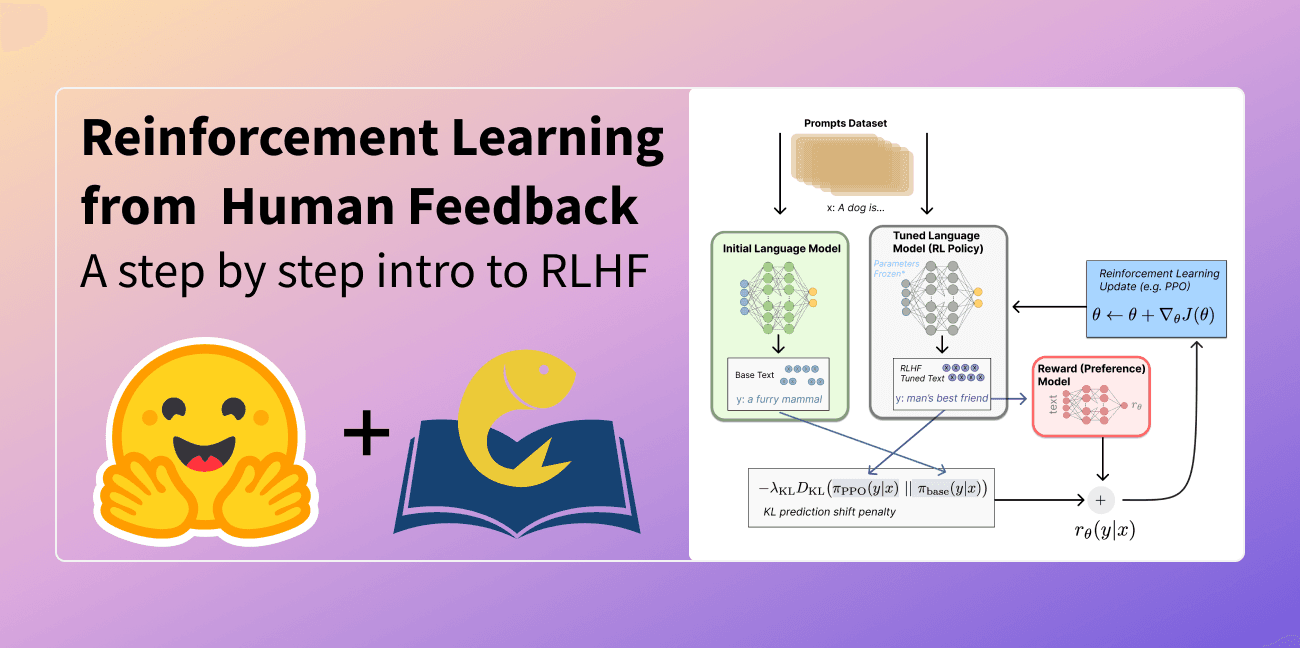
Reward Modeling: Teaching an LLM What 'Good' Means
A reward model is a judge that scores an LLM's outputs based on human preferences. It learns to assign a numerical 'goodness' score to text, turning subjective quality into an optimizable signal for training models like ChatGPT.
Dense Passage Retrieval (DPR): Semantic Search for QA
DPR finds answers by meaning, not just keywords. It converts questions and documents into vectors and finds the closest matches, forming the core of Retrieval-Augmented Generation (RAG).

Hybrid Search: Combining Keyword and Vector Search
Hybrid search combines keyword precision with vector search's conceptual understanding in one query. It excels at retrieving relevant documents for RAG by finding both exact matches (like names) and similar ideas.
Context Stuffing: Giving LLMs Short-Term Memory
Context stuffing adds external documents to an LLM's prompt, giving it temporary, task-specific knowledge. Use it for one-off questions on specific docs, but beware: it fails when documents exceed the model's context window limit, causing truncated data.
LLMs Get 'Lost in the Middle' of Long Contexts
LLMs struggle to find information buried in the middle of long prompts. Performance is highest when key facts are at the beginning or end of the context. This impacts multi-document QA and RAG.
Task Decomposition: Teaching LLMs to Plan
Task decomposition for an LLM agent is like writing a recipe: break a big goal into a checklist of small, executable steps. It's vital for complex requests like planning a trip, but a bad initial plan can cause cascading failures that doom the entire process.

Text-to-Image Synthesis: From Prompt to Picture
Text-to-image models translate words into pixels by learning statistical links between text and images. They power creative tools like DALL-E but don't truly understand prompts, leading to errors in logic like counting or spatial arrangement.
We are hiring for this. Every open role lists the topics its interview covers, so you can prepare for the real thing rather than guessing.
See open roles