Concepts in Product Management, page 20
Regression Discontinuity Design (RDD)
RDD finds a natural experiment at a cutoff point, like a test score threshold for a scholarship. By comparing people just above and below the score, you can estimate the program's effect. The footgun is assuming this local effect applies to everyone.
Product-Market Fit: Why Market Trumps Team and Product
Product-market fit is when a great market pulls a viable product out of a startup, not when a great product creates a market. You'll know you have it when customers are beating down your door.
DevRel: Building For and With Developers
DevRel is the bridge between a company and the developers using its tools, treating them as partners, not just customers. You see it in API docs, tutorials, and community forums. The footgun is treating it as just marketing, not a feedback loop to improve the.
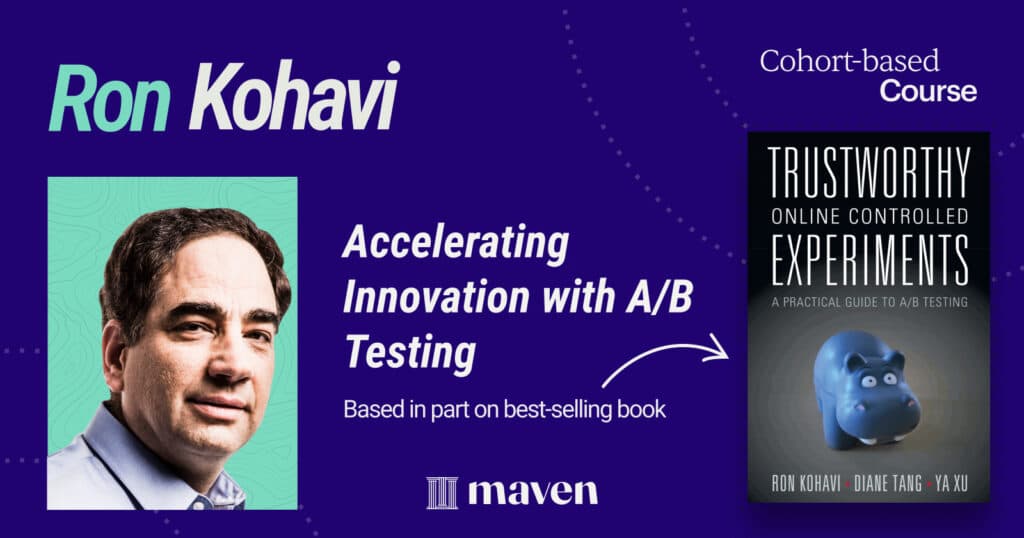
Experiment Knowledge Base: Don't Repeat Failed Tests
An Experiment Knowledge Base is your company's collective memory for A/B tests, centralizing hypotheses, results, and learnings. It prevents re-running old tests and surfaces past insights.
Instrumental Variables: Isolating True Cause and Effect
Instrumental Variables (IV) isolate true causality when a key variable is tainted by hidden factors. An IV is a "clean" substitute that influences your cause without directly touching your effect, letting you measure the true relationship, free from…
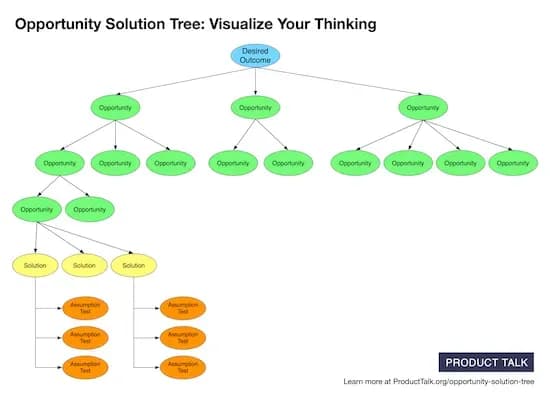
The Opportunity Solution Tree: Connecting Outcomes to Solutions
An Opportunity Solution Tree is a visual map connecting a business goal to the customer problems you could solve to achieve it. Product teams use it to explore paths to an outcome, ensuring features address real user needs.
API-as-a-Product: Your API Is Your Business
Treat your API as a core product with developers as your customers, not just a technical integration. This mindset is crucial when exposing data to partners or building a developer ecosystem, like Stripe or Twilio do.
OKRs: Frame Growth Goals as Measurable Outcomes
OKRs separate your ambitious goal (Objective) from the measurable results that prove you're there (Key Results). Growth teams use this to align on what success looks like.
Propensity Score Matching: Mimicking an A/B Test
Propensity Score Matching (PSM) mimics a randomized trial with observational data by finding a "statistical twin" for each subject. It's used to estimate a feature's impact when a true A/B test isn't possible. The footgun is assuming it removes all bias.
.png&w=1600&q=75)
Kanban: A Strategy for Optimizing Flow
Kanban isn't just a board with columns; it's a strategy for optimizing the flow of value through your process. It helps teams visualize work, manage bottlenecks, and deliver value predictably.
Open vs. Closed Platforms: Walled Garden or Public Park?
An open platform is a public park, inviting others to build on it; a closed one is a walled garden with total control. This choice defines growth: via a third-party ecosystem (Android) or tight integration (Apple).

Growth Squads: Centralized vs. Decentralized
A growth squad is a trade-off between speed and cultural change. A centralized team optimizes for velocity with dedicated members, while a decentralized (embedded) team spreads the growth mindset by borrowing staff.

Moving Average: Smoothing Out the Noise in Data
A moving average smooths out noisy data by replacing each point with the average of its neighbors, revealing the underlying trend. It's used to track stock prices or server metrics without overreacting to short spikes.

Kanban Board: Visualize Your Workflow
A Kanban board is a visual system for managing work as it moves through a process, making bottlenecks obvious. It's used in software development to track features from 'To Do' to 'Done'.
SDKs: A Strategy to Make Your Platform the Default
An SDK is a strategic tool to drive adoption. By bundling compilers and frameworks, you make it easy for developers to build for your platform or integrate your service, making your ecosystem the path of least resistance.
The Traditional Career Ladder: A Single Path Up
The traditional career ladder is a single, vertical track for promotion, moving from entry-level to executive. It's common in large, established organizations with well-defined roles. The footgun is its rigidity, forcing experts into management to advance.
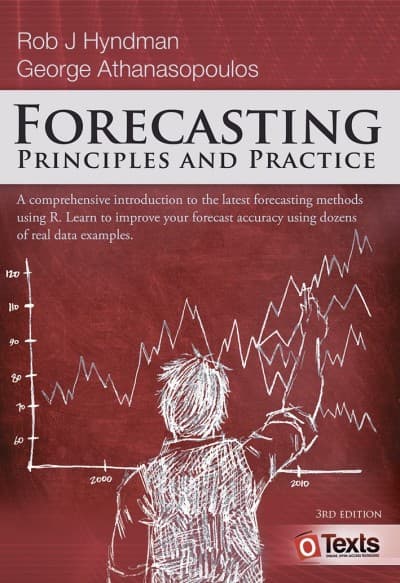
Training vs. Test Sets: Judging a Forecast's True Accuracy
Don't judge a forecast by how well it fits the data it was trained on. To measure true accuracy, split your data into a training set for model fitting and a test set for evaluation, using data the model has never seen before.

Pull System: Make Only What's Needed, When It's Needed
A pull system works like a restaurant kitchen: you only start work when the next step in the process places an order. This approach, core to lean manufacturing and Kanban, prevents overproduction. The footgun is pulling new work before finishing old tasks.
Developer Evangelism: Building a Movement for Your Tech
Developer evangelism builds a movement for a technology, aiming to make it a standard through network effects. It's used to drive adoption for new platforms, APIs, or frameworks by inspiring developers, not just selling to them.

Growth vs. Fixed Mindset: Your Beliefs Shape Your Abilities
A growth mindset sees ability as a muscle to be built, not a static trait you're born with. It's key when facing tough problems or critical feedback. The footgun is believing you're 'not a natural' at something, which prevents you from even trying.
We are hiring for this. Every open role lists the topics its interview covers, so you can prepare for the real thing rather than guessing.
See open roles