Concepts in Product Management, page 23

Guardrail Metrics: Don't Win the Battle to Lose the War
Guardrail metrics are your experiment's safety net, ensuring a win in one area doesn't cause a loss elsewhere. During A/B tests, you monitor them to catch negative side effects on site speed or revenue.
SAFe: Scaling Agile Beyond a Single Team
SAFe is a blueprint for applying Agile principles across large organizations, not just single teams. It coordinates many teams into 'Agile Release Trains' that plan and deliver together in fixed cycles, ensuring alignment on complex products.
Working Backwards: Start with the Press Release
Start product development by writing the press release for its launch. This forces you to define the customer benefit first, ensuring a new idea is customer-obsessed before you build. The footgun is starting with tech capabilities, not customer needs.

Time to Value (TTV): From Signup to 'Aha!'
TTV measures the time from signup to a user's first "aha!" moment. Product teams track it to reduce early churn, as faster value builds trust. The footgun is defining "value" as completing setup, not a real user win.
Net Promoter Score (NPS): A Snapshot of Customer Loyalty
NPS distills customer loyalty into one number by asking, "How likely are you to recommend us?" It's a quick pulse check for product teams. The footgun is treating the score as a diagnosis; it tells you *what* customers feel, but not *why*.
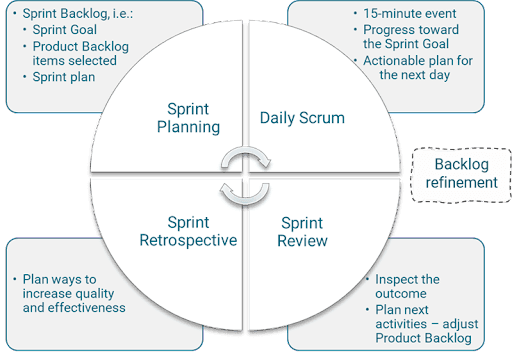
Large-Scale Scrum (LeSS): Scaling Scrum by Descaling the Org
LeSS scales Scrum by simplifying the organization, not adding processes. It applies one-team Scrum principles to multiple teams working on one product. Use it when 2-8 teams need to collaborate on a single product backlog.

Strategic Intent: Winning with Resourcefulness, Not Resources
Strategic Intent is a long-term goal that outstrips your current resources, forcing resourcefulness. Instead of matching resources to opportunities, you set an ambitious target like 'Beat Xerox' and rally the organization to close the gap.

Empty State
An empty state is the screen a user sees before any data exists, like a new account with no projects or a search with no results, and treating it as a real design surface rather than a blank gap is a high leverage move for activation.
Customer Retention Rate: Your Leaky Bucket Metric
Customer Retention Rate measures how many customers you keep over a period, showing how "leaky" your business's bucket is. It's vital for subscription services and e-commerce to gauge loyalty and predict revenue. A high overall rate can hide dangerous churn.
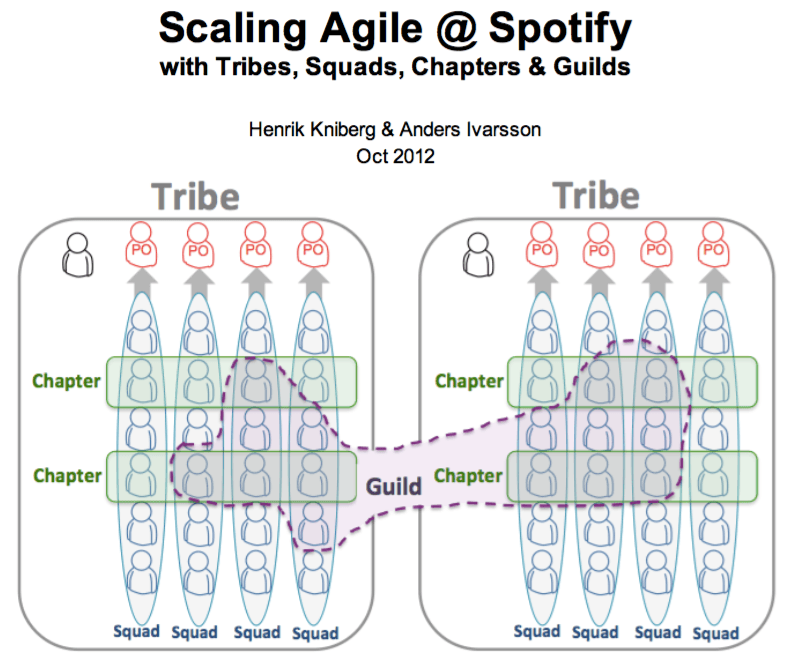
The Spotify Model: Scaling Agile with Autonomy
The Spotify Model organizes teams for autonomy and alignment, using mini-startups (Squads) and skill-based communities (Chapters). It helps scale agile in large orgs, but copying the structure without the culture of trust creates a rigid hierarchy in disguise.
Brand Positioning: Owning a Spot in Your Customer's Mind
Brand positioning is about owning a specific idea in your customer's mind. It's achieved through product differentiation and advertising to make your brand the default answer for a specific need, like Volvo for 'safety.'

Expansion MRR: Growing Revenue from Existing Customers
Expansion MRR measures new monthly recurring revenue from your existing customers. It's how you grow through upgrades, add-ons, or cross-sells, not just new signups. The footgun is mixing it with new business MRR, which hides your product's retention power.
DAU/MAU Ratio: Measuring Product Stickiness
The DAU/MAU ratio measures product stickiness by comparing daily to monthly users. Social media apps aim for high ratios (50%+), while e-commerce expects lower ones. The footgun is comparing ratios without context; a 'good' number varies by product type.
The Agile Release Train: How Multiple Teams Ship Together
An Agile Release Train (ART) is a 'team of teams' that aligns 50-125 people to ship a complex product together. It's used in SAFe to coordinate multiple Agile teams on a shared roadmap, ensuring they all pull in the same direction.
Category Design: Don't Compete, Create the Game
Instead of fighting for a slice of the pie, bake a new one. Category design creates a new market you can dominate, rather than competing in an existing one. The footgun is thinking a new feature makes a new category; it requires teaching the market.

Product-Led Growth (PLG): Let Your Product Sell Itself
Product-Led Growth (PLG) makes the product the primary engine for acquiring and converting users. It relies on a mix of free features, virality, and a smooth upgrade path to paying tiers, letting users experience value before they buy.
Customer Lifetime Value (CLV): A Customer's Total Worth
Customer Lifetime Value (CLV) predicts the total net profit a customer will generate, not just a single sale's revenue. It's used to set acquisition budgets and guide retention efforts. The footgun is using revenue instead of profit, leading to overspending.

PI Planning: Aligning an Entire Agile Release Train
PI Planning gets an entire 'team of teams' (an ART) in one room to plan the next 8-12 weeks. This two-day event aligns development with business goals and identifies cross-team dependencies.

Repositioning: Changing Minds, Not Just Products
Repositioning changes how customers perceive your existing product. Netflix did this by moving from DVDs to streaming to meet new demand. Don't mistake it for rebranding—repositioning alters the core promise, not just the logo or colors.
Product-Led Sales: Your Product is Your Best Salesperson
Product-Led Sales (PLS) treats your product as the primary lead generator. Instead of cold calls, sales teams engage users who show buying intent through their product usage, guiding them to a natural upgrade.
We are hiring for this. Every open role lists the topics its interview covers, so you can prepare for the real thing rather than guessing.
See open roles