Concepts in Product Management, page 4
Customer Data Platform (CDP): Your Customer's Single Source of Truth
A Customer Data Platform (CDP) creates a single, persistent profile for each customer by unifying data from siloed sources. It's used for real-time personalization and AI-driven marketing. The footgun is confusing it with a CRM, which manages relationships.
Problem Statement Framing: Define the 'Why' Before the 'What'
Don't just solve the problem, solve the *right* one. Problem framing forces you to deeply understand a user's need before building. It's the first step in product development, ensuring teams don't build something nobody wants.
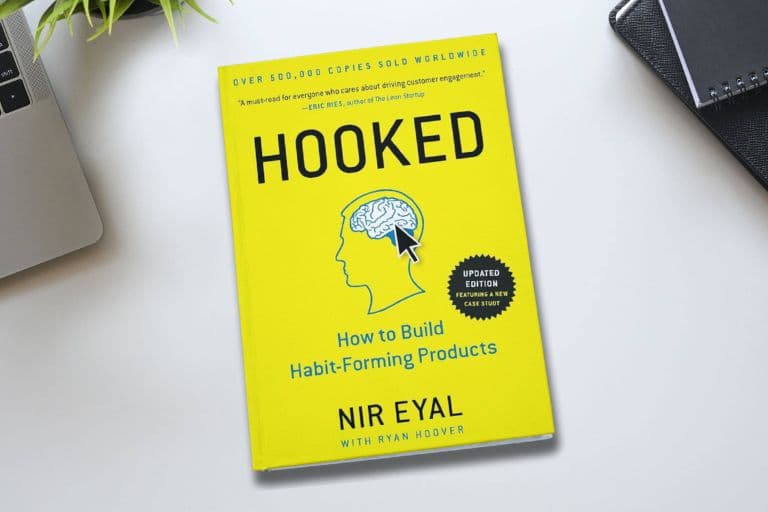
The Hook Model: Designing for Repeat Engagement
The Hook Model engineers user habits with a 4-step loop: Trigger, Action, Variable Reward, and Investment. It's a framework for building products people return to on their own, common in social media and games.
Event Data Pipelining: From Raw Events to Analytics
Treat data not as static tables but as a continuous stream of events. Event data pipelining builds the infrastructure to capture, process, and deliver this real-time flow for analytics or AI applications.

How Might We: Frame Problems, Not Solutions
“How Might We” questions turn research insights into broad prompts for brainstorming. Use them after user research to frame design challenges before ideating. The biggest footgun is embedding a solution in the question, which kills creativity.
Anchoring Bias: The First Number You See Matters Most
The first number you see acts like a mental anchor, warping all subsequent judgments. This is used in pricing, where a high "original" price makes a sale price seem better, and in negotiations.
Log Analysis: Reading Your System's Story
Log analysis turns raw, machine-generated records into a coherent story about your system's health, security, and performance. It's crucial for debugging production failures or investigating security incidents.

ETL: The Assembly Line for Your Data
ETL (Extract, Transform, Load) is an assembly line for data, moving it from various sources into a single destination for analysis. It's used to populate data warehouses by combining data from databases, logs, and APIs into a unified view.
Contextual Inquiry: Watch Users in Their Habitat
Go to the user's environment to see what they *actually* do, not just what they say they do. It's used in early discovery to uncover unstated needs by observing real workflows. The footgun is 'helping' the user, which pollutes the observation.
The Peak-End Rule: Design for Memory, Not Averages
Users don't remember the average of an experience; they remember its most intense moment and its end. This shapes recall of onboarding, support calls, or checkout. The footgun is optimizing for overall 'goodness' while ignoring a painful peak or weak ending.
Diary Study: Capturing User Behavior Over Time
A diary study captures user habits by having them log experiences over time. It's used to understand routines or decision-making in a user's natural environment, without the high cost of a field study. The footgun is relying on self-reported data.
The Paradox of Choice: Why More Options Can Hurt
The Paradox of Choice argues that more options can decrease user satisfaction. Instead of empowering users, an explosion of choices in pricing tiers or feature settings can lead to decision paralysis. The footgun is assuming users want maximum choice.
ELT: Load Raw Data First, Transform It Later
ELT pipelines load raw data directly into a data lake *before* any transformation. This speeds up ingestion and lets you figure out the data's structure later.

Generative vs. Evaluative Research: Define Problems vs. Judge Solutions
Generative research defines problems by asking, "What should we build?" Evaluative research judges solutions by asking, "Did we build it right?" The footgun is using evaluative methods for discovery, which just optimizes a solution for a problem nobody has.
Nudge Theory: Shaping Choices Without Forcing Them
Nudge theory influences behavior by subtly redesigning the environment where choices are made. It's used in product design to guide users toward desired actions, like setting smarter defaults.

Data Warehouse: The Single Source of Truth for Analytics
A data warehouse is a central database optimized for analytics, not transactions. It integrates historical data from disparate sources like sales and marketing to create a single source of truth for business intelligence.
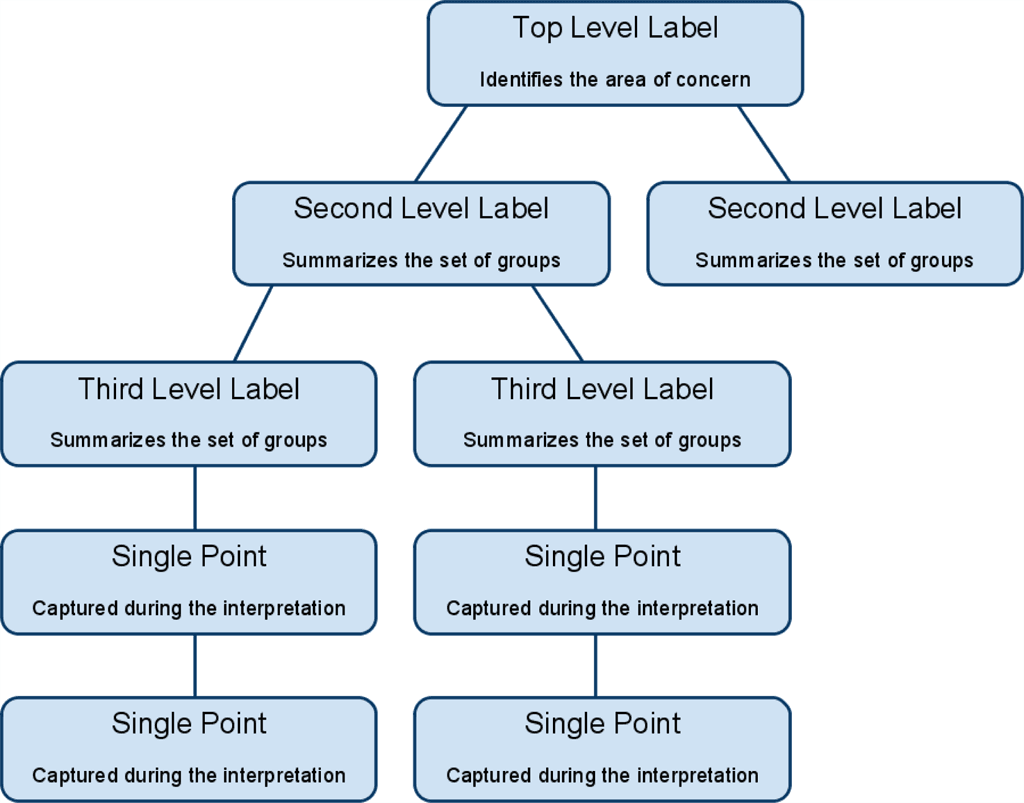
Affinity Diagramming: Finding Structure in Chaos
Affinity diagramming turns a pile of raw ideas into organized themes by grouping them based on natural relationships. Use it after brainstorming to find patterns. The biggest mistake is debating ideas instead of focusing on the connections between them.

Variable Rewards: The Engine of Habit
Variable rewards make products sticky by creating unpredictable payoffs, like a slot machine. This drives repeat actions in social feeds or games. The footgun is that overuse can feel manipulative and lead to user burnout or accusations of addictive design.
Online Analytical Processing (OLAP)
OLAP databases are built to quickly answer complex, multi-dimensional questions, unlike transactional (OLTP) databases that handle individual records. They power business intelligence tools for sales and marketing analysis.
User Stories: What Users Want, and Why
A User Story is a simple description of a feature from the user's perspective, focusing on the 'who, what, and why' instead of technical details. It's the primary unit of work in Agile, building a shared understanding of what to build.
We are hiring for this. Every open role lists the topics its interview covers, so you can prepare for the real thing rather than guessing.
See open roles