Advanced everything in Product Management, page 19
The Flight Levels Model: Connecting Strategy to Execution
The Flight Levels model visualizes work at three altitudes: strategic initiatives (Level 3), cross-team coordination (Level 2), and team execution (Level 1). It helps ensure high-level strategy translates to daily work.
Hoshin Kanri: A Company's Strategic Compass
Hoshin Kanri, or "compass management," is a strategic planning process for aligning an entire company. It ensures high-level goals are effectively communicated throughout the organization and translated into concrete action at every level.
Obeya: The Project 'War Room'
Think of an Obeya as a project's 'war room,' a space for visualizing work to make fast, informed decisions. It's used in lean and agile settings to align teams on strategy and surface problems. The footgun is treating it as a status meeting room, not.
Toyota Kata: The Practice Routine for Continuous Improvement
Think of Toyota Kata as a daily workout for your team's problem-solving muscles. It provides a structured routine to move from a current condition to a target condition via rapid, small experiments.
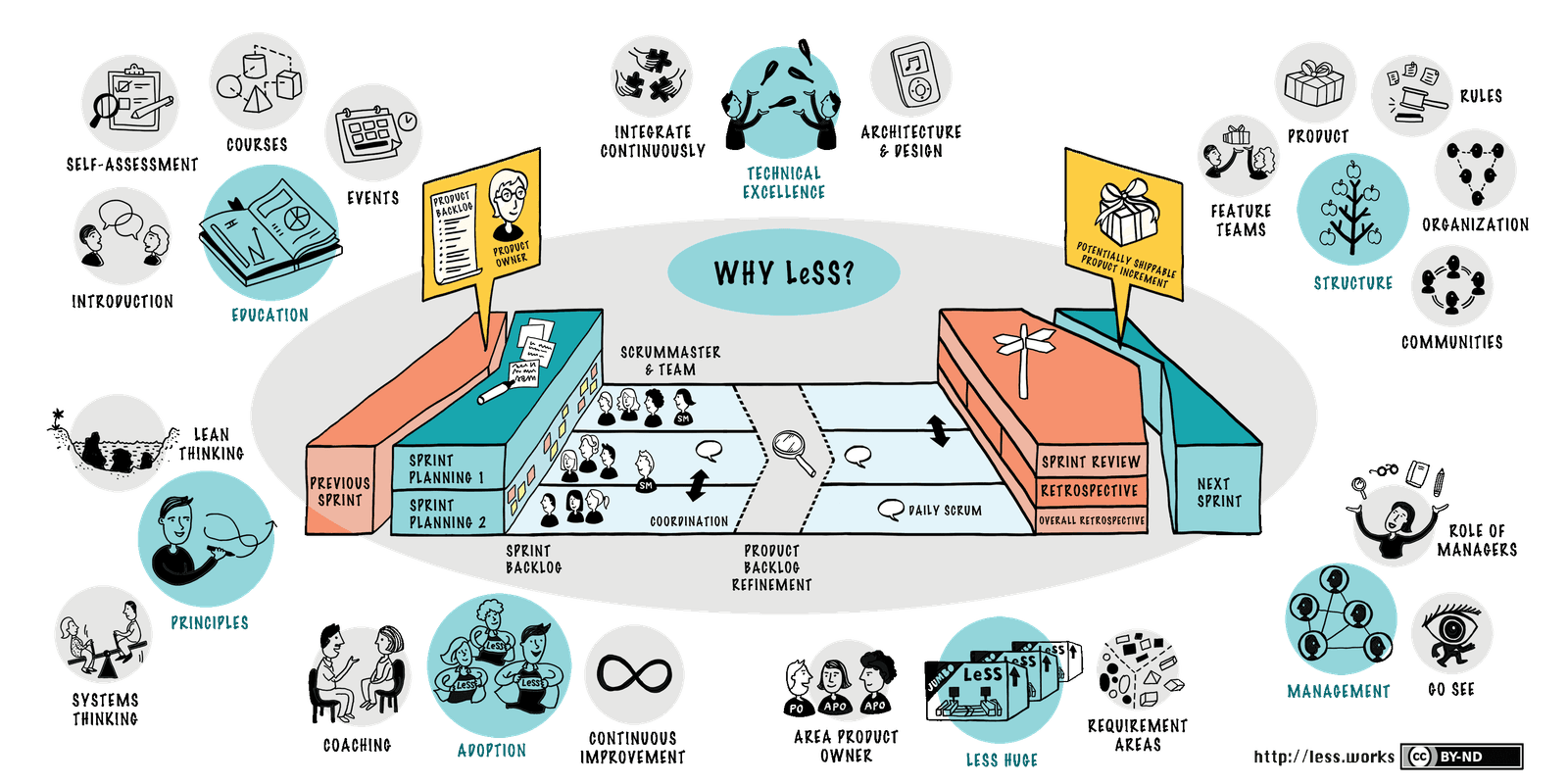
LeSS Huge: Scaling Scrum Beyond Eight Teams
LeSS Huge is a framework for applying Scrum when over eight teams work on one product, organizing them into "Requirement Areas." It’s for massive projects, like autonomous driving systems, where dozens of teams must coordinate.
Solution Train: The Train of Agile Trains
A Solution Train is a 'train of trains,' coordinating multiple Agile Release Trains (ARTs) to build one massive product. It's used for complex systems like autonomous vehicles where many teams must align.
Flow Debt: The Hidden Cost of Workflow Inefficiency
Flow Debt is the invisible cost of process bottlenecks that slow down delivery. It shows up as work waiting for handoffs, reviews, or decisions. The footgun is blaming individuals for system-level delays instead of optimizing the workflow itself.
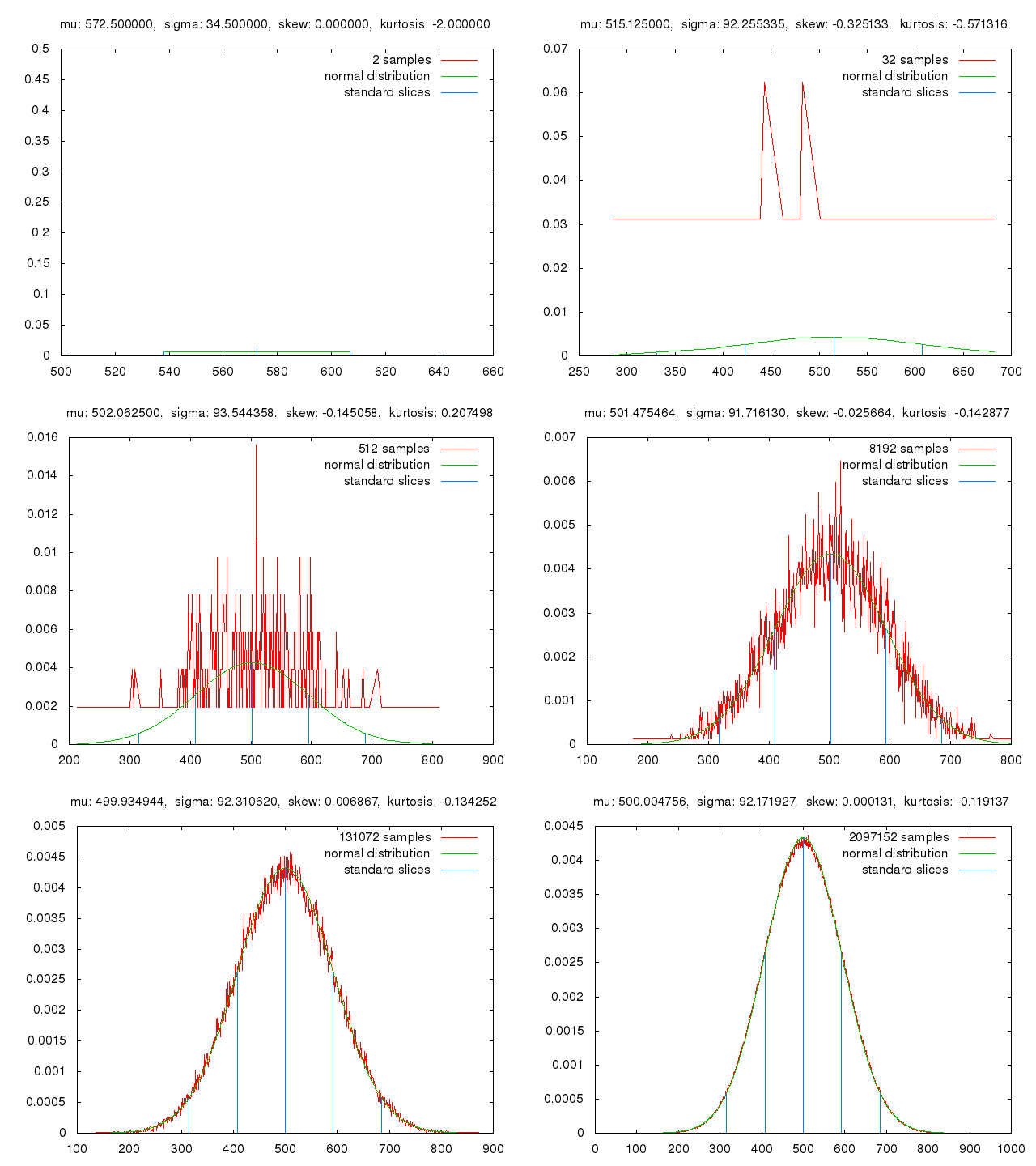
Monte Carlo Forecasting: Probabilities, Not Promises
Monte Carlo forecasting trades a single due date for a set of probabilities. By running thousands of random simulations based on past performance, it generates a range of likely completion dates, not a single guess.
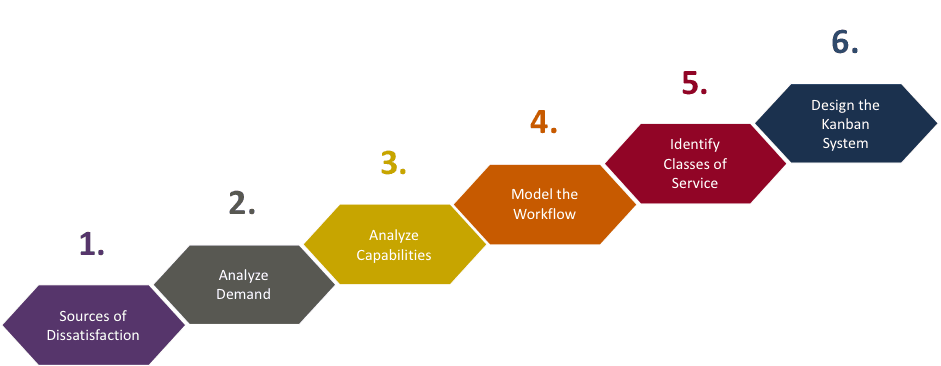
STATIK: Designing a Kanban System from First Principles
STATIK is a diagnostic recipe for designing a Kanban system tailored to your team's actual work, not just copying a template. Use it when starting a new implementation or when an existing process is stuck. The footgun is skipping the analysis.
Little's Law: Why Adding More Work Slows You Down
Little's Law shows that average task completion time is proportional to the work in progress (WIP). For a stable team, Cycle Time = WIP / Throughput. It's used in Kanban to predict delivery times. The footgun is adding more WIP to go faster; this always.
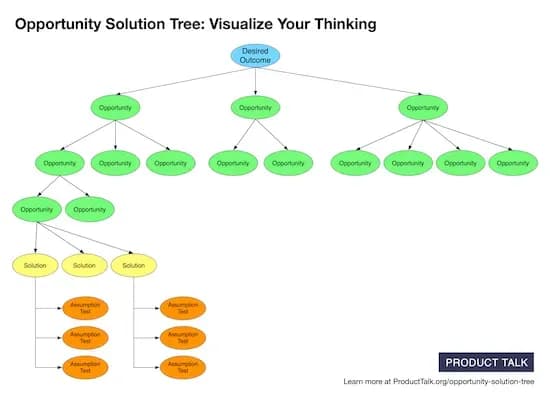
The Opportunity Solution Tree: Connecting Outcomes to Solutions
An Opportunity Solution Tree is a visual map connecting a business goal to the customer problems you could solve to achieve it. Product teams use it to explore paths to an outcome, ensuring features address real user needs.
Product-Market Fit: Why Market Trumps Team and Product
Product-market fit is when a great market pulls a viable product out of a startup, not when a great product creates a market. You'll know you have it when customers are beating down your door.

Pretotyping: Build The Right It, Not Just It Right
Pretotyping tests if anyone wants your product before you build it, ensuring you build 'The Right It.' Use it to validate market demand with minimal resources, gathering real data. The footgun is confusing it with prototyping, which tests implementation.
Dual-Track Agile: Discovery Before Delivery
Dual-Track Agile runs two parallel streams: a Discovery track to quickly validate ideas and a Delivery track to build releasable software. It prevents waste by testing concepts with cheap prototypes before writing code.
ATDD: Aligning Code with Business Needs Before You Build
Acceptance Test-Driven Development (ATDD) is a communication framework where business, developers, and testers write acceptance tests together *before* coding begins. This ensures everyone understands the requirements.

Contract Testing: Test Interfaces, Not Integrations
Contract testing ensures services work together without slow integration tests. It's a formal agreement where a 'consumer' defines its needs, and a 'provider' proves it can meet them.
Strangler Fig Pattern: Replace Legacy Systems Safely
The Strangler Fig pattern lets you replace a legacy system by gradually growing a new one around it, eventually choking out the old code. It's used for modernizing critical systems where a "big bang" rewrite is too risky, routing traffic feature by feature.
Actionable Agile Metrics: Predicting 'Done'
Stop guessing 'done' and start forecasting with data. Actionable Agile Metrics use historical flow data—like cycle time and throughput—to answer 'When will it be done?' for customers who need predictability.
Double-Loop Learning: Question the 'Why', Not Just the 'How'
Double-loop learning means questioning the 'why' behind your work, not just fixing the 'how'. Instead of only correcting errors, you challenge the underlying goals. This is crucial in retrospectives when a team realizes their entire approach was flawed.
Continuous Delivery vs. Deployment: The Final Step
Continuous Delivery automates releases to a staging environment for a manual go-live decision, while Continuous Deployment automatically pushes every passing build to production. Use Delivery for business-timed releases; use Deployment for maximum velocity.
We are hiring for this. Every open role lists the topics its interview covers, so you can prepare for the real thing rather than guessing.
See open roles