Intermediate everything in Product Management, page 36
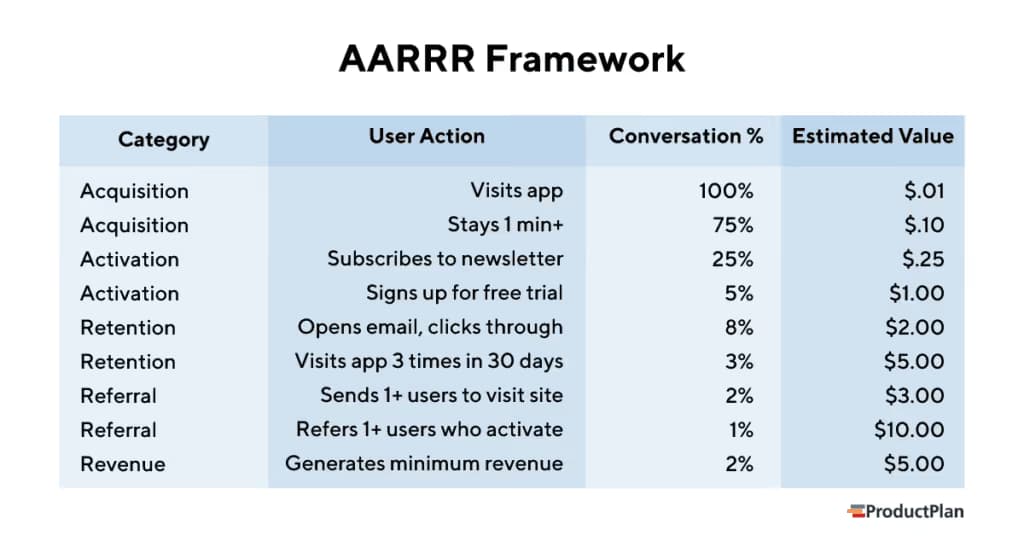
AARRR 'Pirate' Metrics: A Funnel for What Really Matters
The AARRR framework is a five-stage funnel (Acquisition, Activation, Retention, Referral, Revenue) that tracks the user journey. It helps product teams focus on metrics that directly impact business health, not vanity metrics like social media likes.
Customer Lifetime Value (LTV): Predicting Future Customer Profit
LTV predicts the total net profit a customer will generate over their entire relationship with you. It guides how much to spend on acquiring customers (CAC) and helps identify your most valuable segments. The footgun: LTV is profit, not revenue.
Niche Market Strategy: Big Wins in Small Ponds
A niche strategy means dominating a small, well-defined market instead of fighting for a slice of a large one. It's used by startups to gain a foothold or by large firms launching specialized products. The footgun is picking a niche too small to be profitable.
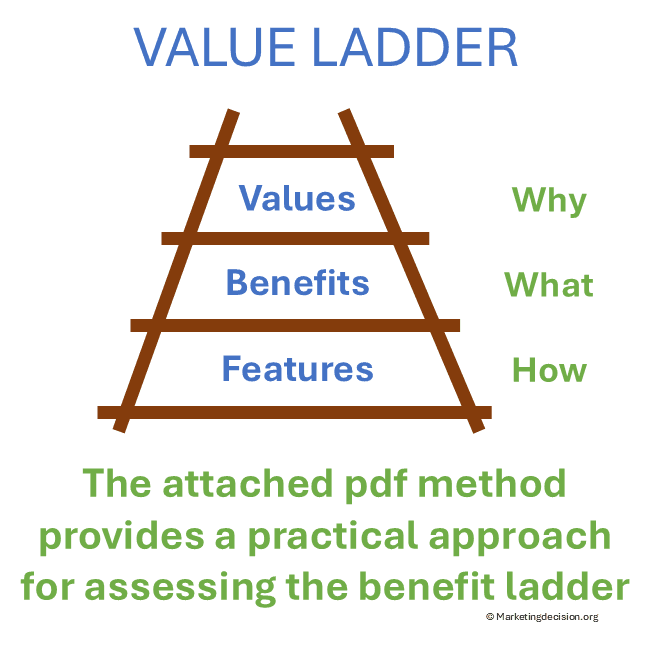
The Feature-Benefit-Value Ladder: Selling Outcomes, Not Specs
The Feature-Benefit-Value Ladder connects product specs to the outcomes customers truly want. It's used to prioritize features and craft messaging that links to core values.
Crossing the Chasm: From Early Hype to Mainstream Success
“Crossing the Chasm” is the dangerous gap between a tech product's first enthusiastic users and the pragmatic majority needed for real scale. It explains why products with initial hype fail.
Product Differentiation: Standing Out in a Crowded Market
Product differentiation is making your product uniquely distinct for a specific audience, not just objectively 'better'. It's how a new phone brand might focus on privacy to avoid competing on price alone.

Points of Parity: First Be 'Good Enough,' Then Be Different
Points of Parity are the 'good enough' features a product needs to even compete. Before you can win with your unique Points of Difference, you must first meet these basic expectations. The footgun is ignoring parity and being disqualified by default.
Product Principles: Your Team's Decision-Making Compass
Product Principles are a team's shared values that guide decision-making, acting as a compass when facing trade-offs. They help prioritize work and maintain consistency. The footgun is creating generic principles that don't help resolve actual conflicts.

BHAG: The Big Hairy Audacious Goal
A BHAG is a huge, daunting goal that unifies an organization, like NASA's moonshot. It's a 10-25 year objective that is clear, compelling, and has a defined finish line. The footgun is mistaking a vague mission statement for a tangible BHAG.

Sales Battle Cards: Frame Your Competition, Don't Just Attack Them
A sales battle card is a one-page cheat sheet that frames your competitor's product for a different audience, not just lists its flaws. Sales teams use it to steer conversations toward your strengths.

Network Effects: Value Grows with Users
A product with network effects is like a telephone: its value grows as more people join. This powers social media, marketplaces, and communication tools. The main pitfall is the 'cold start problem'—attracting the first users to an empty, valueless network.
Switching Costs: The Moat Around Your Product
Switching costs are the gravity holding users to a product—the sum of all financial, mental, and effort-based pain of leaving. This is why bundled services are sticky. The footgun is creating costs that feel like traps, which destroys long-term trust.
Competitor Teardown: Reverse-Engineering Product Strategy
A competitor teardown reverse-engineers a product to reveal its underlying strategy, not just its features. PMs use it to understand how rivals solve user problems and inspire new ideas.
Competitive Intelligence: Turning Market Data into Strategy
Competitive intelligence turns public data about your market into a strategic map of what might happen next. It's used when pricing products or planning campaigns. The biggest mistake is confusing it with simple competitor tracking; true CI analyzes the *why*.

Focus Groups: Understanding the 'Why' Behind User Reactions
A focus group is a guided conversation to uncover the 'why' behind user opinions, not just what they are. It's used to gauge reactions to new products or understand shared experiences.
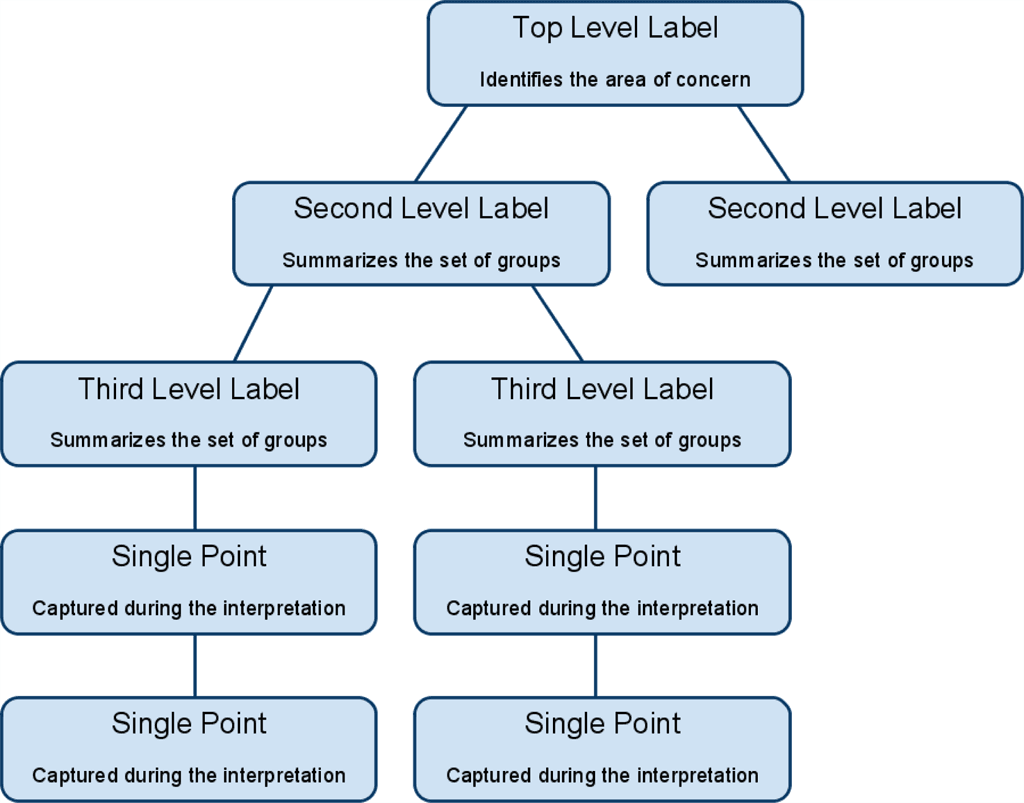
Affinity Diagramming: Finding Structure in Chaos
Affinity diagramming turns a pile of raw ideas into organized themes by grouping them based on natural relationships. Use it after brainstorming to find patterns. The biggest mistake is debating ideas instead of focusing on the connections between them.

Generative vs. Evaluative Research: Define Problems vs. Judge Solutions
Generative research defines problems by asking, "What should we build?" Evaluative research judges solutions by asking, "Did we build it right?" The footgun is using evaluative methods for discovery, which just optimizes a solution for a problem nobody has.
Diary Study: Capturing User Behavior Over Time
A diary study captures user habits by having them log experiences over time. It's used to understand routines or decision-making in a user's natural environment, without the high cost of a field study. The footgun is relying on self-reported data.
Contextual Inquiry: Watch Users in Their Habitat
Go to the user's environment to see what they *actually* do, not just what they say they do. It's used in early discovery to uncover unstated needs by observing real workflows. The footgun is 'helping' the user, which pollutes the observation.

Diffusion of Innovations: How Good Ideas Spread
New tech spreads in a predictable S-curve, moving through groups from Innovators to Laggards. Use this model to target the right users at the right time, like focusing on Early Adopters to cross the 'chasm' to the majority.
We are hiring for this. Every open role lists the topics its interview covers, so you can prepare for the real thing rather than guessing.
See open roles