Everything in Product Management, page 82
Agile Coaching: Teacher, Mentor, Facilitator, Coach
An Agile Coach isn't just a senior Scrum Master, but a guide helping teams find their own path to high performance. They support teams by teaching, mentoring, facilitating, and coaching to improve outcomes.
Tuckman's Stages: Why Teams Must Storm Before They Perform
Teams evolve through predictable phases, not starting out fully effective. A team must pass through forming, storming (conflict), and norming (resolution) to reach high performance.
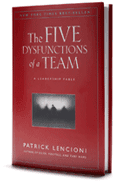
The Five Dysfunctions of a Team: A Model for Diagnosing Failure
This model uses a business fable to explore the root causes of team failure and organizational politics. It applies when a team struggles to grow together, offering a framework to diagnose underlying issues.
Servant Leadership: Serve First, Lead Second
A servant-leader inverts the power pyramid, focusing on their team's growth over their own power. This is common in Agile, where scrum masters remove blockers to help developers perform at their best.
Weighted Shortest Job First (WSJF): Prioritizing for Economic Impact
WSJF prioritizes work by its economic impact over time, not just its total value. It sequences backlogs in SAFe by dividing the "cost of delay" by job size. The footgun is getting bogged down in precise estimates instead of using relative sizing.
Definition of Ready (DoR): The Bouncer for Your Sprint
The Definition of Ready (DoR) is the bouncer for your sprint, a checklist ensuring a user story is clear and actionable before the team commits to it. It prevents starting work on half-baked ideas. The footgun is making it too rigid, creating a bottleneck.
Stakeholder Mapping: Prioritizing Voices by Power and Interest
Stakeholder mapping visualizes who to engage by plotting their power and interest in your project. Use it to decide who needs daily updates versus a quarterly summary. The footgun is treating it as static; a stakeholder's influence can change overnight.
User Story Mapping: From Backlog to Value Map
User Story Mapping reframes your backlog from a feature list into a map of the user's journey, focusing on delivering outcomes customers value. It helps teams prioritize work by visualizing the whole experience.

The MoSCoW Method: Prioritizing for Fixed Deadlines
The MoSCoW method protects deadlines by sorting work into four buckets: Must Have, Should Have, Could Have, and Won't Have this time. It's used in agile projects with fixed timelines to ensure critical features ship.
Minimum Viable Product (MVP): Learn Faster with Less Code
An MVP is the smallest product version that delivers value to early users and provides feedback for future development. Use it to test a business hypothesis with minimal resources, like a single-feature app.
User Stories: Features from the User's Perspective
A user story is an informal, natural language description of a software feature from the end user's viewpoint. Used in agile development, they're written by stakeholders like clients or developers on Post-its or in apps.
User Stories: What Users Want, and Why
A User Story is a simple description of a feature from the user's perspective, focusing on the 'who, what, and why' instead of technical details. It's the primary unit of work in Agile, building a shared understanding of what to build.
The Scrum Master: A Coach, Not a Manager
A Scrum Master is a servant-leader who coaches a team on Scrum practices, not a project manager who assigns tasks. They facilitate events and remove impediments. The footgun is treating them as a team admin, which undermines the team's self-organization.
The Daily Scrum: A 15-Minute Team Sync
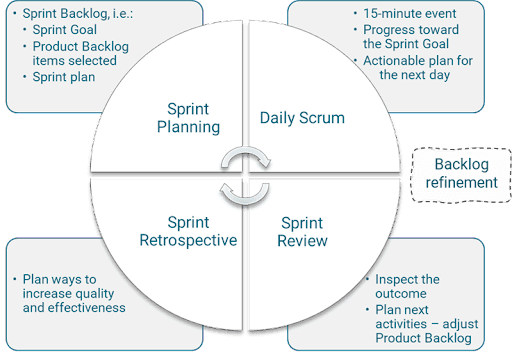
The Daily Scrum isn't just a status update; it's a 15-minute planning session for the next 24 hours. Team members sync on progress, identify blockers, and adjust their plan for the day. The footgun is treating it as a report to a manager.
The Sprint: A Timeboxed Rhythm for Work
A sprint is a fixed-length container, typically 1-4 weeks, where a team turns ideas into a valuable product increment. Sprints give a predictable rhythm to software teams and marketing campaigns. The footgun is treating a sprint as a mini-waterfall project.
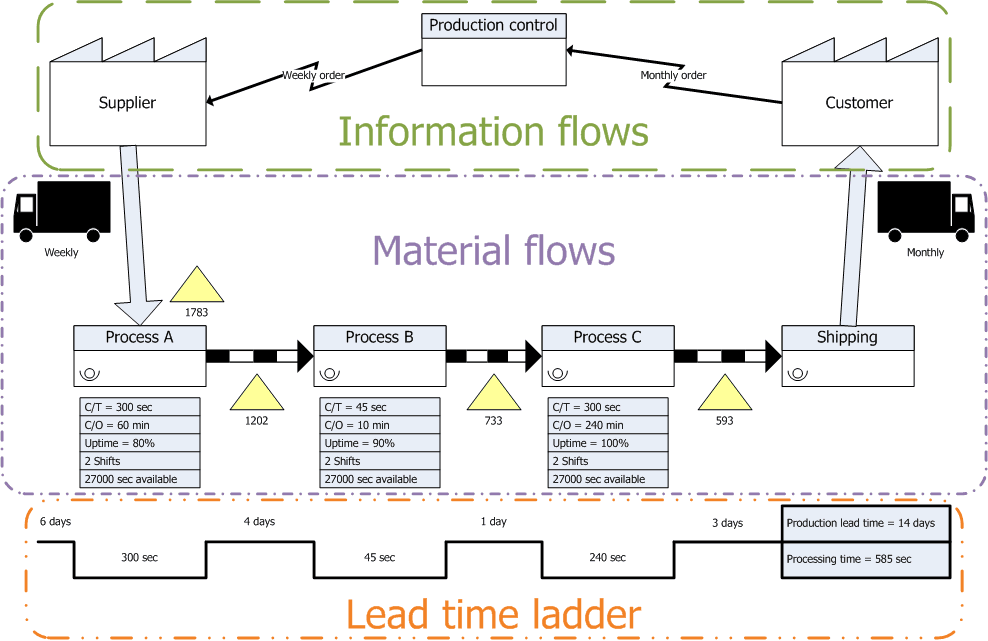
Value Stream Mapping: Find the Waste in Your Process
Value Stream Mapping visualizes your entire process, from request to delivery, to separate value-adding work from wasteful delays. It's used to find bottlenecks in manufacturing or software, like code waiting for review.
Empirical Process Control: Steer by Observing, Not by Plan
Empirical process control means steering by observation, not by a rigid upfront plan. Scrum uses this to tackle complex problems, inspecting real work in Sprints to adapt. The footgun is fake transparency—if artifacts hide problems, you're steering blind.
Toyota Production System (TPS): The Original Lean
The Toyota Production System (TPS) is a complete socio-technical system, not just a toolkit. It organizes manufacturing and logistics from suppliers to customers.

Cycle Time vs. Lead Time: Team Speed vs. Customer Wait
Lead time runs from a request to delivery. Cycle time runs from starting the work to finishing it, including waiting within that period. Track both to see whether delays happen before work starts or while it is in progress.
The Seven Wastes of Software Development (Muda)
Think of "Muda" as anything consuming resources without adding customer value. This Lean concept helps agile teams spot inefficiencies like partially done work and context switching.
We are hiring for this. Every open role lists the topics its interview covers, so you can prepare for the real thing rather than guessing.
See open roles