Advanced concepts in Product Strategy

The Strategy Kernel
The strategy kernel, from Richard Rumelt, is the minimal structure of a real strategy: a diagnosis of the actual obstacle, a guiding policy for addressing it, and coherent action that carries it out, separating genuine strategy from a list of goals.

Porter's Five Forces: Is This Industry Worth Entering?
Porter's Five Forces is a framework for analyzing an industry's profit potential. It assesses the competitive environment to determine if a market is attractive or if its structure will drive all profits down to a baseline, like in pure competition.
Go-to-Market (GTM): Your Plan to Enter a Market
A Go-to-Market (GTM) strategy is the complete plan for connecting a product with customers to achieve a competitive advantage. It defines the target market, pricing, and distribution channels. The footgun is treating GTM as just a marketing or sales plan.
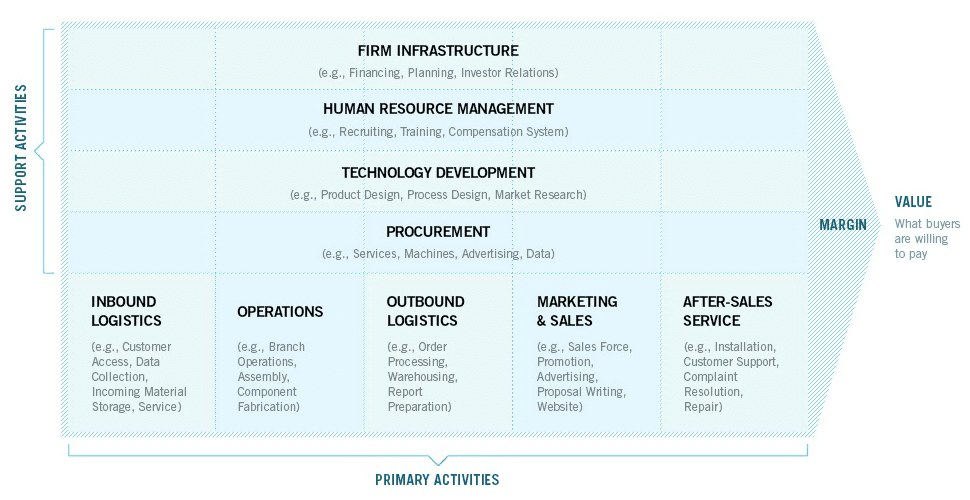
Value Chain Analysis: Find Your Edge by Mapping Your Activities
Value Chain Analysis maps a company's activities to find its competitive edge. Instead of a list of costs, it shows how each step adds value, revealing where you can lower costs or justify higher prices.
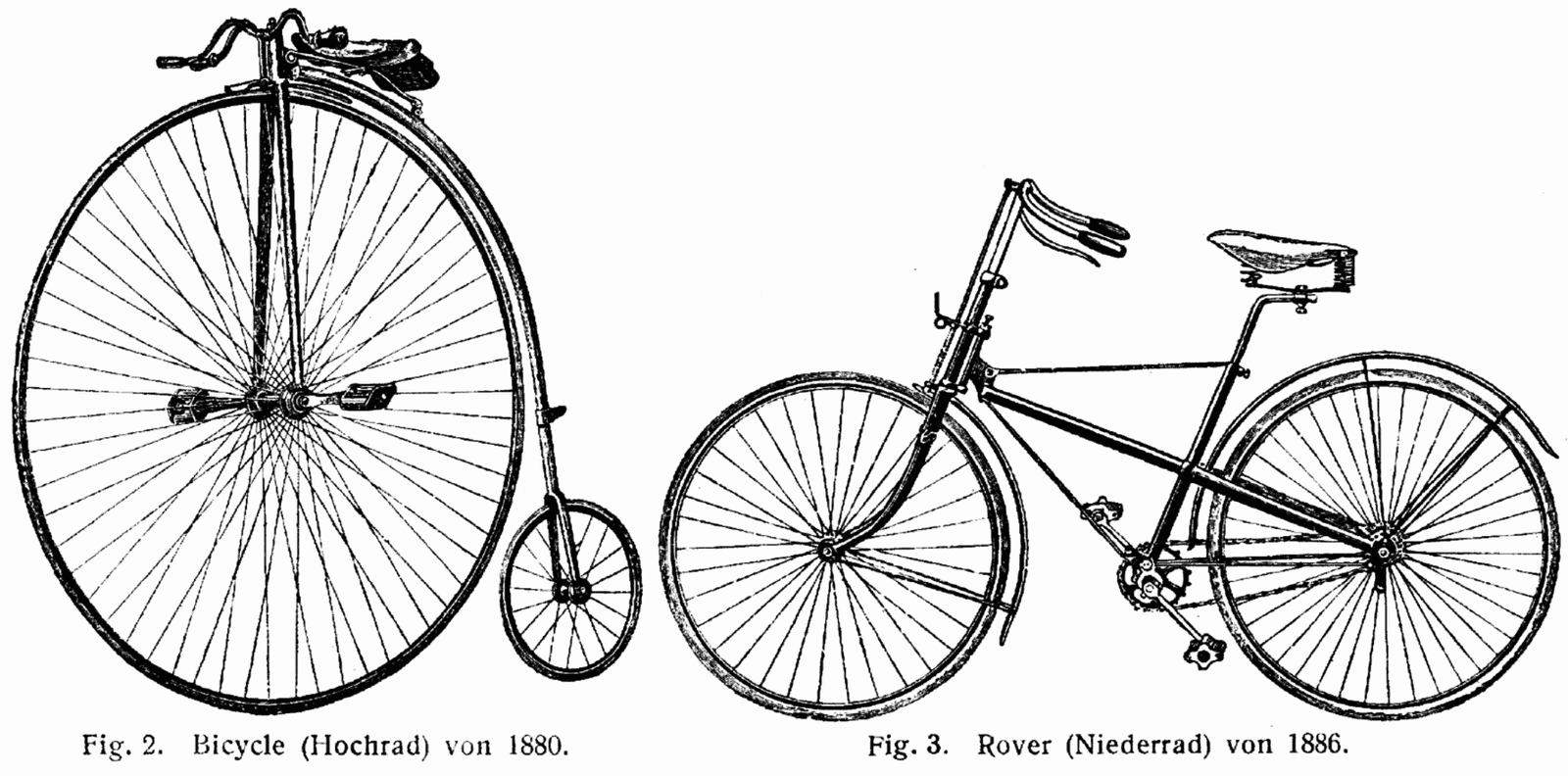
Disruptive Innovation: Why 'Good Enough' Often Wins
Disruptive innovation isn't a better product, but a simpler, cheaper one incumbents ignore. It wins by serving overlooked customers at the bottom of a market, eventually moving up.
Ethnography: Uncover Needs Users Can't Articulate
Ethnography uncovers user needs by observing them in their natural environment, not just asking questions. It reveals what people *do*, not just what they say. Use it for early discovery to find needs users can't articulate.

Thematic Analysis: Finding Patterns in Qualitative Data
Thematic Analysis finds patterns in qualitative data, like sifting user interviews for recurring ideas. It's about interpreting meaning, not just counting words. Use it on feedback to understand needs.
Sustainable Competitive Advantage: Building a Moat
A sustainable competitive advantage is a structural 'moat' that makes your business hard to copy. It's seen in network effects (social media), high switching costs (enterprise software), or economies of scale (Amazon).
Barriers to Entry: The Moats Around a Business
Barriers to entry are the 'cover charge' for a market that new players must pay, but incumbents didn't. They're the moats protecting a business, seen in regulated industries or with strong brand loyalty.
Resource-Based View: Win With What You Uniquely Have
The Resource-Based View argues a firm's unique internal resources, not market position, create sustainable advantage. It's used for long-term strategy and M&A. The footgun is overvaluing resources that competitors can easily buy or copy.
VRIO Framework: Finding Your Competitive Advantage
The VRIO framework is a checklist to see if a resource is a true competitive advantage. Use it to analyze internal assets like patents or expert teams. The footgun is stopping at "Valuable"—a true moat must also be Rare, Inimitable, and Organized.

The Hedgehog Concept: Know Your One Big Thing
The Hedgehog Concept trades scattered efforts for focused strategy. It's the intersection of what you're passionate about, what you can be the best at, and what drives your economic engine. Use it for long-term strategic clarity.
PR/FAQ: Write the Press Release Before You Build
A PR/FAQ forces you to write the launch press release before writing any code, ensuring you build something customers want. It vets ideas by starting with the customer benefit and working backwards.

Visiontype: Prototyping Your 3-5 Year Product Future
A visiontype is an interactive prototype of your product's 3-5 year future, making abstract goals tangible. It aligns teams on a long-term direction, breaking the cycle of purely incremental updates. The biggest mistake is creating it in a silo.

Unit Economics: Is Each Customer Profitable?
Unit economics asks if you make or lose money on a single customer or sale. It's used in SaaS to compare customer lifetime value (LTV) to acquisition cost (CAC). The footgun is defining the 'unit' poorly, hiding that each new customer costs you money.
LTV to CAC Ratio: Is Your Growth Profitable?
The LTV to CAC ratio measures if you make more money from a customer than you spent to get them. It's the core health metric for a subscription business, used to judge marketing efficiency. A ratio above 3:1 is often healthy.

Van Westendorp Price Sensitivity Meter
The Van Westendorp Price Sensitivity Meter is a market research technique for determining consumer price preferences. It's used to help set product prices by surveying potential buyers about their perceived value and willingness to pay.
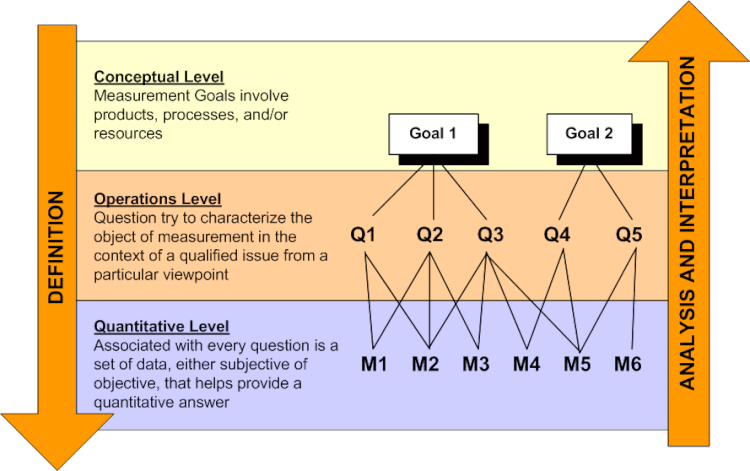
Goal-Question-Metric: Measure What Matters, Not What's Easy
GQM is a top-down framework for defining metrics. You start with a Goal, ask Questions to clarify it, then define Metrics to answer them. This avoids the common trap of collecting vanity metrics that don't reflect true software quality or business goals.
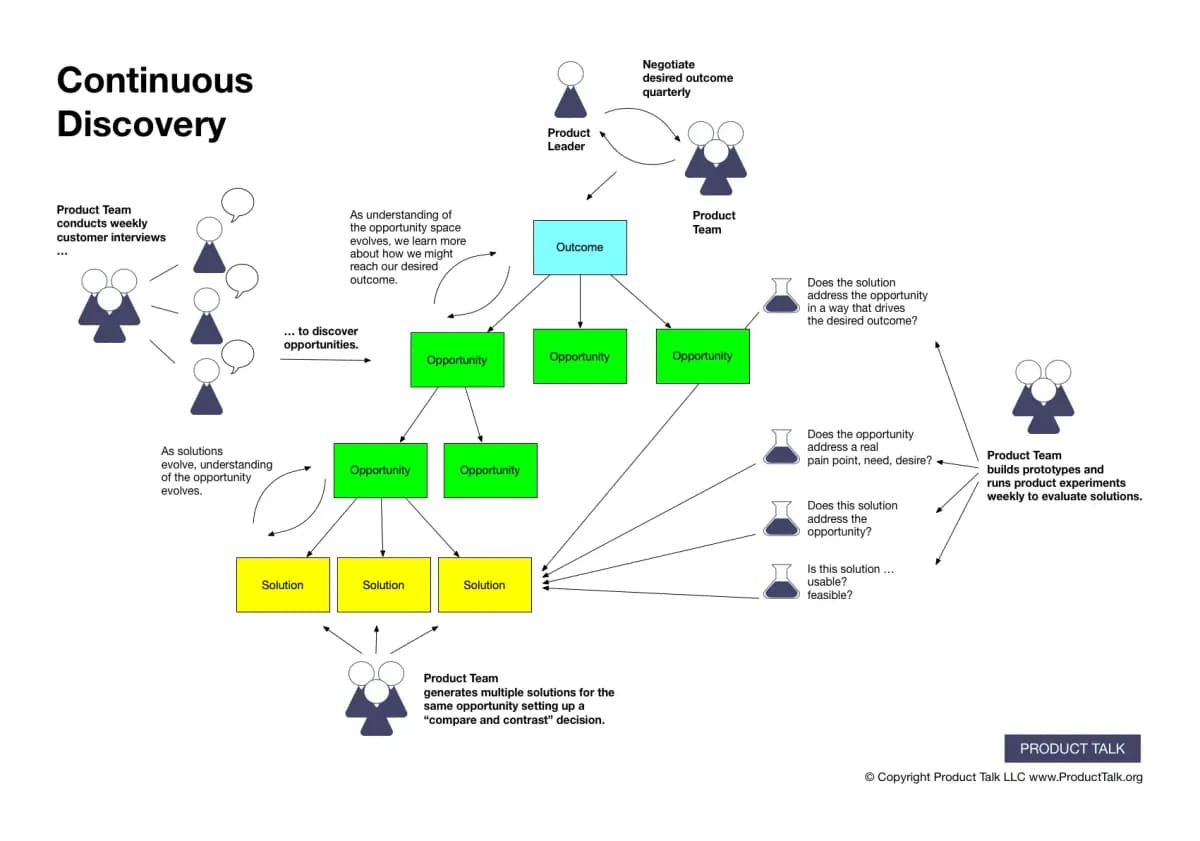
Continuous Discovery: Talk to Users Weekly, Not Yearly
Continuous discovery means small, weekly chats with customers, not a big upfront research phase. It's for teams building products that are never 'done,' like Netflix or your SaaS app. The footgun is treating discovery as a project, leading to stale insights.

Roadmap Commitment Levels: Now, Next, Later
Agile roadmaps replace fixed timelines with commitment levels: 'Now' (in progress), 'Next' (planned), and 'Later' (potential ideas). This structure communicates decreasing certainty, allowing teams to adapt without breaking promises.
We are hiring for this. Every open role lists the topics its interview covers, so you can prepare for the real thing rather than guessing.
See open roles