All bites
The whole library, newest first. Filter by what you are here for, or pick a topic if you already know.
4247 bites
Page 70
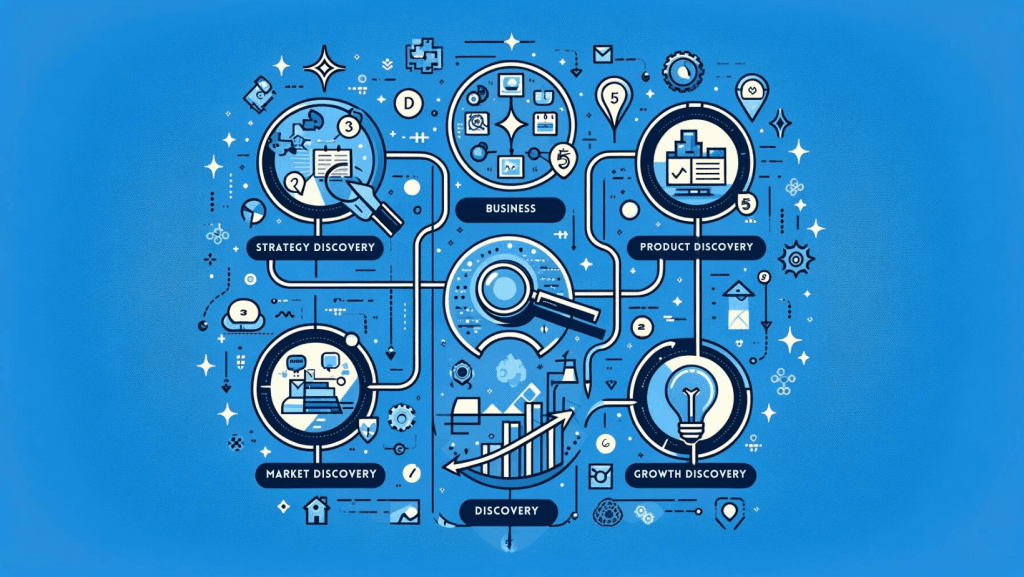
In-Product Discovery: Finding Growth Inside Your App
In-product discovery is finding your next growth lever by observing users within your live product, not just in pre-launch research. It's used to scale existing products via in-app experiments.
The Hybrid GTM Model: PLG Meets Enterprise Sales
A hybrid go-to-market model blends a self-serve product with a sales team, letting users start on their own and bringing in sales for big deals. B2B SaaS uses this for efficiency, but the footgun is creating friction if the handoff isn't seamless.
Entitlements: Use Feature Flags for Permanent Access Control
Entitlements use permanent feature flags to control long-term access, like a bouncer for your app's VIP section. This is how you manage premium tiers or special user permissions, ensuring the right customers always see the right features.
Growth Accounting: What's Really Driving Your Growth?
Growth accounting splits your growth into two parts: adding more resources (like ad spend) and getting better with what you have. Use it to see if growth came from a bigger budget or a better product.
Linear Regression: Forecasting with a Straight Line
Linear regression forecasts the future by drawing a straight line through past data. It's used to predict outcomes like sales based on ad spend or energy use based on temperature.
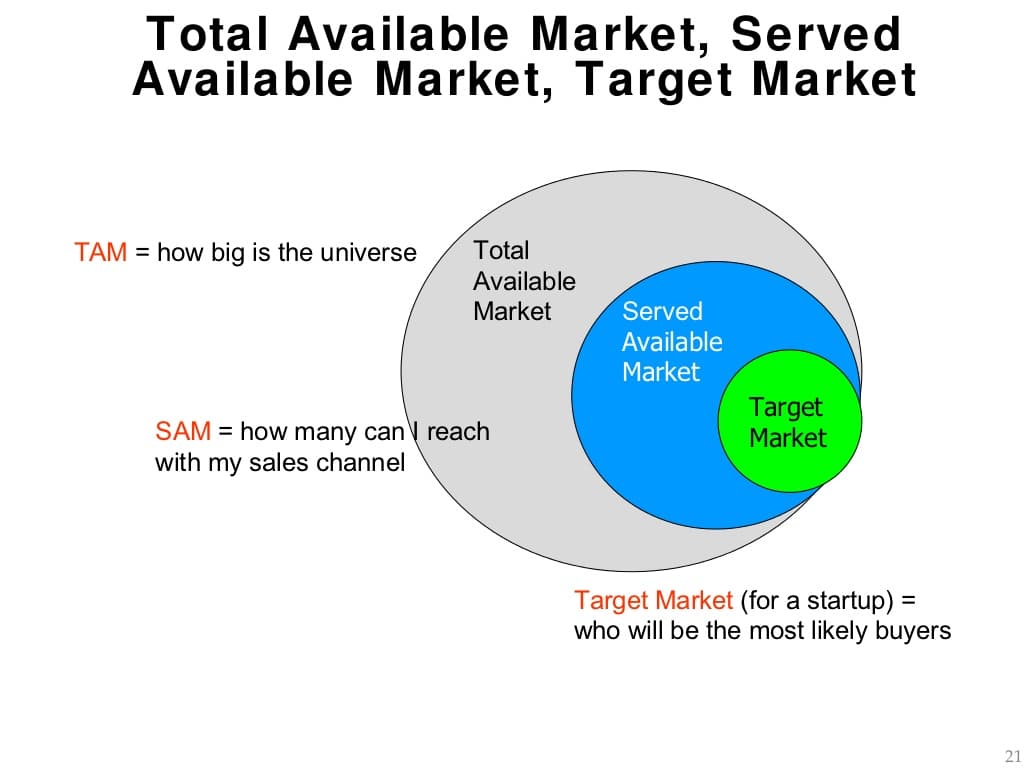
Market Sizing: TAM, SAM, and SOM for Realistic Planning
Market sizing is a funnel, not a single number. TAM is the total universe of customers, SAM is the segment you can reach, and SOM is who you can realistically win. It's crucial for business plans and investor pitches.
The Bass Diffusion Model: Innovators vs. Imitators
The Bass Diffusion Model splits product adoption into innovators who buy first and imitators who follow the crowd, creating the classic S-curve of growth. It's used to forecast sales for new products by modeling how word-of-mouth drives adoption.

Prophet: Time Series Forecasting for Seasonal Data
Prophet treats a time series as a sum of its parts: a long-term trend, seasonal cycles, and holidays. It's used for business forecasting, like predicting sales, when you have strong seasonal data. The footgun is using it for non-seasonal data.
Survival Analysis: Predicting When, Not Just If
Survival analysis predicts *when* an event like user churn will happen, not just *if*. It's used to model customer lifetime or hardware failure rates. The key mistake is using simple averages, which are skewed by users who haven't churned yet (censored data).
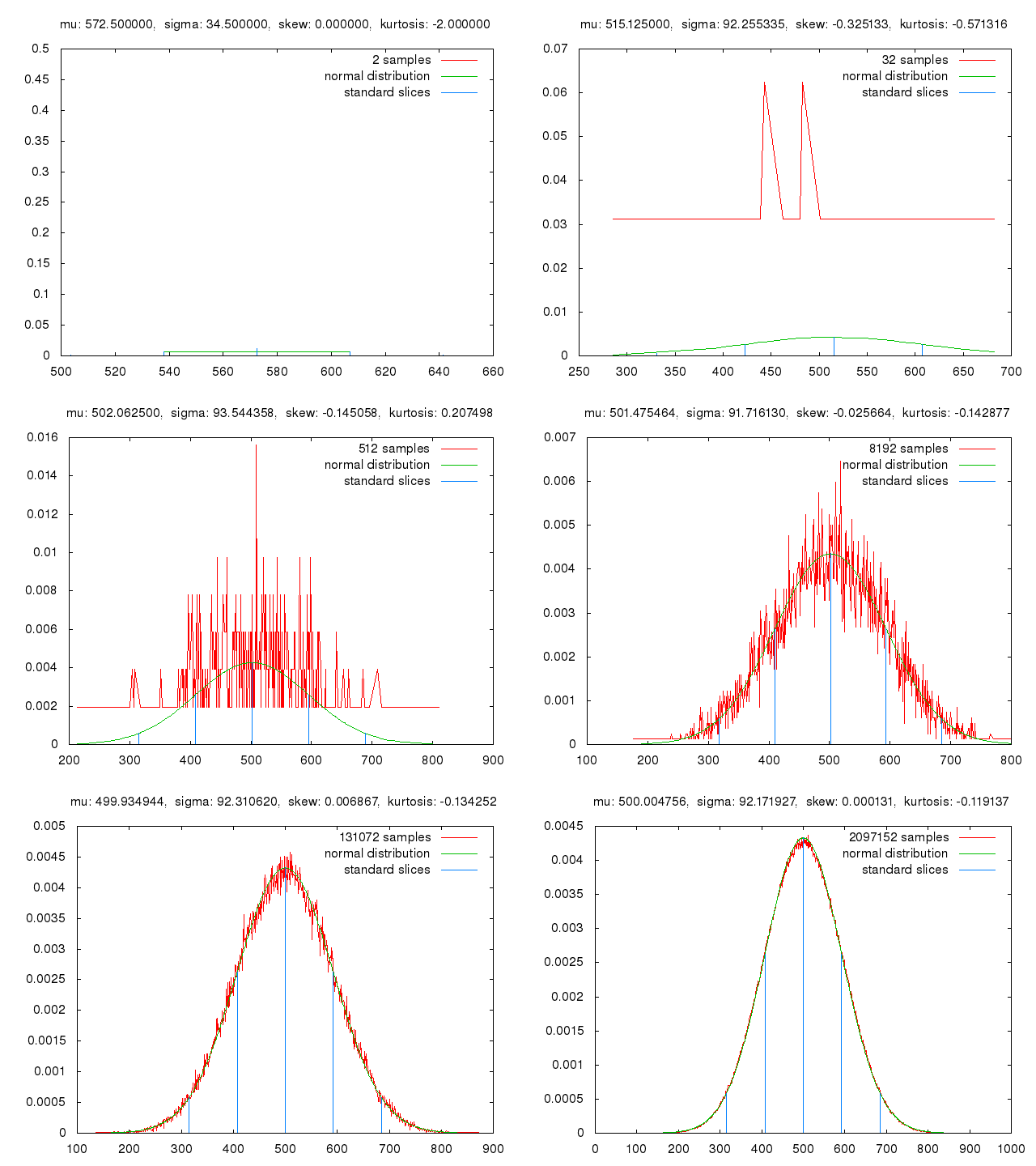
Forecasting with Monte Carlo Simulation
A Monte Carlo simulation forecasts outcomes by running thousands of 'what if' scenarios with random inputs. Use it to model complex systems like user growth with variable conversion rates.
Causal Impact: Measuring Effects Without an A/B Test
Causal Impact estimates an intervention's effect by modeling a 'what if' counterfactual. It's used to measure lift from a new feature or ad campaign when a clean A/B test isn't possible.
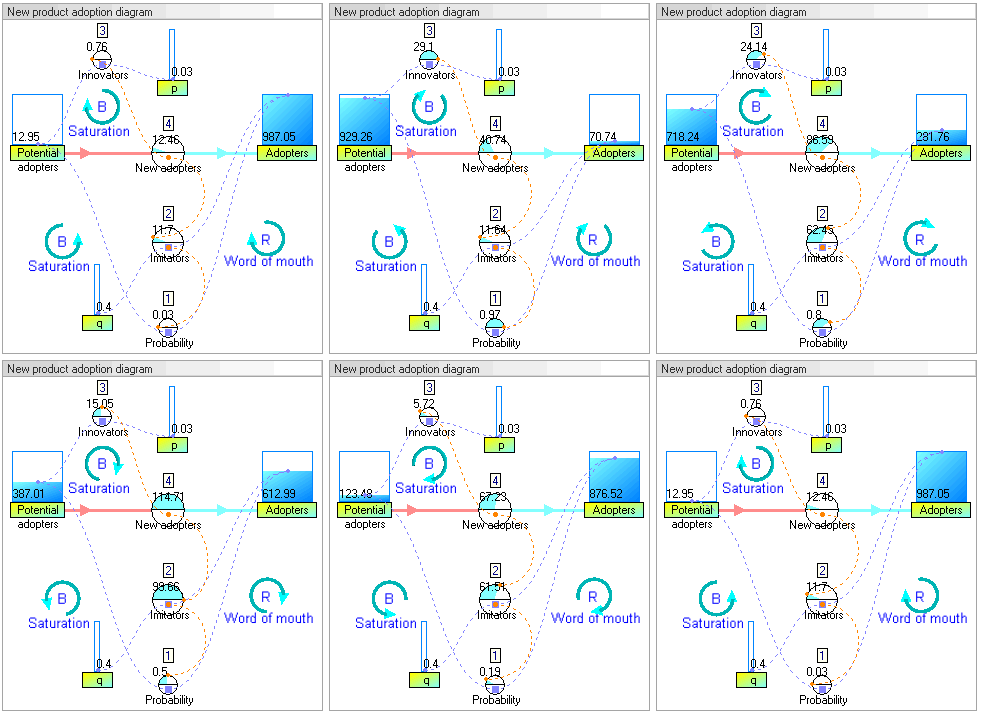
System Dynamics: Modeling with Stocks, Flows, and Feedback
System Dynamics models the world as interconnected stocks (like users) and flows (like signups), governed by feedback loops. Use it to understand why growth stalls or why hiring lags behind need.

ETL vs. ELT: When to Transform Your Data
ETL (Extract, Transform, Load) preps data before storage, like a chef prepping ingredients. ELT loads raw data first, transforming it inside the warehouse. Use ETL for structured reporting; use ELT for flexibility with raw data.

Feature Management: Control Releases After You Deploy
A feature management platform decouples code deploys from feature releases. It centralizes control over who sees what, turning simple code toggles into a powerful system for canary releases, A/B tests, and targeted rollouts, all from a UI.

Server-Side Experimentation: Testing Your Backend Logic
Server-side experimentation renders A/B test variations on the server before sending the page. Use it for testing deep backend logic like search algorithms or to avoid the visual 'flicker' of client-side tests. The footgun: it requires developer cycles.

Metrics Layer: The Dictionary for Your Data
A metrics layer is the central dictionary for your company's numbers, defining what "Revenue" or "Active User" means once for everyone. It ensures teams and AI agents get consistent answers from a single source of truth, preventing conflicting reports.
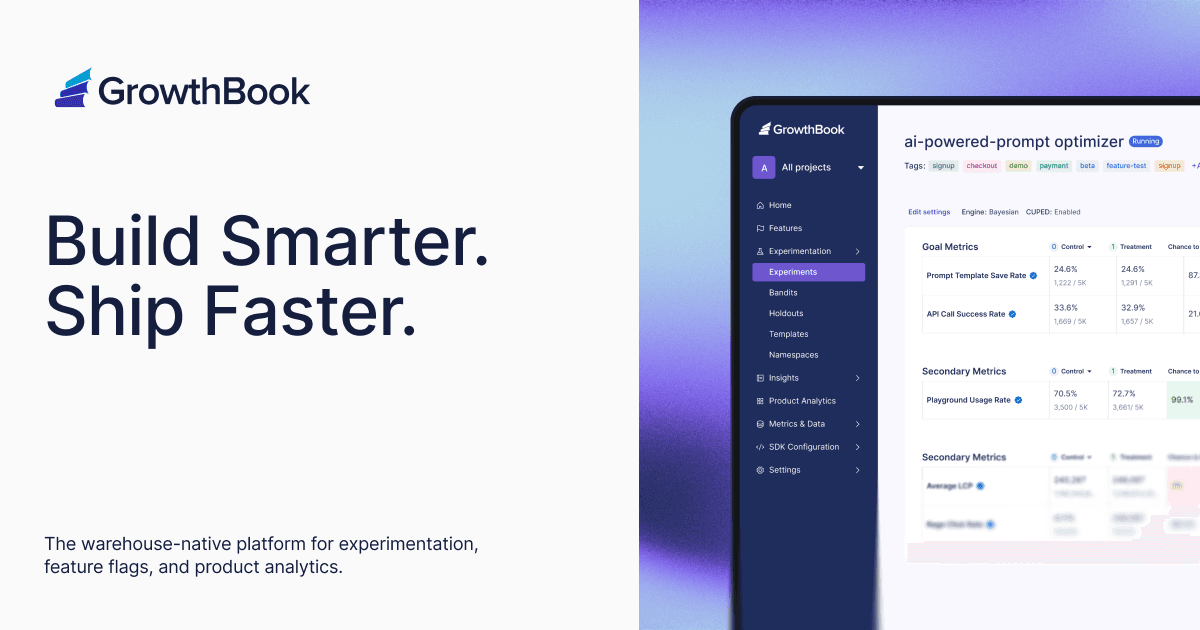
What is an Experimentation Stats Engine?
A stats engine is the brain of an A/B testing platform, turning raw data into reliable 'which version won?' decisions. It powers tools that analyze feature rollouts, ensuring statistical rigor.
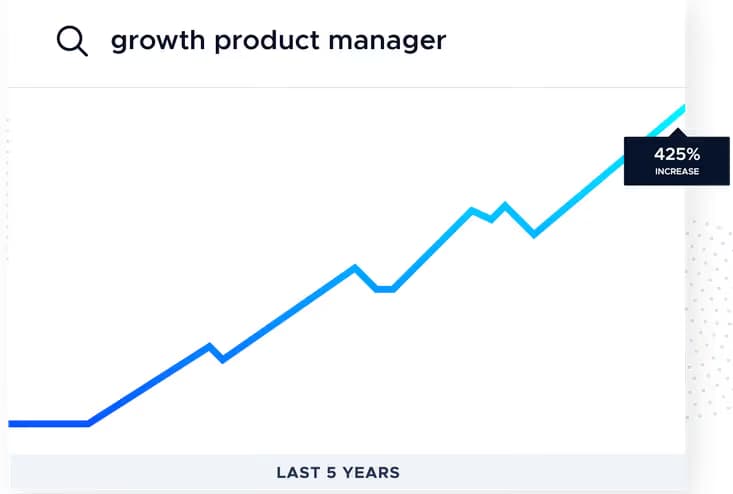
Growth Product Manager: Driving Metrics, Not Just Features
A Growth PM is a business optimizer for an existing product. They focus on moving a single metric like user activation or retention, often through rapid experimentation. This role is key in product-led companies where the product must sell itself.
Growth Meeting Cadence: Focus on Learnings, Not Updates
Run your weekly growth meeting like a learning synthesizer, not a status report. Focus on extracting insights from experiments to drive future impact. The biggest mistake is wasting time on "what" you're doing; handle status updates asynchronously.
The Independent Growth Team Model
An independent growth team is a startup-within-a-company, given autonomy to run experiments across the funnel. Use it to break silos and accelerate learning. The main footgun is isolation, creating a rogue unit whose wins are difficult to integrate.