All bites
The whole library, newest first. Filter by what you are here for, or pick a topic if you already know.
8667 bites
Page 426
Delegation Poker: Making Delegation a Team Sport
Delegation isn't a binary choice. Delegation Poker is a game where teams discuss and agree on their level of authority for key decisions, moving from 'manager decides' to 'team decides'. It's used to clarify roles and empower teams.
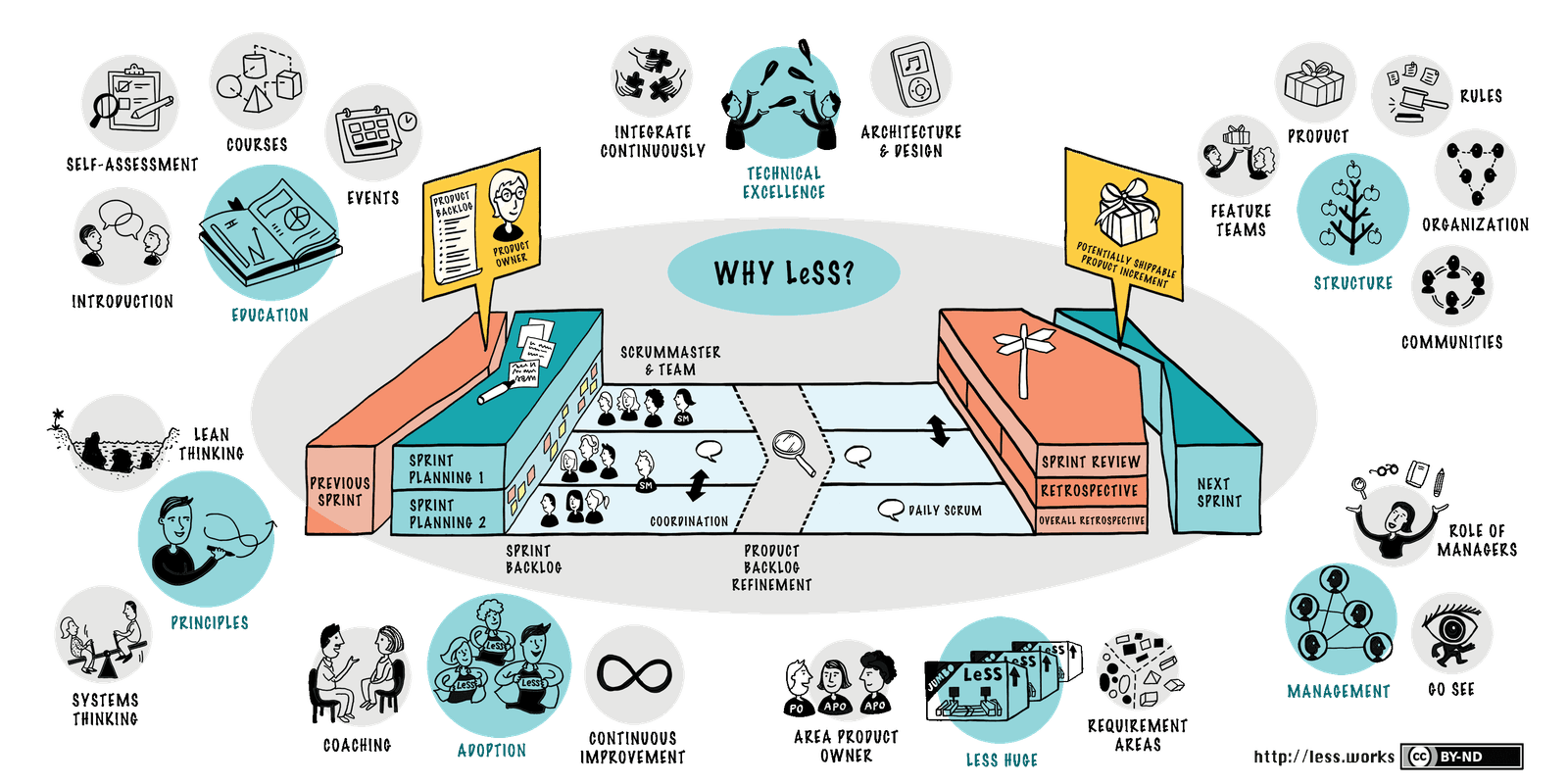
LeSS Huge: Scaling Scrum Beyond Eight Teams
LeSS Huge is a framework for applying Scrum when over eight teams work on one product, organizing them into "Requirement Areas." It’s for massive projects, like autonomous driving systems, where dozens of teams must coordinate.
Solution Train: The Train of Agile Trains
A Solution Train is a 'train of trains,' coordinating multiple Agile Release Trains (ARTs) to build one massive product. It's used for complex systems like autonomous vehicles where many teams must align.

Inspect & Adapt: SAFe's Formal Improvement Event
Inspect & Adapt is a formal 'pit stop' for an entire Agile Release Train (ART) to improve its process. At the end of each Program Increment, teams demo the solution, review metrics, and identify improvements.

Scrum@Scale: Agile for Teams of Teams
Scrum@Scale treats your organization as a network of Scrum teams, aiming for "minimum viable bureaucracy." It coordinates multiple teams working on one complex product.
RTE: The Conductor of the Agile Release Train
The Release Train Engineer (RTE) is the master facilitator for a group of agile teams, acting as a servant leader and coach. They orchestrate large-scale planning and ensure smooth value delivery.

PI Planning: Aligning an Entire Agile Release Train
PI Planning gets an entire 'team of teams' (an ART) in one room to plan the next 8-12 weeks. This two-day event aligns development with business goals and identifies cross-team dependencies.
The Agile Release Train: How Multiple Teams Ship Together
An Agile Release Train (ART) is a 'team of teams' that aligns 50-125 people to ship a complex product together. It's used in SAFe to coordinate multiple Agile teams on a shared roadmap, ensuring they all pull in the same direction.
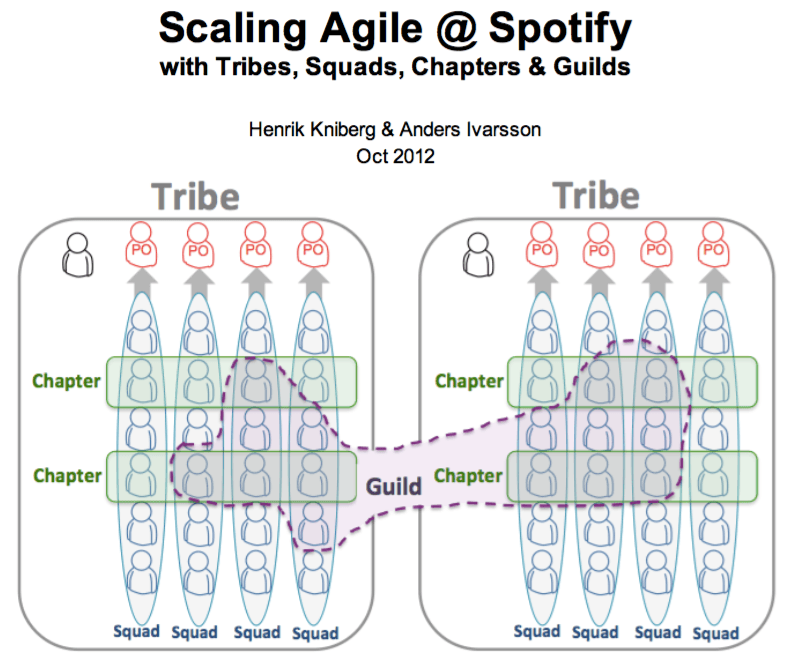
The Spotify Model: Scaling Agile with Autonomy
The Spotify Model organizes teams for autonomy and alignment, using mini-startups (Squads) and skill-based communities (Chapters). It helps scale agile in large orgs, but copying the structure without the culture of trust creates a rigid hierarchy in disguise.
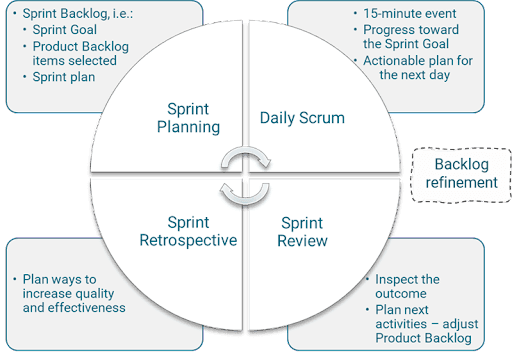
Large-Scale Scrum (LeSS): Scaling Scrum by Descaling the Org
LeSS scales Scrum by simplifying the organization, not adding processes. It applies one-team Scrum principles to multiple teams working on one product. Use it when 2-8 teams need to collaborate on a single product backlog.
SAFe: Scaling Agile Beyond a Single Team
SAFe is a blueprint for applying Agile principles across large organizations, not just single teams. It coordinates many teams into 'Agile Release Trains' that plan and deliver together in fixed cycles, ensuring alignment on complex products.
Flow Debt: The Hidden Cost of Workflow Inefficiency
Flow Debt is the invisible cost of process bottlenecks that slow down delivery. It shows up as work waiting for handoffs, reviews, or decisions. The footgun is blaming individuals for system-level delays instead of optimizing the workflow itself.
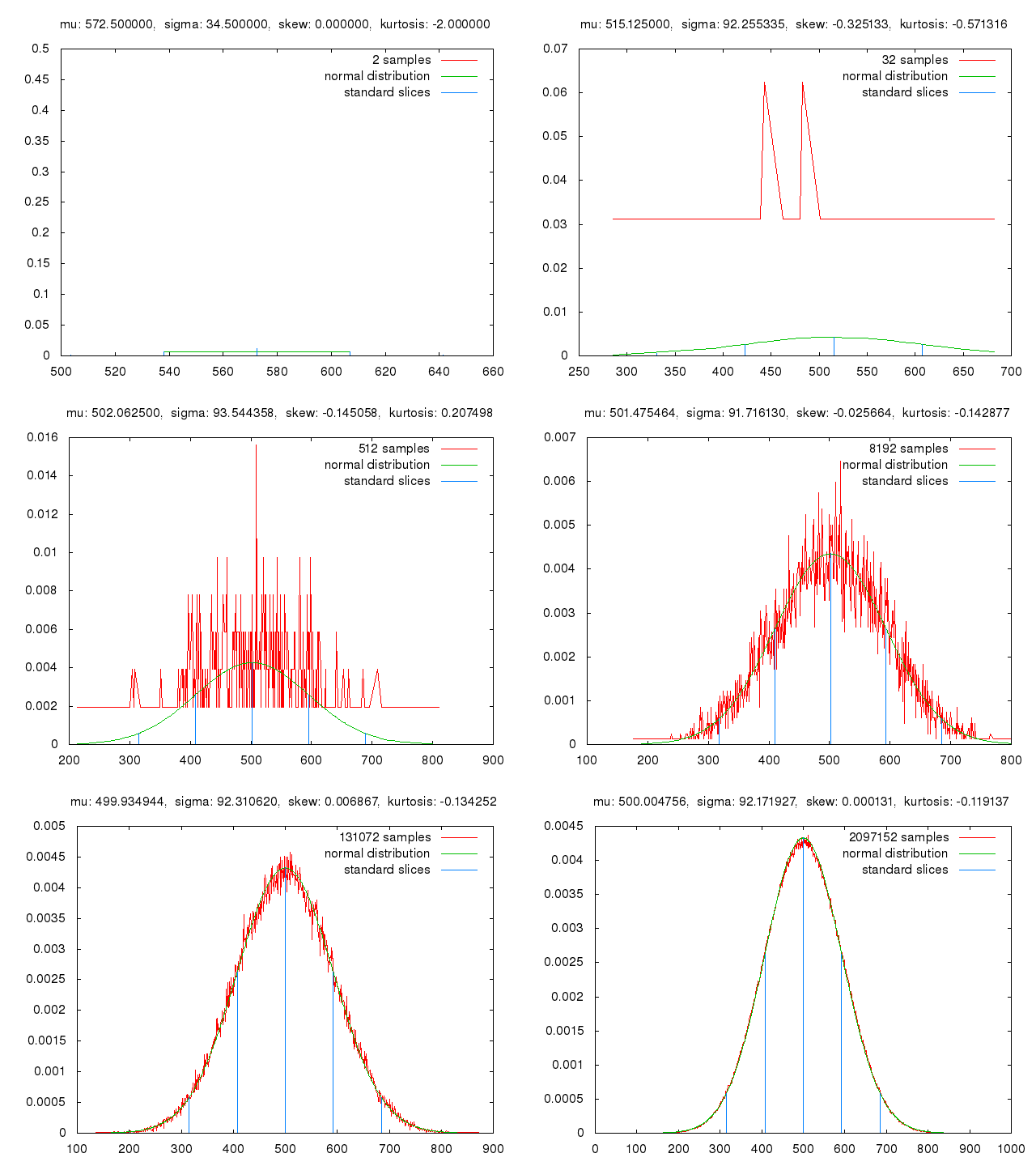
Monte Carlo Forecasting: Probabilities, Not Promises
Monte Carlo forecasting trades a single due date for a set of probabilities. By running thousands of random simulations based on past performance, it generates a range of likely completion dates, not a single guess.
Escaped Defects Rate: Measuring What Slips to Production
Escaped Defects Rate is your quality report card from users, measuring the percentage of total bugs that your internal testing missed. Teams use it to gauge QA effectiveness. The footgun is using it to blame individuals, which just encourages hiding bugs.
Takt Time: Your Customer's Production Rhythm
Takt time is the production rhythm required to meet customer demand—a metronome for your workflow. It's used to design manufacturing lines or software sprints by setting a target pace.
Lead Time: From Customer Request to Live Code
Lead Time measures the total duration from when a feature is requested to when it's live for users—it's the customer's total waiting time. Teams use it to understand responsiveness and set predictable timelines. The footgun is confusing it with Cycle Time.
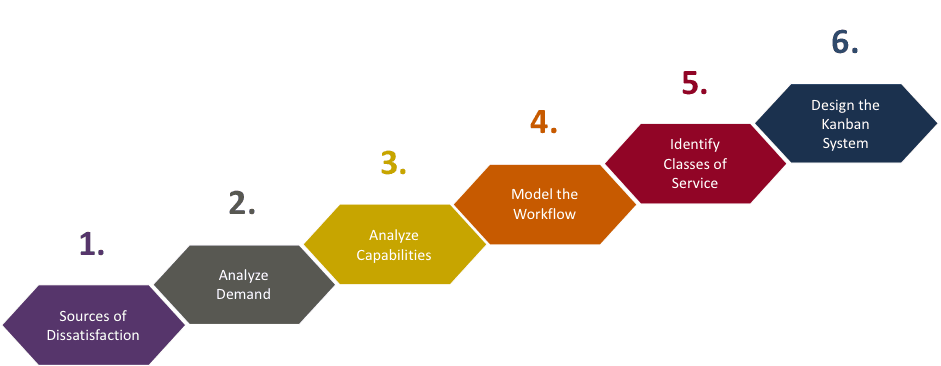
STATIK: Designing a Kanban System from First Principles
STATIK is a diagnostic recipe for designing a Kanban system tailored to your team's actual work, not just copying a template. Use it when starting a new implementation or when an existing process is stuck. The footgun is skipping the analysis.
Little's Law: Why Adding More Work Slows You Down
Little's Law shows that average task completion time is proportional to the work in progress (WIP). For a stable team, Cycle Time = WIP / Throughput. It's used in Kanban to predict delivery times. The footgun is adding more WIP to go faster; this always.

Make Policies Explicit: Write Down Your Workflow's Rules
Making policies explicit turns your team's unwritten rules into a shared, improvable playbook. Use it to define what 'done' means for each stage or how to handle blocked items.

Pull System: Make Only What's Needed, When It's Needed
A pull system works like a restaurant kitchen: you only start work when the next step in the process places an order. This approach, core to lean manufacturing and Kanban, prevents overproduction. The footgun is pulling new work before finishing old tasks.