Intermediate interview questions in Product Management, page 5
How would you leverage microservices to out-maneuver a monolithic competitor?
Tests turning architecture into product velocity. Exploit competitor's release cycle with independent service teams shipping features in days not months via domain boundaries. Red flag: seeing microservices as purely technical or suggesting big-bang rewrite.
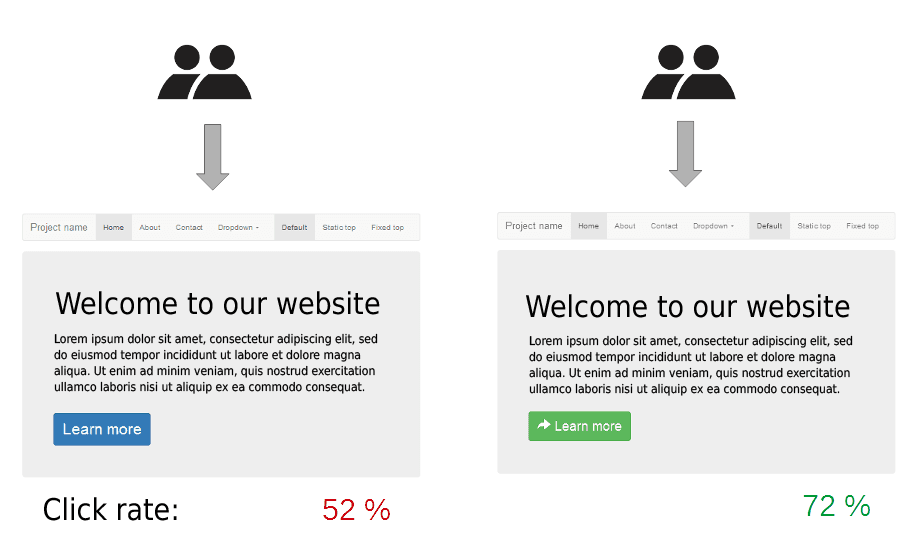
Design an A/B test for loss aversion versus gain framing at checkout
Tests whether you can isolate framing effects from checkout confounders. Strong answers detail user-level randomization, event logging, and guardrail metrics like revenue per visitor. Red flag: a conversion-only analysis with no unit of diversion defined.
How would you implement data lineage for microservices analytics?
Tests end-to-end provenance tracking, not just docs. Strong answers cover automated metadata capture at service boundaries, a central catalog such as DataHub or OpenLineage, and column-level tracing.
How would you coach a developer skipping backlog refinement?
Coach one-on-one to find blockers; tie skipped refinement to planning delays; adapt format with the team.
Explain data lineage and how you would implement it
This tests your ability to design for data observability. Define lineage (origin, transformation, movement), then propose a solution using metadata extraction (OpenLineage) and a central graph store/UI (Marquez) to trace data from microservices to analytics.
How do you coach a dev who skips backlog refinement?
This tests your ability to coach and connect process to outcomes. First, diagnose the 'why' in a 1:1. Then, frame refinement as a solution to their pain points (e.g., fewer interruptions). A red flag is quoting Scrum rules or immediately escalating.
Explain data lineage and how you'd implement it
Tests your practical data governance knowledge. Define lineage (origin, transforms, movement), then outline a solution: metadata collection from services, a central store (graph DB), and a visualization tool (Amundsen/OpenLineage).
How to coach a developer who skips backlog refinement?
This tests your coaching skills and ability to influence peers. First, understand their 'why' in a 1-on-1. Then, frame refinement as an investment to reduce future rework. A red flag is immediately escalating to a manager or being overly dogmatic.
How would you out-engineer a competitor's new data-intensive feature?
This tests strategic design under competition. Strong answer maps competitor's bottleneck, applies distributed sharding or streaming, picks asymmetric edge caching, and locks in latency SLAs. Red flag: no bottleneck analysis or ignoring quantified moats.

Design a variable daily-login reward system with anti-gaming controls
Tests server-side reward probabilities and idempotency in distributed systems. Strong answers cover: configurable weights, idempotent tokens with DB unique constraints, rolling windows, and server-side grants.

Design a CDC pipeline that handles schema evolution gracefully
Tests designing resilient CDC pipelines against schema drift. A strong answer covers schema registries with versioning, backward-compatible serialization, and automated compatibility checks.

How should a Scrum Master resolve local optimizations hurting cross-team integration?
Tests if you see cross-team friction as a Scrum Master impediment needing global optimization. Answer: map the bottleneck, convene leaders to align on company goals, and broker a sustainable workflow. Red flag: blaming other teams or escalating without data.
Handle Schema Evolution in a CDC Analytics Pipeline
This tests your ability to design robust data systems that anticipate change. A great answer includes a schema registry, compatibility rules, a dead-letter queue for non-compliant records, and automated alerting.
How do you resolve cross-team friction from local optimizations?
Tests your ability to think beyond your team and address systemic, organizational impediments. A good answer involves gathering data, facilitating cross-team communication, and proposing systemic solutions.
How to handle schema evolution in a CDC analytics pipeline?
This tests your ability to design resilient CDC pipelines. A strong answer outlines automated schema detection, using a flexible format like Avro, and enforcing governance with a schema registry. A red flag is proposing manual fixes for every change.
How do you resolve team optimizations causing org-level friction?
Tests your ability to see beyond your team and facilitate org-level change. Gather data on the friction, facilitate cross-team discussions to align on shared goals, and propose structural solutions. A red flag is blaming others or only protecting your team.
How would you scope a one-quarter v1 against a three-quarter solution?
Tests bounded technical debt via stable interfaces. A strong answer defines a thin core, pushes complexity into swappable modules, documents debt ledger, and negotiates scope cuts. Red flag: promising to refactor later without concrete boundaries or ownership.
Design the data model and backend for a 7-day trial at scale
Tests state machine design for time-bound entitlements at scale. A strong answer covers: an idempotent enrollment API, a trial ledger with timezone-aware expiration, and an event-driven expiration pipeline.
How would you build a Customer golden record across fragmented systems?
This tests master data management discipline for distributed, conflicting records. A strong response covers identity resolution, survivorship rules, merge architecture, lineage, and feedback loops.
How do you create a 'golden record' from fragmented data?
Tests your ability to design a data reconciliation system. A great answer outlines a process: profiling sources, defining survivorship rules, implementing a matching engine, and creating a stewardship process. A red flag is suggesting a simple one-off script.
We are hiring for this. Every open role lists the topics its interview covers, so you can prepare for the real thing rather than guessing.
See open roles