Interview questions in Product Management, page 12
How do you debug a data quality issue in a complex pipeline?
Tests systematic debugging in distributed systems. A great answer prioritizes containment, traces data lineage from report to source, and proposes specific observability tools.
What is the Definition of Done (DoD)?
This tests your understanding of how DoD creates transparency and ensures a usable Increment. A good answer defines DoD as a quality standard, explains it applies to the entire Increment, and links it to predictability.
How would you debug a critical data quality issue in a pipeline?
Tests your systematic debugging of a distributed system under pressure. A great answer contains the impact, traces data lineage backward from the report to the source, and then proposes preventative tooling.
What is the Definition of Done and its impact?
Tests your grasp of Scrum's core quality mechanism and its link to predictability. Define DoD as the formal quality standard for a releasable Increment, creating transparency and ensuring all work is truly complete.
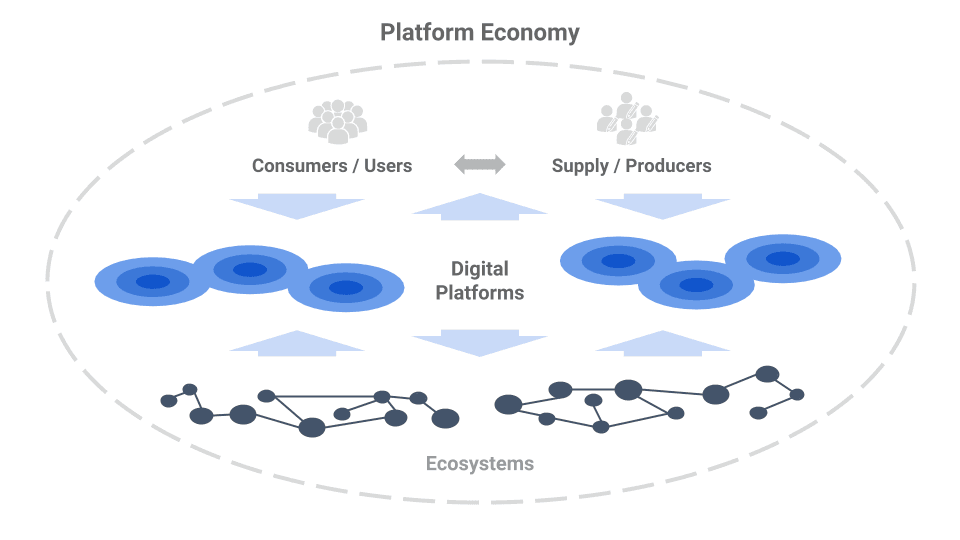
Propose a platform strategy to beat competitor feature velocity
Tests trading feature parity for architectural leverage. Strong answers frame the platform as an intermediary enabling interactions and innovation via self-service APIs, composable primitives, and data loops. Red flag: a shared library creating bottlenecks.
Design a system that detects choice paralysis and dynamically simplifies the interface
Track hover entropy, scroll jitter, and time-to-click; use a contextual bandit to select simplification tiers.
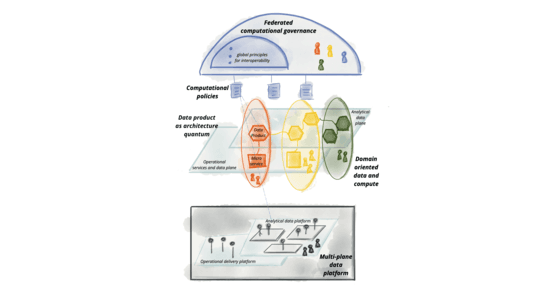
Design a scalable data governance framework balancing autonomy and control
Self-serve platform with domain products, auto-catalog, schema contracts, and policy-as-code access in CI/CD.
What is your responsibility when frontend developers are overloaded?
Tests cross-functional accountability and shared Sprint Goal ownership. Strong answer: own the goal collectively; pair, test, or learn simpler frontend tasks; raise the blocker at the Daily Scrum.
Design a Scalable Data Governance Framework
This tests your grasp of decentralized data architectures like Data Mesh. A great answer proposes a federated model with domain ownership, data as a product, and a self-serve platform.
What's your responsibility when only frontend work remains?
This tests your commitment to collective ownership over individual tasks. A great answer prioritizes the Sprint Goal, offers to help overloaded frontend devs directly (e.g., testing, pairing), and avoids the red flag of starting future work before helping the…
Design a Scalable Data Governance Framework
This tests your grasp of decentralized data governance (Data Mesh). A great answer outlines four principles: domain ownership, data as a product, a self-serve platform, and federated computational governance.
What do you do when only frontend work remains in a sprint?
This tests your commitment to team ownership over role specialization. A great answer prioritizes the Sprint Goal, offers to help the frontend devs directly (pairing, testing), and finds other ways to unblock them.

How would you design architecture to sidestep a competitor's proprietary dataset?
Tests architecture without data moats. Strong answers pick asymmetric plays like real-time loops, federated learning, or synthetic pipelines and link them to defensible design. Red flag: buying or copying the dataset.

Which three data sources would you analyze to improve activation?
This tests whether you ground hypotheses in diverse evidence before experimenting. A strong answer names qualitative feedback, funnel metrics, and behavioral analytics as distinct inputs.
Why prefer median and p95 over mean for API latency?
This tests statistical intuition for skewed distributions. A strong answer notes that median captures typical experience, p95 captures tail suffering, and mean hides outliers. A red flag is claiming mean alone is sufficient.
How should the team handle a PO adding urgent work mid-sprint?
This tests your grasp of agreed goals and the Scrum Master role. A strong answer covers: inspecting the current work selection, negotiating swaps, and having the Scrum Master foster conversation.
Why use median/p95 for API latency instead of the mean?
This tests if you understand how long-tail distributions make averages misleading for user experience. A good answer explains that median (p50) shows the typical user, while p95 captures the worst-case experience.
How do you handle a PO adding work mid-sprint?
Tests your ability to protect the Sprint Goal via collaboration, not conflict. A good answer uses the Retrospective to discuss impact, proposes a 'one-in, one-out' policy for the Sprint Backlog, and involves the Scrum Master.
Why use p50/p95 over mean for API response times?
Tests your grasp of statistical distributions for UX metrics. A good answer explains how outliers skew the mean, while percentiles (p50, p95) better represent typical and worst-case user experiences.
How do you handle a PO adding work mid-sprint?
This tests your ability to protect the Sprint Goal collaboratively. A good answer acknowledges the PO's intent, proposes a scope swap to make trade-offs visible, and uses the Retrospective for long-term fixes.
We are hiring for this. Every open role lists the topics its interview covers, so you can prepare for the real thing rather than guessing.
See open roles