More in Product Management — page 21
Slow dashboard querying a large fact table: first three checks?
This tests systematic diagnosis of fact-table query latency. A strong answer checks the execution plan and indexing, evaluates partitioning and data model fit, and inspects caching or pre-aggregation.
Why prefer median and p95 over mean for API latency?
This tests statistical intuition for skewed distributions. A strong answer notes that median captures typical experience, p95 captures tail suffering, and mean hides outliers. A red flag is claiming mean alone is sufficient.
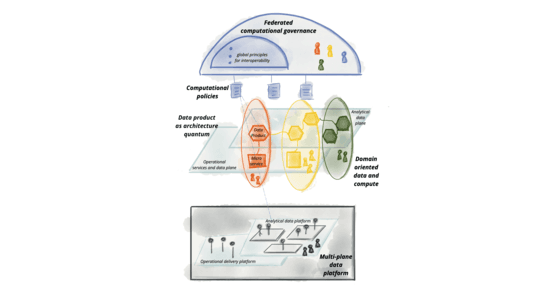
Design a scalable data governance framework balancing autonomy and control
WHAT IT TESTS: Federated governance balancing autonomy with interop via policy. OUTLINE: Self-serve platform with domain products, auto-catalog, schema contracts, and policy-as-code access in CI/CD. RED FLAG: Centralized manual approval of schemas and access.
How do you root-cause bad data across microservices and Spark?
This tests structured debugging and observability for distributed pipelines. A strong answer isolates the break via lineage, validates schema and freshness per stage, and compares microservice outputs to Spark inputs.
How would you build a Customer golden record across fragmented systems?
This tests master data management discipline for distributed, conflicting records. A strong response covers identity resolution, survivorship rules, merge architecture, lineage, and feedback loops.

Design a CDC pipeline that handles schema evolution gracefully
Tests designing resilient CDC pipelines against schema drift. A strong answer covers schema registries with versioning, backward-compatible serialization, and automated compatibility checks.
How would you implement data lineage for microservices analytics?
Tests end-to-end provenance tracking, not just docs. Strong answers cover automated metadata capture at service boundaries, a central catalog such as DataHub or OpenLineage, and column-level tracing.

What is a data schema and why enforce it at ingestion?
Tests schemas as contracts and ingestion validation as a quality gate. Strong answers cite blueprints with constraints, fail-fast ingestion catching type errors upstream, and downstream trust. Red flag: treating schemas as optional docs affecting only storage.
What validation checks would you implement for a user-submitted email field?
Tests whether you separate syntax validation from deliverability and know practical ingestion guards. A strong answer covers RFC-aware syntax, domain checks, normalization, and deduplication.
How do you handle 10% nulls in a key numerical column?
WHAT IT TESTS: Judgment between dropping rows, imputing, or flagging gaps for dashboards. ANSWER OUTLINE: Check MCAR/MAR/MNAR; prefer median or mean imputation; add an "is_missing" indicator. RED FLAG: Row deletion or zero-fill without bias checks.

Design a data quality framework from source to consumption
This tests full-lifecycle data architecture. Strong answers define ownership first, then schema contracts at ingestion, profiling and anomaly detection in CI/CD, column-level lineage, and KPI-linked scorecards. Red flag: tools before ownership or RACI.
Diagnose out-of-memory errors in a growing Spark job
WHAT IT TESTS: Spark SQL tuning and OOM diagnosis. ANSWER OUTLINE: Inspect plans for skewed partitions and joins; tune shuffle partitions, batch sizes, and join strategies; leverage AQE and statistics.
What is data partitioning in a cloud data warehouse?
Tests physical data layout and cost/performance tradeoffs. Strong answers define time-based or integer-range partitioning, explain partition pruning avoids full scans, and warn against high-cardinality keys.
How would you handle late-arriving data in a streaming analytics pipeline?
Tests understanding of event-time processing, watermarks, and windowing for correctness. A strong answer covers watermarks with allowed lateness, event-time triggers, and idempotent updates to sinks.
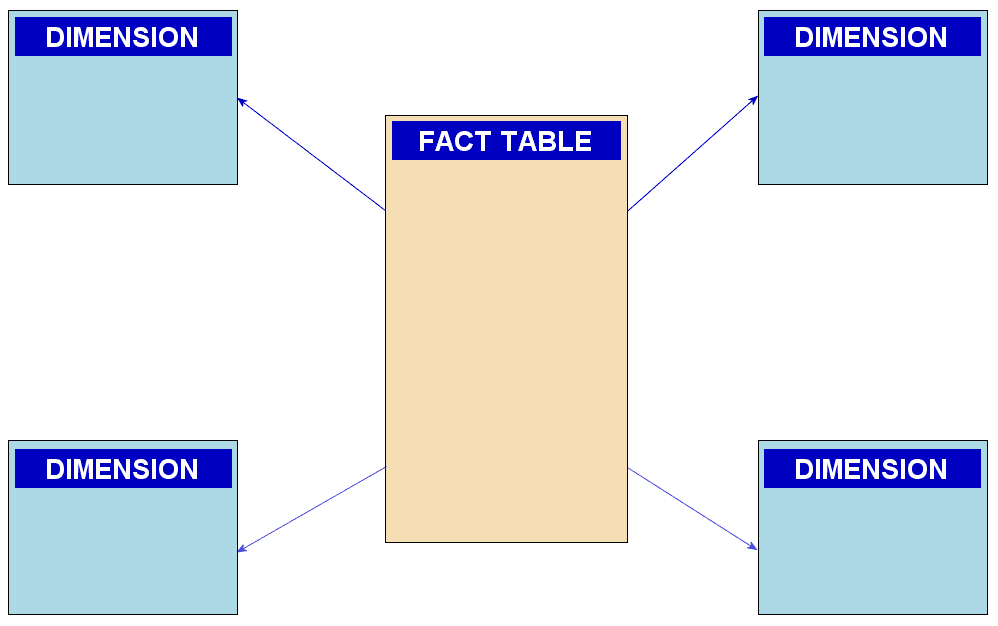
Describe star and snowflake schemas and their trade-offs
WHAT IT TESTS: Dimensional modeling denormalization trade-offs. ANSWER OUTLINE: Star schemas flatten dimensions for fast joins; snowflake schemas normalize hierarchies to reduce redundancy but add joins.

Explain data warehouse purpose and how it differs from OLTP
This tests whether you know the OLTP versus analytics split. A great answer contrasts OLTP row-level writes and normalized schemas with warehouse denormalized schemas and BI reads. A red flag is calling a warehouse just a bigger OLTP database.
Outline an automated pipeline to load a daily CSV into a database
WHAT IT TESTS: designing a minimal production-ready ingestion pipeline, not just listing tools. ANSWER OUTLINE: event trigger on drop, schema validation, idempotent load, and observability.

Differences between ETL and ELT, and when to choose each
WHAT IT TESTS: Pipeline architecture tradeoffs. ANSWER OUTLINE: ETL transforms before loading for structured data; ELT loads raw first and transforms in the warehouse for scale. RED FLAG: Calling one better without citing volume, structure, or compute.

How do you guarantee at-least-once event delivery for a financial transaction?
WHAT IT TESTS: Atomicity of state changes and side effects without 2PC. ANSWER OUTLINE: Write events to a DB outbox in the same transaction as the biz update; a relay polls and publishes to analytics. RED FLAG: Suggesting direct HTTP POSTs or dual writes.

Design client-side event batching and prevent unload data loss
It tests balancing network efficiency and data reliability in browser analytics. Strong answers cover in-memory batching with size or time triggers, sendBeacon or fetch keepalive on visibilitychange, and a retry queue.