All bites
The whole library, newest first. Filter by what you are here for, or pick a topic if you already know.
8667 bites
Page 424
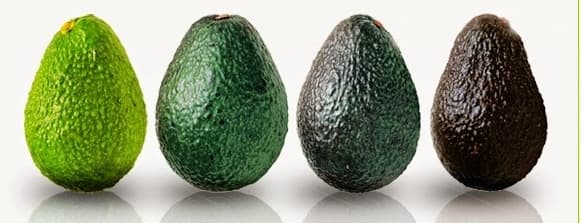
Work Item Age: Don't Let Your Tasks Spoil
Think of work item age as the time elapsed since a task started, like food in a fridge with an expiration date. Kanban teams use it to spot delays and bottlenecks. The biggest mistake is tracking age without acting on aging items to unblock them.
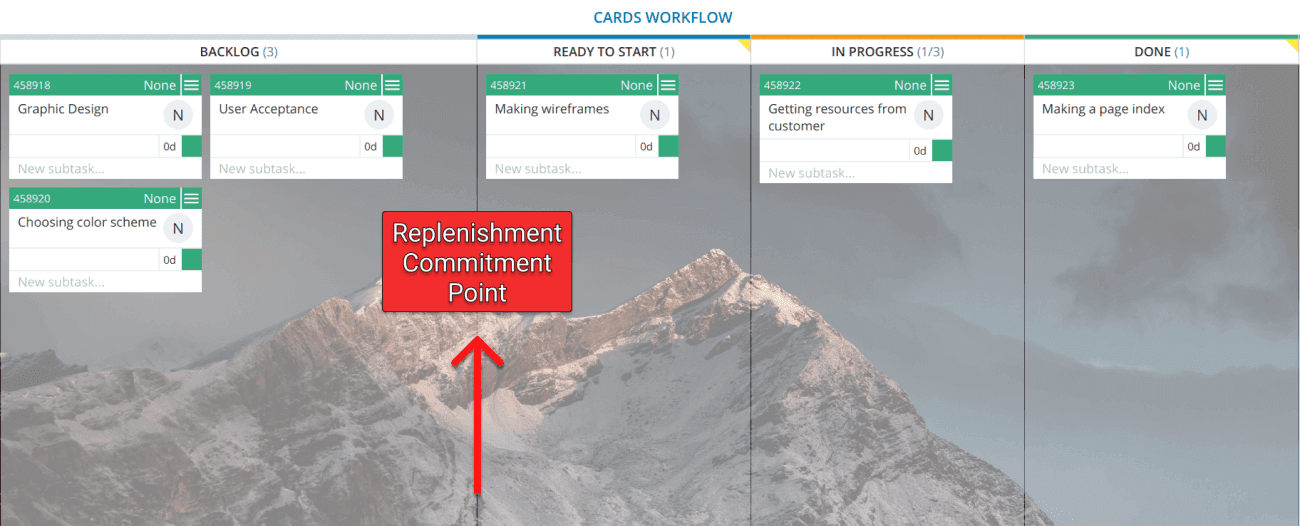
Kanban Replenishment: Pulling Work, Not Pushing It
Instead of a manager pushing tasks, a replenishment meeting is where the team pulls work into their active backlog. This cadence refills the 'Ready to Start' column, ensuring a steady flow of well-understood tasks.
A3 Problem Solving: One Page to Clarity
A3 Problem Solving makes your thinking visible, using a single-page report to map the journey from a problem to a solution. It's used to diagnose bugs or strategic issues like falling market share. The footgun is using it when options are already decided.
Sprint Capacity Planning: Committing to Achievable Work
Sprint capacity planning is like checking your team's fuel tank before a road trip. It calculates your team's actual available work hours for a sprint, accounting for time off, to make a realistic commitment.
Kaizen: The Art of Continuous Improvement
Kaizen means "continuous improvement," making small, frequent changes instead of big, risky ones. In Scrum, this is the heart of the Sprint Retrospective, where teams inspect their process and define concrete actions for the next sprint.
Agile Maturity Models: A Map, Not a Race
An Agile Maturity Model is a report card for your process, assessing adherence to Agile values through defined levels. Teams use it to benchmark progress and find weak spots.
Disciplined Agile: A Toolkit, Not a Prescription
Disciplined Agile (DA) is a toolkit, not a rigid framework, for choosing your own process. It helps teams blend practices from Scrum and Lean when one method doesn't fit. The footgun is treating DA as a prescription instead of a decision-making guide.
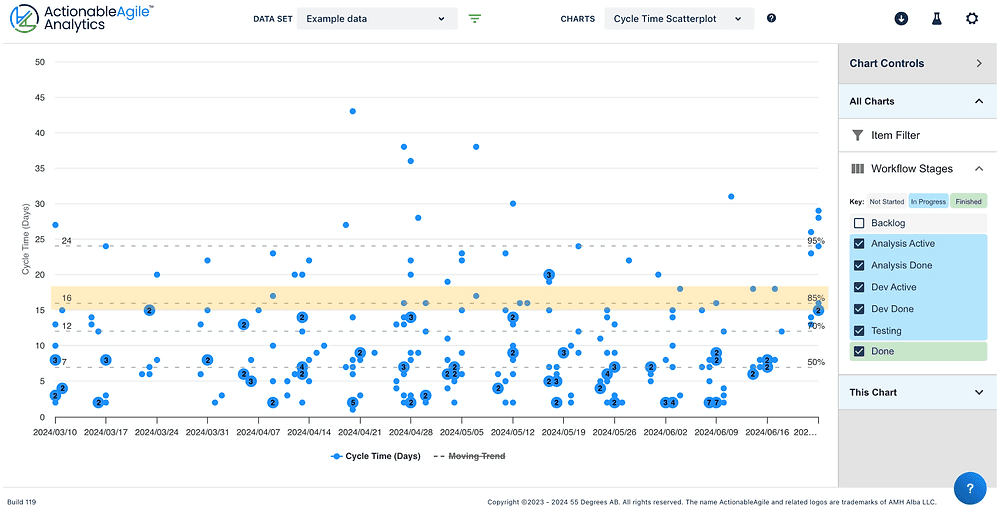
Cycle Time Scatterplot: Visualize Your Team's Predictability
A Cycle Time Scatterplot visualizes delivery speed by plotting how long each task took against its completion date. Agile teams use it to spot predictability trends and set realistic delivery forecasts.

Cycle Time: Measuring Your 'Time to Value'
Cycle time is the total duration from a feature's conception to its deployment in production. Agile teams track it to speed up feedback loops and value delivery. The main footgun: start and stop times are inconsistent, making cross-team comparisons unreliable.
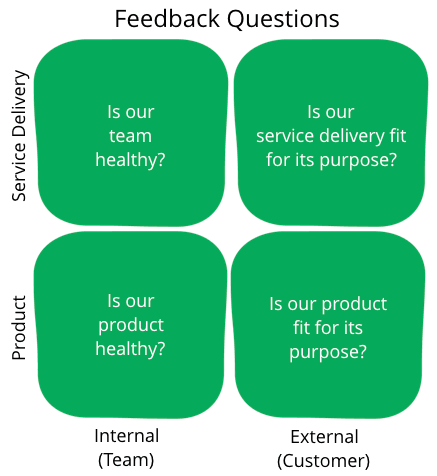
Service Delivery Review: The Missing Agile Feedback Loop
A Service Delivery Review shifts focus from *what* was built to *how* it was delivered. It's a regular meeting where teams and customers review quantitative metrics like lead time and blockers.
The North Star Metric: Your Product's One True Focus
A North Star Metric (NSM) is the single number that best captures the core value your product delivers. It's a compass for long-term growth, guiding sprint planning and backlog prioritization.
Swarming: The Team Tackles One Thing at Once
Swarming focuses the entire team's effort on a single work item to finish it fast, rather than having everyone work on separate tasks. Use it to unblock a critical feature or push the most important story over the finish line at the end of a.

The Scrum Board: Visualizing the Sprint's Workflow
A Scrum board is a visual snapshot of a team's work in a sprint, making progress and bottlenecks obvious. Teams use it to track tasks from "To Do" to "Done," ensuring alignment. The footgun: mistaking the board for Scrum itself; it's a helpful tool, not.
Story Splitting: Delivering Value in Smaller Slices
Story splitting breaks large user stories into smaller, independent pieces that still deliver value, like slicing a cake vertically so each piece has all layers. This is crucial for fitting work into a sprint and getting faster user feedback.
Story Points: Estimating Effort, Not Time
Story points measure effort, not hours. They combine a task's complexity, uncertainty, and volume into a single relative number. Agile teams use them to forecast work capacity.
The 3 Cs: Card, Conversation, Confirmation
A user story isn't a spec; it's a promise for a conversation. The 3 Cs model this: the Card is a placeholder, the Conversation clarifies requirements, and the Confirmation defines "done" with acceptance criteria.

Agile Spikes: Time-Boxed Research to Reduce Uncertainty
A spike is a time-boxed investigation to answer a question or reduce uncertainty. It's a story whose deliverable is knowledge, not shippable code. Spikes are used to de-risk complex stories or evaluate technical options.
Agile Velocity: A Forecasting Tool, Not a Target
Agile velocity isn't about speed; it's a measure of a team's predictable output per iteration. It's used to forecast how much work can be done in future sprints and to estimate release dates. The footgun is treating it as a productivity KPI.
Systems Thinking: Optimize the Whole, Not the Parts
Systems thinking means optimizing the entire system, not just its individual parts. In large-scale development, siloed teams create local efficiencies that harm the overall delivery pipeline.

Conflict Management in Agile Teams
Agile's tight, high interaction cadence, standups, planning, retros, surfaces disagreement constantly. Conflict management means treating friction as raw material for a better decision, resolved openly, not avoided to keep the sprint looking smooth.